Rumänisches Hähnchen in Knoblauch-Tomatensoße (Ostropel de Pui)
Ostropel de pui Aussprache: os-tro-PEL deh poo-ee
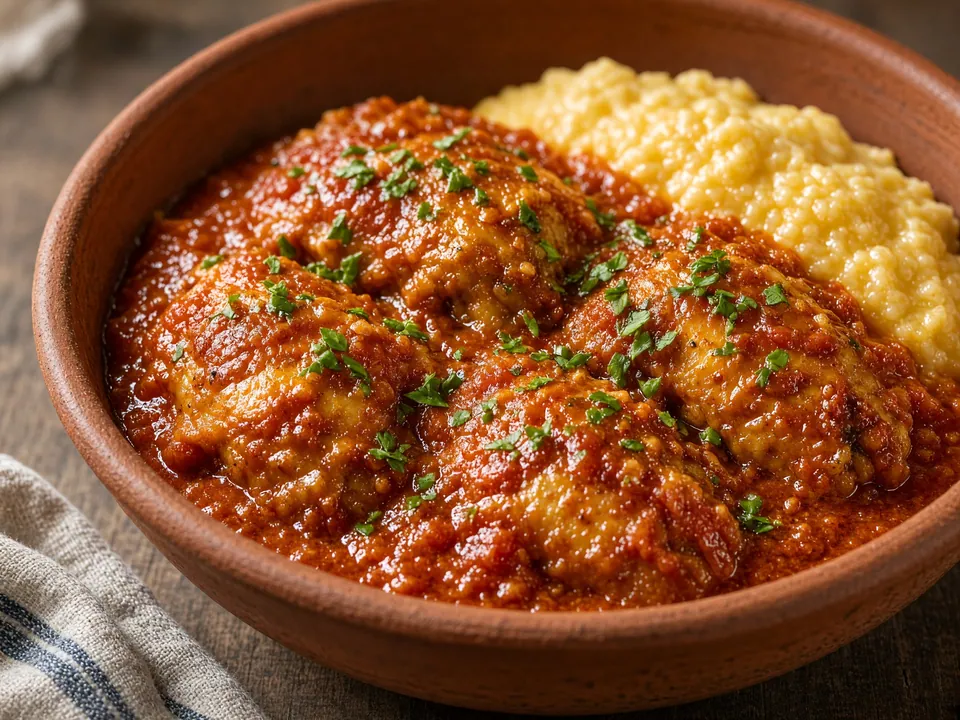
Ostropel de pui ist ein rustikaler rumänischer Hähncheneintopf aus den Regionen Walachei und Oltenien. Hähnchenteile mit Knochen werden zuerst goldbraun gebraten und dann sanft in einer dicken, aromatischen Soße aus Tomaten, reichlich Knoblauch und einer Prise Mehl zum Andicken geschmort. Das Ergebnis ist zartes Fleisch in einer reichhaltigen, knoblauchhaltigen Tomatensoße, die sich wunderbar am Hähnchen festsetzt. Es ist klassisches hausgemachtes Comfort Food, das oft zum Sonntagsessen oder Familienfeiern zubereitet und mit Polenta oder knusprigem Brot serviert wird, um jede Soßentropfen aufzusaugen.
Rumänisches Hähnchen in Knoblauch-Tomatensoße (Ostropel de Pui)
Ostropel de pui
Aussprache os-tro-PEL deh poo-ee
- Für
- 4
- Vorbereitung
- 20 Min.
- Zubereitung
- 50 Min.
- Gesamt
- 1 Std. 10 Min.
- Schwierigkeit
- Mittel
Auch nussfrei und eifrei.
Allergene: enthält gluten. Etiketten auf verpackten Zutaten prüfen.
Zutaten
Mengen wurden angepasst. Kochzeiten und Pfannengrößen bleiben gleich.
Zubereitung
Pat the chicken pieces dry with paper towels and season generously with salt and black pepper on all sides.
Heat the oil in a large, heavy-bottomed skillet or Dutch oven over medium-high heat. Working in batches if necessary, fry the chicken skin-side down until deep golden and crisp, about 6–7 minutes per side. Transfer to a plate and set aside.
Reduce heat to medium. Add the chopped onion to the same pan and cook, stirring often, until soft and lightly golden, about 5 minutes.
Add the minced garlic and cook for 30–40 seconds until fragrant but not browned. Sprinkle in the flour and stir continuously for 1 minute to cook out the raw taste.
Pour in the tomato passata and chicken stock. Stir well, scraping up any browned bits from the bottom of the pan. Add the bay leaves, paprika, and sugar if using. Bring to a gentle simmer.
Return the chicken pieces to the pan, nestling them into the sauce. Cover partially with a lid and simmer on low heat for 35–40 minutes, until the chicken is very tender and the sauce has thickened to a rich, spoon-coating consistency. Stir occasionally.
Taste and adjust seasoning with more salt or a pinch of sugar if needed. Remove bay leaves.
Sprinkle with chopped parsley just before serving.
Regionale Varianten
Some cooks add a splash of white wine to the sauce or finish with a little sour cream for a creamier version common in certain Transylvanian households. Modern adaptations occasionally use boneless chicken breast, though it is less traditional.
Tipps des Kochs
- Use bone-in, skin-on chicken for the most flavor; the skin renders fat that enriches the sauce.
- If the sauce becomes too thick during simmering, add a splash of stock or water to reach desired consistency.
- For best results, let the dish rest 10 minutes off the heat before serving so the flavors meld.
Dazu servieren
Mămăligă (Romanian polenta), crusty bread, and a simple green salad or pickled vegetables.
Vorbereiten und Aufbewahren
Tastes even better the next day. Refrigerate up to 3 days; reheat gently on the stovetop with a splash of water to loosen the sauce.