Shaanxi koude huidnoedels (Liangpi)
凉皮 liángpíZeg het: lyahng-pee
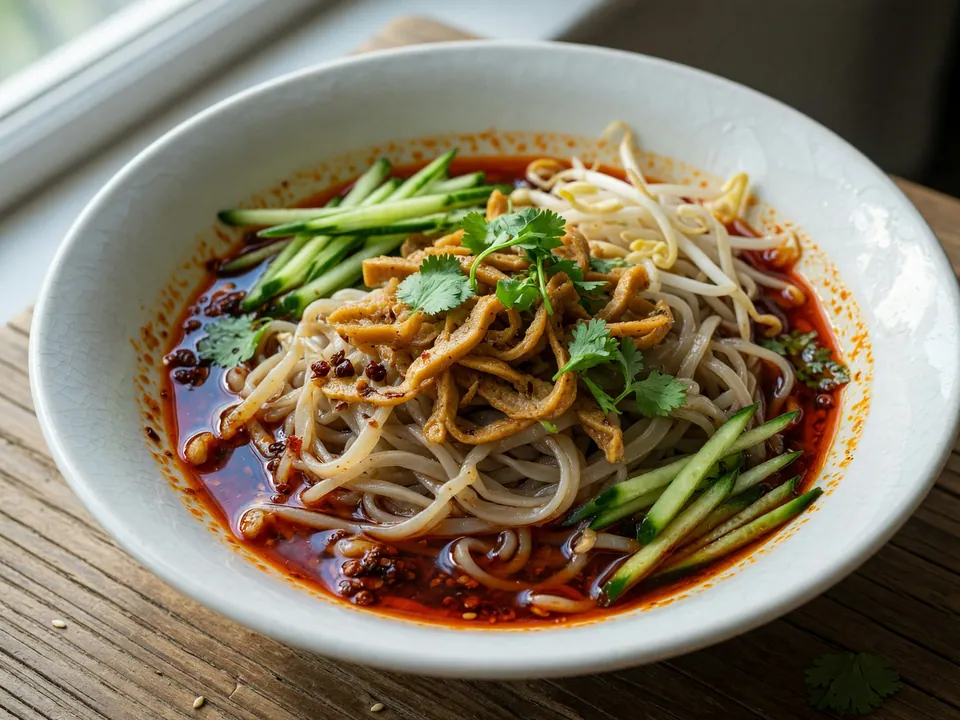
Wanneer deze gekoelde tarwezetmeel linten het gehemelte raken, leveren ze een onweerstaanbaar contrast van veerkauw, heldere zuurgraad, vurige chiliverwarming en tintelende Sichuan-peper die direct verfrist op een hete dag. Deze gestroomlijnde huisversie begint met kant-en-klare liangpi zodat je binnen enkele minuten een authentieke Xi'an-straatstijl kom op tafel hebt.
Shaanxi koude huidnoedels (Liangpi)
凉皮, liángpí
Uitgesproken als lyahng-pee
- Voor
- 6
- Voorbereiding
- 20 min
- Bereiding
- 15 min
- Totaal
- 35 min
- Niveau
- Makkelijk
Ook notenvrij en ei-vrij.
Allergenen: bevat gluten, soja, sesam. Controleer etiketten op verpakte ingrediënten.
Ingrediënten
Hoeveelheden zijn aangepast. Bereidingstijden en panformaten blijven hetzelfde.
For the sauce
For the noodles and toppings
Bereiding
Combine the chili oil, black vinegar, light soy sauce, sesame oil, sesame seeds, ground Sichuan peppercorns, sugar, salt, and minced garlic in a mixing bowl. Stir thoroughly and taste; tweak the levels of acidity, saltiness, or spiciness until the balance is right.
If the liangpi arrives as whole sheets, slice them into strips about ½ inch (1 cm) wide. For dried alternatives, prepare according to the packet directions, immediately shock under cold running water, drain thoroughly, and allow to reach complete coolness.
Bring a small saucepan of water to a rolling boil, drop in the mung bean sprouts for thirty seconds, then drain and refresh under cold water to stop the cooking. Slice the wheat gluten or tofu puffs into manageable bite-size chunks; dense wheat gluten benefits from an extra five-minute steam or blanch to improve tenderness.
Place the prepared liangpi strips, blanched sprouts, wheat gluten pieces, cucumber matchsticks, and cilantro leaves into a spacious bowl. Drizzle the mixed sauce generously over everything and use two spoons or chopsticks to lift and turn the ingredients until every strand glistens with seasoning.
Sample a bite and fine-tune with additional vinegar, soy sauce, chili oil, or salt if desired. Portion into individual bowls and present straight away while still cold or at cool room temperature.
Regionale variant: Hanzhong rice skin noodles (汉中米皮, Hànzhōng mǐpí)
Prepare a thin batter from rice flour, water, and a pinch of salt, then steam it in successive thin sheets following the same technique used for wheat-starch liangpi. The resulting noodles contain no wheat gluten, producing a lighter and softer mouthfeel; compensate by boosting the chili oil and garlic component to match Hanzhong tradition and accompany with generous extra blanched bean sprouts.
Opmerkingen van de kok
- Quality chili oil forms the backbone of flavor here; select a brand packed with visible chili sediment, or quickly infuse your own by heating neutral oil and pouring it over a blend of crushed chili flakes and Sichuan peppercorns.
- Anyone wanting stronger numbing sensation can sprinkle in a touch more ground Sichuan pepper or a few drops of Sichuan pepper oil right at the table.
- To preserve ideal texture, store the sauce apart from the noodles and vegetables until the moment of serving; once combined the starch can continue to absorb liquid and soften the strands.
Serveer met
Pair these cold noodles with chilled jasmine tea or a crisp light beer. In Xi'an they are classically served alongside roujiamo or a side of pickled vegetables.
Van tevoren maken en bewaren
Prepare the sauce up to two days in advance and refrigerate. Keep the cooked noodles, blanched sprouts, wheat gluten, cucumber, and herbs in separate containers. Combine and toss only immediately before serving.