Poolse witte borsjtsj (Barszcz Biały)
barszcz biały Zeg het: BARSHCH BYAH-wih
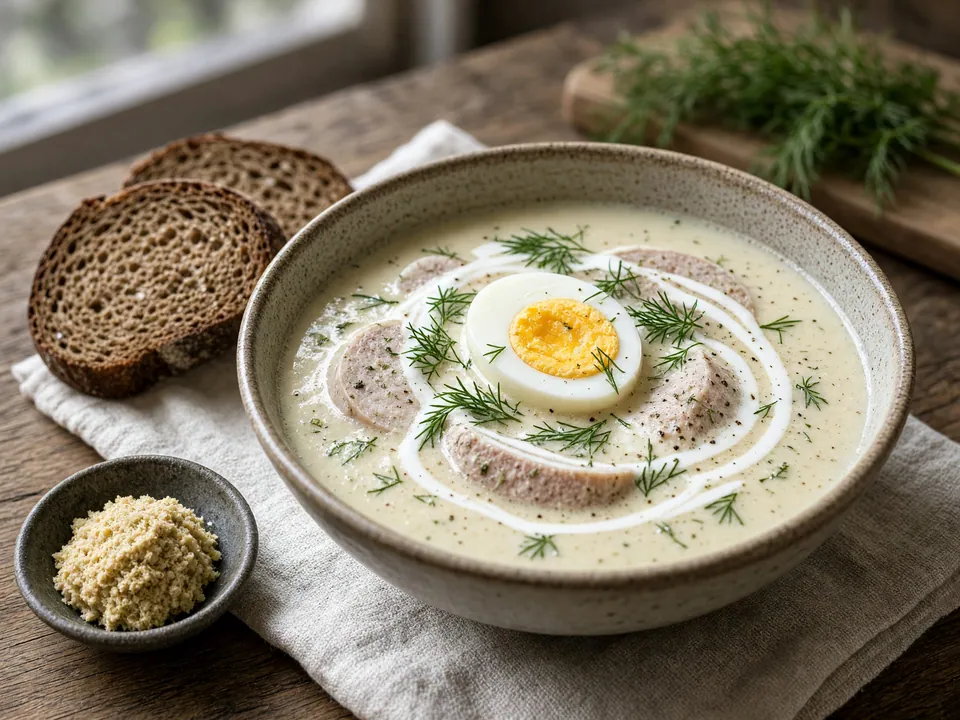
Barszcz biały is een romige, friszure Poolse soep die is opgebouwd rond een gefermenteerde roggestarter, bekend als zakwas. Het is een vast onderdeel van de Paastafel, vooral in centraal en zuidelijk Polen, waar het heet wordt geserveerd met plakjes witte worst, gehalveerde eieren en een pittige kick van mierikswortel. De bouillon is zijdezacht maar licht, met een aangename zuurgraad door de fermentatie en een milde warmte van marjolein en peper. In tegenstelling tot heldere rode borsjtsj is het bleek ivoorkleurig en troostend, gemaakt om met roggebrood te lepelen.
Poolse witte borsjtsj (Barszcz Biały)
barszcz biały
Uitgesproken BARSHCH BYAH-wih
- Voor
- 4
- Voorbereiding
- 20 min
- Bereiding
- 40 min
- Totaal
- 1 uur
- Niveau
- Gemiddeld
Ook notenvrij.
Allergenen: bevat gluten, melk, ei. Controleer etiketten op verpakte ingrediënten.
Ingrediënten
Hoeveelheden zijn aangepast. Bereidingstijden en panformaten blijven hetzelfde.
For the rye starter (zakwas)
For the soup
Bereiding
In a 1-quart (1 L) glass jar, whisk the rye flour with 1 cup (240 ml) of the lukewarm water until smooth. Stir in the remaining 1 cup (240 ml) water, garlic, bay leaf and allspice. Cover loosely and leave at room temperature, stirring once daily, for 3–5 days, until bubbly, pleasantly sour and a layer of liquid separates on top. Strain through a fine-mesh sieve, pressing lightly; discard the solids.
In a large pot, combine the sausage, 6 cups (1.4 L) water, onion, carrot, parsley root and leek. Bring to a gentle boil, reduce the heat, skim off the foam and simmer uncovered for 20 minutes, until the sausage is firm and cooked through. Remove the sausage to a plate; strain the broth and return it to the pot.
Add the potatoes to the broth and simmer for 12–15 minutes, until tender when pierced with a knife. Slice the sausage into 1/2-inch (1 cm) rounds.
Whisk the strained zakwas with 1 cup (240 ml) hot broth in a bowl to temper, then stir it into the pot with the garlic, marjoram, horseradish, pepper and sugar, if using. Simmer gently for 5 minutes—do not boil hard or the soup may curdle—then taste and season with salt.
In a small bowl, whisk the cream with a ladleful of hot soup; stir it back into the pot. Warm over low heat for 2–3 minutes, without boiling, until the soup is creamy and lightly thickened.
Add the sliced sausage and warm through for 3–4 minutes. Taste for salt, sourness and horseradish, adjusting as needed.
Ladle into bowls and top with the egg halves, dill or parsley, and extra horseradish if you like. Serve hot.
Regionale variant: Lenten White Borscht (Barszcz biały postny)
For the Lenten version, omit the sausage and simmer the onion, carrot, parsley root and leek in 8 cups (1.9 L) water or vegetable broth; add 2 extra potatoes and a handful of dried mushrooms, if you like. Finish with the same tempered zakwas, cream, eggs and horseradish. It is lighter but still creamy and sour.
Tips van de kok
- Keep the zakwas in a warm, draft-free spot and stir it daily; it is ready when it smells cleanly sour, not moldy.
- Never let the soup boil after the starter and cream go in; a gentle simmer keeps it smooth.
- For a sharper, more traditional bite, serve extra horseradish on the side and add it at the table.
Serveer met
Rye bread and extra horseradish; at Easter it joins a table of cold meats, eggs and salads.
Van tevoren maken en bewaren
The zakwas can be made up to 1 week ahead and refrigerated; the finished soup keeps 3 days in the fridge and reheats gently, but do not boil.