Burmesisches Hühnercurry (Kyet Thar Hin)
ကြက်သားဟင်း kyet thar hinAussprache: chet-THAR hin
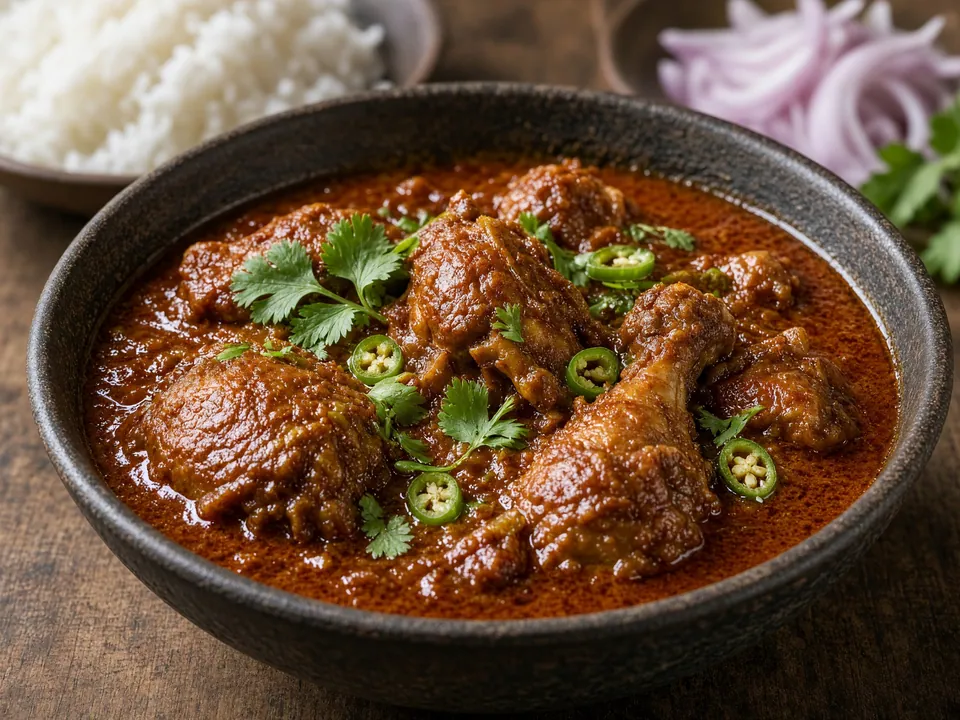
Burmesisches Hühnercurry — kyet thar hin — ist das alltägliche Curry auf dem Familientisch in Myanmar. Es wird in einem schweren Topf über langsamer Flamme gekocht, bis das Huhn zart ist und ein glänzendes rotbraunes Öl an die Oberfläche steigt. Die Basis ist eine feuchte Paste aus Zwiebel, Knoblauch, Ingwer, Kurkuma und getrockneten Chilis, die geduldig in reichlich Öl angebraten wird, mit Tomaten und etwas Ngapi für Tiefe. Es ist reichhaltig, herzhaft und sanft scharf und wird zu fast jeder Mittags- oder Abendmahlzeit mit Reis gegessen.
Burmesisches Hühnercurry (Kyet Thar Hin)
ကြက်သားဟင်း, kyet thar hin
Aussprache chet-THAR hin
- Für
- 4
- Vorbereitung
- 20 Min.
- Zubereitung
- 55 Min.
- Gesamt
- 1 Std. 15 Min.
- Schwierigkeitsgrad
- Einfach
Auch nussfrei und eifrei.
Allergene: enthält fisch, schalentiere. Etiketten auf verpackten Zutaten prüfen.
Zutaten
Mengen wurden angepasst. Kochzeiten und Pfannengrößen bleiben gleich.
For the chicken
For the curry base
Zubereitung
Pat the chicken pieces dry and toss them in a bowl with the turmeric, fish sauce and salt. Leave to sit while you make the paste, at least 15 minutes.
Put the onions, garlic, ginger, drained chilies and paprika in a blender or food processor and blitz to a smooth, thick paste, adding a tablespoon or two of water only if the blades stick.
Heat the oil in a heavy-bottomed pot over medium heat. Add the paste and fry, stirring often and scraping the base, for 12–15 minutes, until the water cooks off, the paste darkens to a deep ochre and the oil separates and pools at the edges.
Add the chicken and turn the pieces in the paste for about 5 minutes, until every piece is coated and the outside has turned from pink to pale and opaque.
Stir in the tomatoes and the shrimp paste, if using, and cook for 8–10 minutes, until the tomatoes collapse completely and the oil rises back to the surface.
Pour in the water, bring to a gentle simmer, then cover partly and cook for 20 minutes, stirring once or twice so nothing catches.
Uncover and simmer for another 10–15 minutes, until the sauce is thick enough to coat the chicken, the meat pulls easily from the bone and a red oil slick floats on top. Taste and adjust with salt.
Take the pot off the heat and let it rest for 5 minutes before serving, so the oil settles into a glossy layer over the curry.
Regionale Variante: Chicken curry with potatoes (အာလူးထည့် ကြက်သားဟင်း, alu htain kyet thar hin)
Peel 2 medium potatoes (about 12 oz / 350 g) and cut them into 1 1/2-inch (4 cm) chunks. Add them with the water in step 6 and simmer, partly covered, for 20–25 minutes instead of 20, until a knife slides in easily and the potatoes have drunk up some of the red sauce. The curry becomes heartier and slightly thicker, and the potatoes are usually served as part of the dish rather than on the side.
Tipps des Kochs
- Do not cut back on the oil — it is the cooking medium and the signature red slick on top is the sign of a properly cooked Burmese curry.
- Fry the onion paste long enough: if it still smells raw or looks pale, keep going, because the whole flavor of the dish is built there.
- Check your fish sauce and shrimp paste labels if gluten matters to you; most fish sauces are gluten-free, but brands vary.
Dazu servieren
Steamed white rice, sliced raw onion and green chili on the side, and a thin lentil or vegetable soup to balance the richness.
Vorbereiten und Aufbewahren
Keeps 3 days in the fridge and improves overnight; reheat gently on the stove with a splash of water, and skim the oil if you prefer a lighter curry.