German Roast Goose (Gänsebraten)
Gänsebraten Say it: GEN-zeh-brah-ten
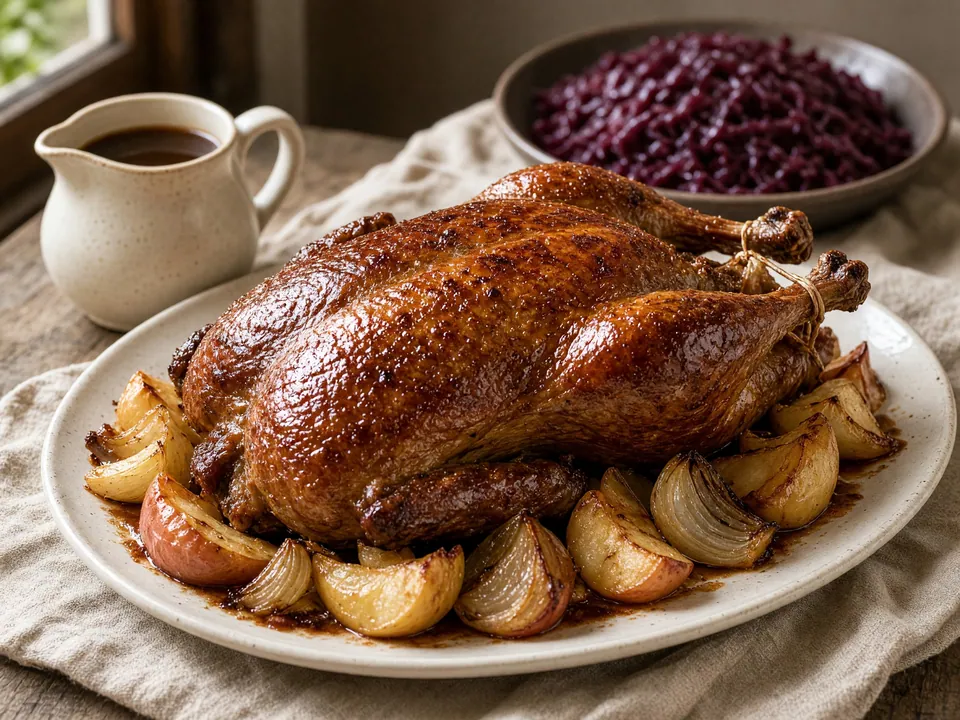
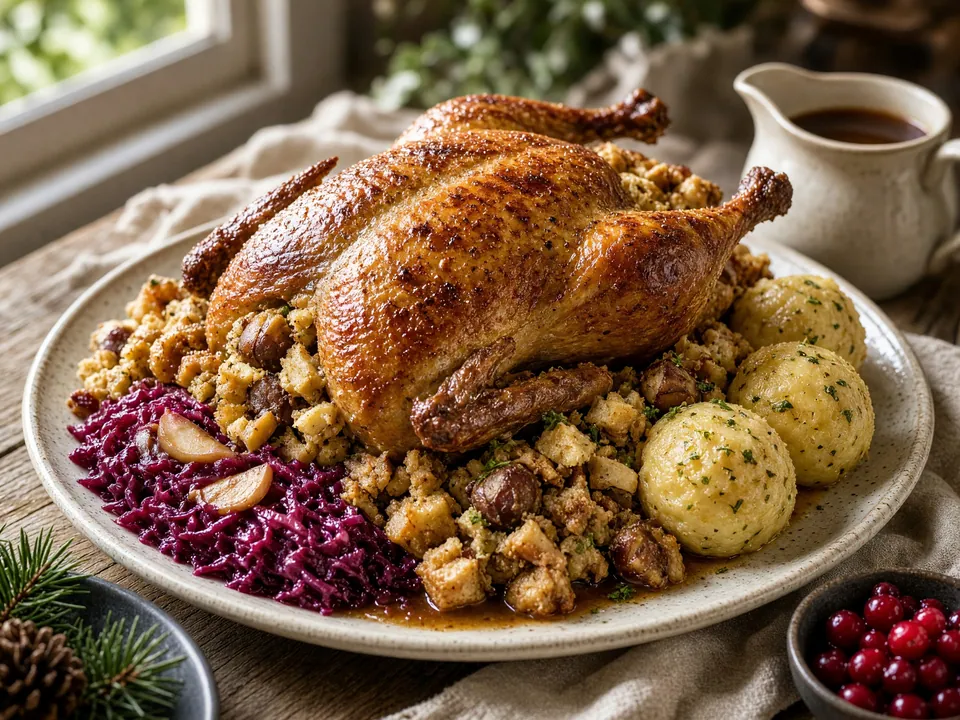
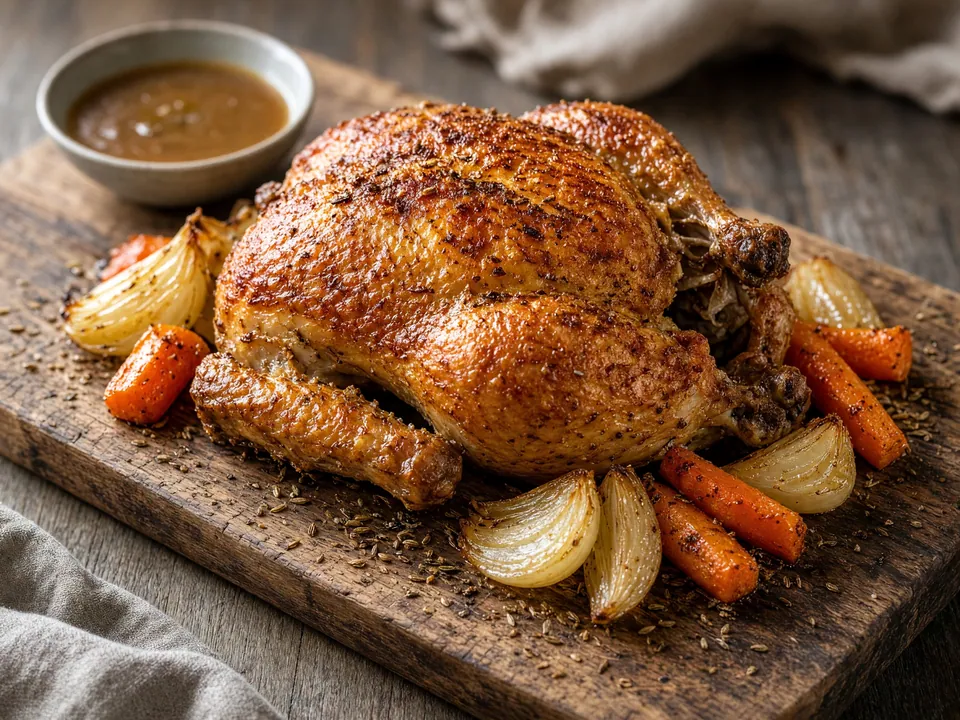
Gänsebraten is the grand centrepiece of the German Christmas table, a whole goose rubbed with marjoram and stuffed with apples and onions, then roasted slowly until the skin turns mahogany and shatters under the fork. The meat underneath stays dark, juicy and faintly gamey, while the fruit softens into the pan juices and deepens the gravy. It is a Sunday-and-holiday dish rather than an everyday one, carved at the table and served with red cabbage and dumplings while the kitchen still smells of roasting fat and marjoram.
German Roast Goose (Gänsebraten)
Gänsebraten
Pronounced GEN-zeh-brah-ten
- Serves
- 4
- Prep
- 30 min
- Cook
- 3 hr
- Total
- 3 hr 30 min
- Level
- Medium
Also nut-free and egg-free.
Allergens: contains gluten, milk. Check labels on packaged ingredients.
Ingredients
Amounts are scaled. Cooking times and pan sizes stay the same.
For the goose
For the giblet broth
For the gravy
Method
Pull the giblets and neck out of the goose and set them aside. Trim any large lumps of fat from the opening at the tail end, cut off the wing tips at the first joint and reserve them too. Prick the skin all over — breast, thighs and back — with a fine skewer, piercing the skin only and not the meat, so the fat can escape.
Rub the goose inside and out with the salt, pepper and marjoram, then fill the cavity with the apple and onion quarters. Tie the legs together with kitchen twine, tuck the wings neatly against the body and set the goose breast-side up on a rack in a large roasting pan.
While the oven heats to 350°F (175°C), put the neck, wing tips, giblets, onion, carrot, bay leaf and water in a small saucepan. Simmer gently, uncovered, for about 1 hour, then strain and keep the broth hot.
Pour the cup of hot water into the roasting pan and cover the goose loosely with foil. Roast for 1 hour, then lift off the foil, prick the skin again and baste the bird with the fat collected in the pan.
Continue roasting uncovered for 1 1/2 to 2 hours more, basting every 20-30 minutes, until the skin is deep golden brown and crisp and the juices at the thigh run clear, about 175°F (80°C) on a meat thermometer. Add a splash of hot water if the pan runs dry.
Lift the goose onto a warm platter, tent it loosely with foil and let it rest for 20 minutes; the meat settles and carving becomes much easier.
For the gravy, pour the pan juices into a jug and let the fat rise to the top. Skim off 2 tbsp of the fat (or use butter) and spoon off the rest. Set the roasting pan over medium heat, add the fat and the flour and stir for 1-2 minutes until nut-brown.
Whisk in the strained hot broth and the wine, scraping up the browned bits from the pan, and simmer for 5-10 minutes until the gravy coats the back of a spoon. Stir in the redcurrant jelly, season with salt and pepper and keep warm.
Carve the goose — legs first, then the breast — and spoon over a little gravy. Serve the rest of the gravy separately with red cabbage and potato dumplings.
Regional variant: Goose with Chestnut and Prune Stuffing (Gänsebraten mit Kastanien und Pflaumen)
Soften 2 chopped onions in butter, then mix with 1 cup (150 g) cooked peeled chestnuts, 8 pitted prunes roughly chopped and just 1 chopped apple, and use this mixture to fill the goose instead of the plain apple and onion. Roast exactly as above. The chestnuts and prunes turn soft and sweet and give the gravy a darker, fruitier edge.
Cook's notes
- Leave the goose uncovered in the fridge overnight before roasting; a dry skin crisps far better.
- Prick the skin each time you baste — the more fat that escapes, the crisper the skin will be.
- Save the rendered goose fat: it keeps for months in the fridge and makes superb roast potatoes.
Serve with
Braised red cabbage (Rotkohl) and potato dumplings (Kartoffelklöße), with a dry Riesling or a dark lager.
Make ahead and storage
The goose can be roasted a few hours ahead and reheated at 325°F (165°C) for 20-25 minutes, loosely covered; the gravy keeps for 2 days in the fridge.