German Christmas Goose (Weihnachtsgans)
Weihnachtsgans Say it: VY-nahkhts-gahns
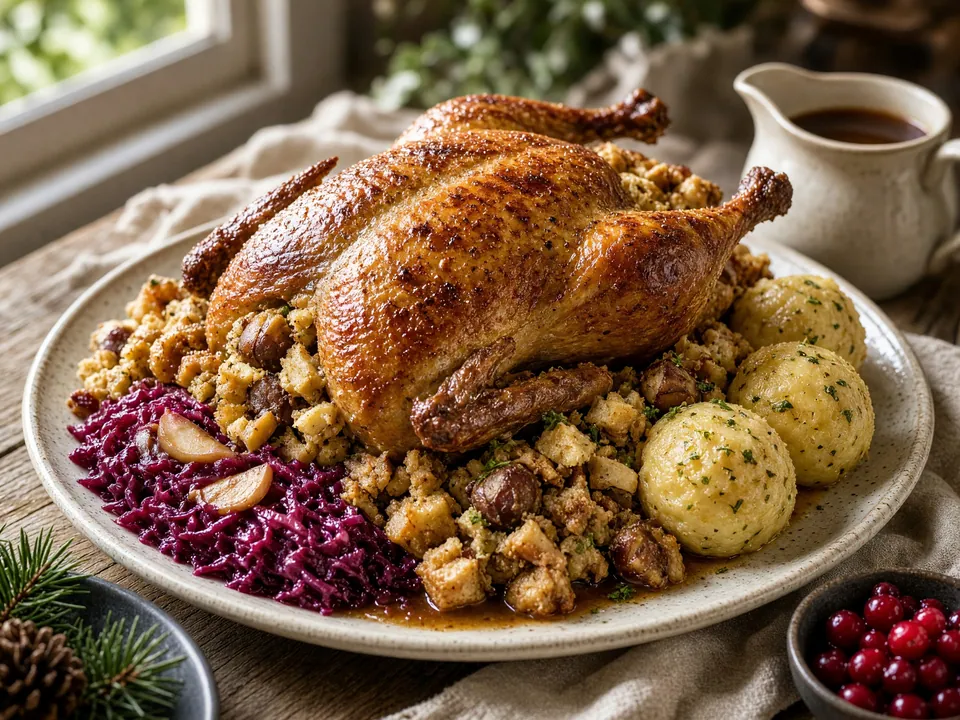
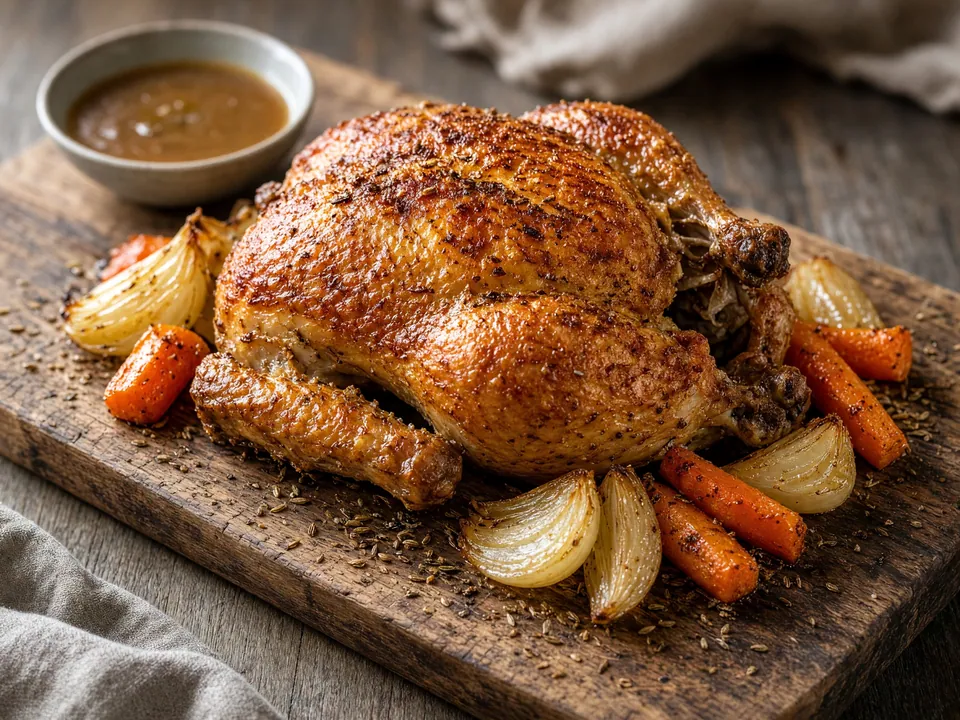
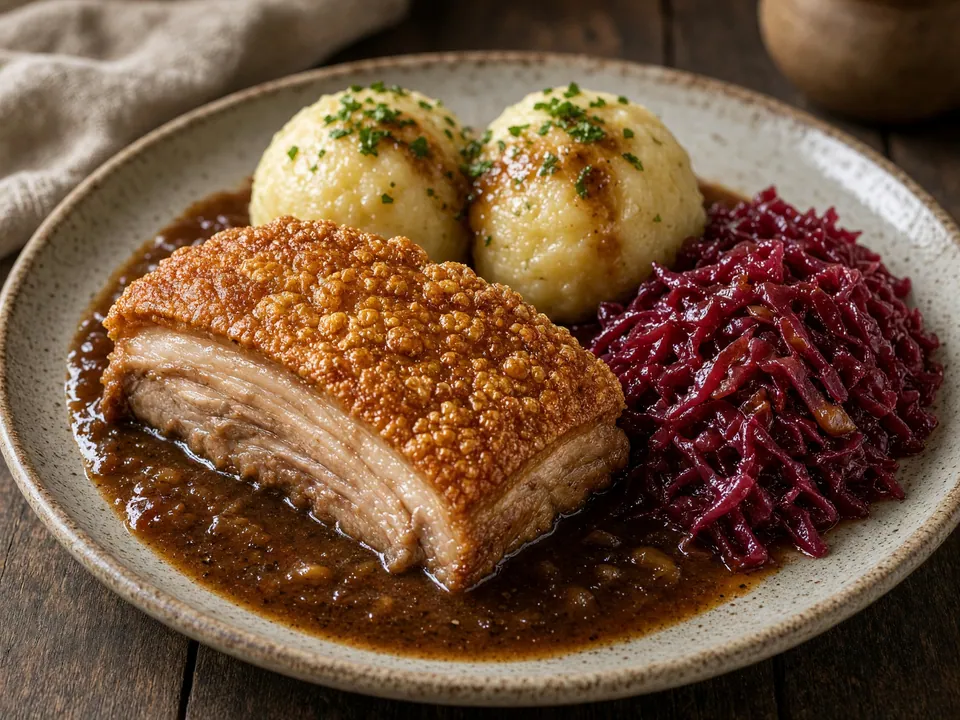
Weihnachtsgans is the centerpiece of a German Christmas table: a whole goose roasted until the skin is crisp and the meat is tender, with a fruity, savory stuffing of apples, chestnuts, prunes and marjoram. It is traditionally served on Christmas Eve or Christmas Day with red cabbage, potato dumplings and a rich gravy. The contrast between crackling skin, soft dark meat and the sweet-tart filling makes it a festive, deeply comforting dish.
German Christmas Goose (Weihnachtsgans)
Weihnachtsgans
Pronounced VY-nahkhts-gahns
- Serves
- 6
- Prep
- 30 min
- Cook
- 3 hr 40 min
- Total
- 4 hr 10 min
- Level
- Medium
Also egg-free.
Allergens: contains gluten, milk, nuts. Check labels on packaged ingredients.
Ingredients
Amounts are scaled. Cooking times and pan sizes stay the same.
For the goose
For the stuffing
For the pan and gravy
Method
Remove the giblets and neck from the goose and reserve them for the gravy. Trim excess fat from the cavity, prick the skin all over with a skewer (avoid piercing the meat), then rub the goose inside and out with the salt and pepper and the cut lemon.
For the stuffing, melt the butter in a large skillet over medium heat. Add one chopped onion and cook until soft and translucent, about 5 minutes. Stir in the apples, chestnuts, prunes, bread cubes, marjoram, caraway, 1/2 tsp salt and 1/4 tsp pepper; cook for 2 minutes, then cool slightly.
Loosely fill the goose cavity with the stuffing; do not pack it tightly. Truss the legs and tuck the wings under. Place the goose breast side up on a rack in a roasting pan and pour the wine and 1/2 cup (120 ml) of the stock into the pan. Any extra stuffing can be baked separately in a buttered dish for the last 30 minutes.
Roast at 350°F (175°C), basting every 30 minutes with the pan juices and spooning off accumulated fat. If the skin browns too quickly, tent loosely with foil. Cook for 3 1/2 to 4 hours, until the thigh juices run clear and a thermometer inserted into the thickest part of the thigh and the stuffing reads 165°F (74°C).
While the goose roasts, make the gravy stock: simmer the reserved neck and giblets with the remaining chopped onion, carrot, bay leaf and remaining 1 1/2 cups (360 ml) stock for 45 minutes. Strain, discarding the solids.
Transfer the goose to a warm platter and rest for 20 minutes. Remove the stuffing to a serving dish and keep warm.
Skim the fat from the roasting pan juices and add the juices to the strained giblet stock. Whisk the flour with a few tablespoons of the stock until smooth, stir it into the gravy and simmer for 5–8 minutes, until thickened and glossy. Season to taste.
Carve the goose and serve with the stuffing, gravy, red cabbage and potato dumplings.
Regional variants
Some German cooks add raisins, dried apricots or a little chopped bacon to the stuffing; in other regions the goose is served with bread dumplings instead of potato dumplings.
Cook's notes
- Pricking the skin and pouring off fat is the key to crisp skin; do not pierce the meat or juices will escape.
- Stuff the cavity only loosely and check the stuffing temperature—it must reach 165°F (74°C).
- Resting the goose for 20 minutes before carving keeps the meat juicy.
Serve with
Red cabbage, potato dumplings (Kartoffelklöße) and gravy; dry Riesling or a dark beer.
Make ahead and storage
Leftovers keep refrigerated up to 3 days; reheat covered at 325°F (165°C) with a splash of stock. Cook a stuffed raw goose immediately.