Hōtō Noodle Stew (Hōtō)
ほうとう HōtōSay it: HOH-toh
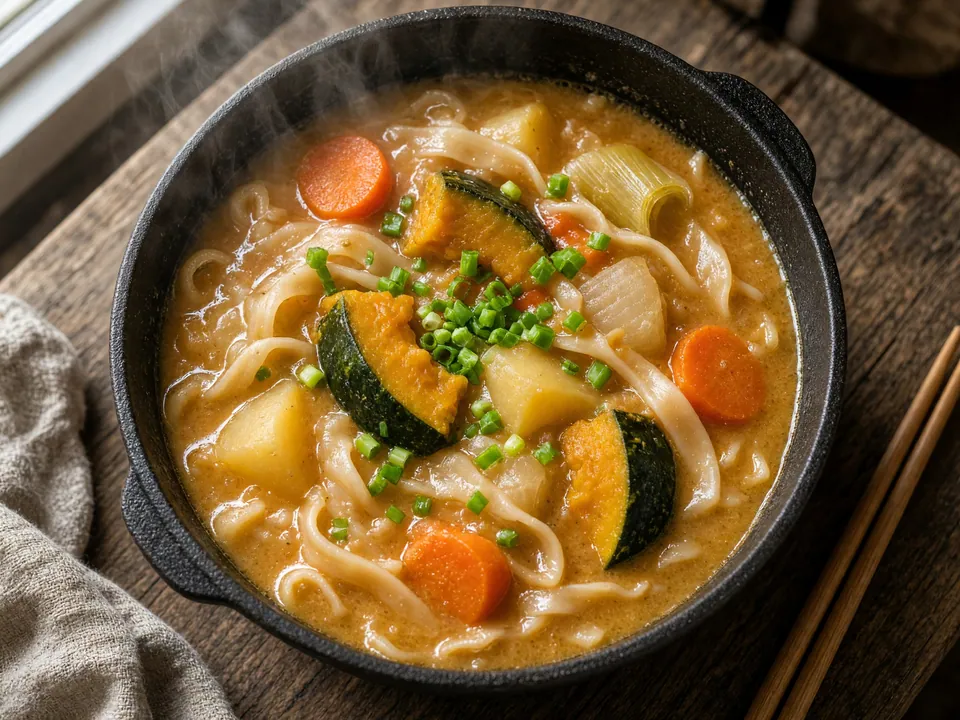
Hōtō is a rustic, one-pot noodle dish from Yamanashi Prefecture in Japan. Thick, hand-cut wheat noodles are simmered directly in a hearty miso broth with plenty of seasonal vegetables, most notably sweet kabocha squash, carrots, potatoes, leeks, and daikon. The starch released during cooking gives the broth a comforting, slightly thickened texture that clings to every ingredient. Traditionally prepared in an iron pot over an open fire during the cold winter months, this filling meal celebrates the agricultural bounty of the region and is often shared family-style.
Hōtō Noodle Stew (Hōtō)
ほうとう, Hōtō
Pronounced HOH-toh
- Serves
- 4
- Prep
- 30 min
- Cook
- 35 min
- Total
- 1 hr 5 min
- Level
- Medium
Also nut-free and egg-free.
Allergens: contains gluten, soy. Check labels on packaged ingredients.
Ingredients
Amounts are scaled. Cooking times and pan sizes stay the same.
Noodles
Broth and Vegetables
Method
Make the noodle dough. mix the flour and salt in a large bowl. Gradually add the water, stirring until a firm dough forms. Knead on a lightly floured surface for 5-7 minutes until smooth. Wrap and rest 20 minutes.
Roll the rested dough into a rectangle about 1/4 inch (6 mm) thick. Cut into 1-inch (2.5 cm) wide strips, then cut each strip crosswise into roughly 3-inch (7.5 cm) lengths. Dust with flour and set aside.
Heat the oil in a large heavy pot or cast-iron nabe over medium heat. Briefly sauté the carrots, potatoes, daikon, and kabocha for 2 minutes to develop flavor.
Add the dashi or vegetable stock and bring to a boil. Reduce to a simmer, cover, and cook the vegetables for 10 minutes until they begin to soften.
In a small bowl, whisk both miso pastes with a ladleful of hot broth until completely smooth. Stir the miso mixture and soy sauce into the pot.
Add the leek slices and the fresh noodle pieces directly into the simmering broth. Stir gently once to separate, then simmer uncovered for 8-10 minutes until the noodles are cooked through and the broth has thickened from the released starch.
Taste and adjust with a little more soy sauce or miso if needed. The broth should coat the vegetables and noodles nicely.
Remove from heat and serve immediately in deep individual bowls, ensuring each portion has plenty of vegetables and noodles.
Optional final touch. drizzle each bowl with a few drops of toasted sesame oil for aroma.
Regional variants
Regional households sometimes add mushrooms, burdock root, or taro depending on the season and what is available. Modern home versions may include a small amount of grated ginger for warmth, though the classic Yamanashi preparation keeps the flavor purely miso and vegetable-forward.
Cook's notes
- Do not over-stir after adding the noodles; the starch naturally thickens the broth and helps the pieces stay distinct.
- Leaving the skin on the kabocha squash is traditional and adds texture; the skin softens during cooking.
- Use a wide cast-iron pot if possible for the most authentic rustic flavor and even heat.
Serve with
Steamed white rice, pickled vegetables (tsukemono), and hot green tea.
Make ahead and storage
Best enjoyed fresh. Leftovers can be refrigerated up to 2 days; reheat gently on the stovetop with a splash of water or dashi to loosen the thickened broth.