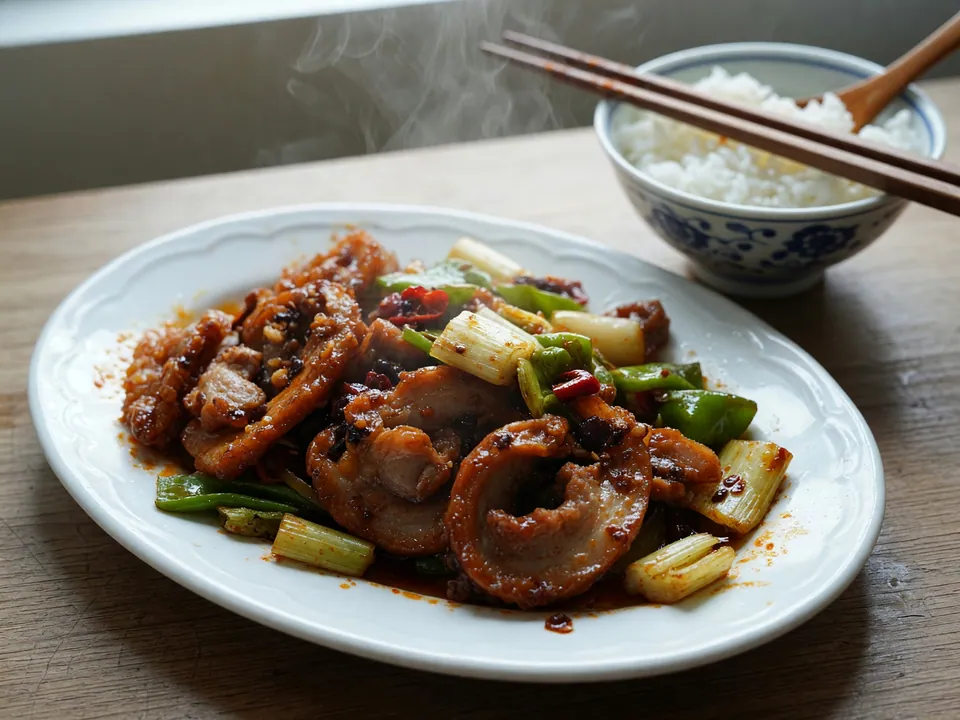
Kung Pao Chicken (Gōngbǎo Jīdīng)
宫保鸡丁 gōngbǎo jīdīngSay it: gong-bow jee-ding
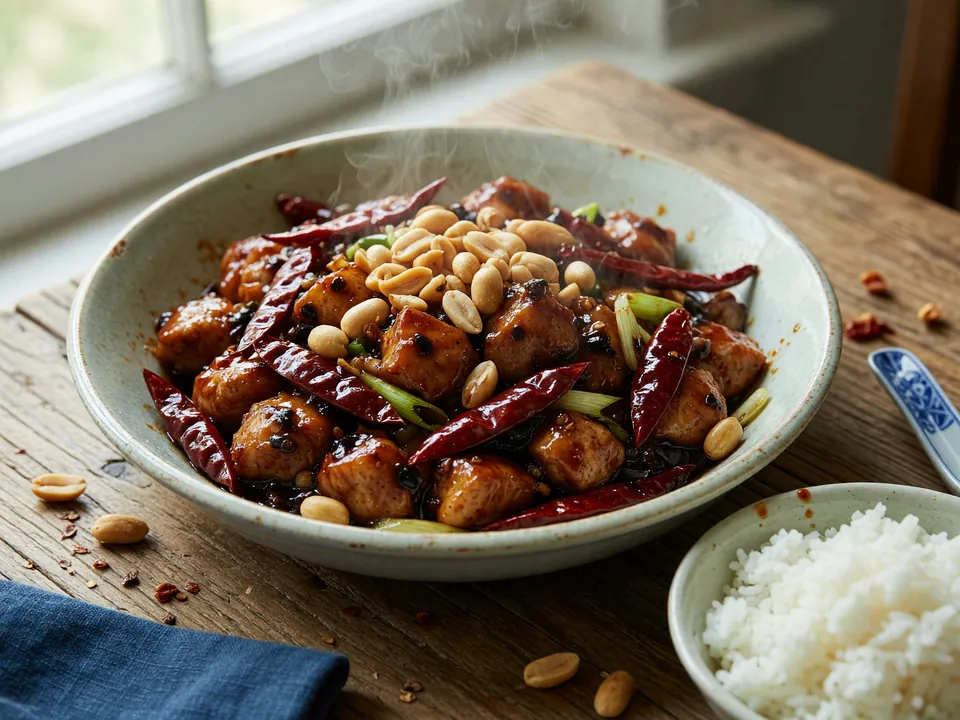
Bite into tender cubes of chicken surrounded by crunchy peanuts and fiery chilies in a bright sweet-tangy glaze that delivers a thrilling mix of savory, sour, spicy, and tingly Sichuan peppercorn sensations. This quick-cooking classic delivers restaurant-quality excitement on busy evenings when you want bold flavors without hours in the kitchen.
Kung Pao Chicken (Gōngbǎo Jīdīng)
宫保鸡丁, gōngbǎo jīdīng
Pronounced gong-bow jee-ding
- Serves
- 4
- Prep
- 40 min
- Cook
- 15 min
- Total
- 55 min
- Level
- Medium
Also egg-free.
Allergens: contains peanuts, soy, gluten. Check labels on packaged ingredients.
Ingredients
Amounts are scaled. Cooking times and pan sizes stay the same.
For the peanuts
For the chicken and marinade
For the sauce
For the stir-fry
Method
Warm 1 tsp vegetable oil in a wok over medium heat if starting with raw peanuts. Toast them while stirring nonstop until they become golden and aromatic, roughly 3 to 4 minutes, then set aside on a plate to crisp up as they cool. Roasted peanuts need no preparation.
Mix the cubed chicken thighs thoroughly with Shaoxing wine, light soy sauce, cornstarch, 1 tsp vegetable oil, salt, and white pepper inside a medium bowl. Allow this mixture to rest for 20 minutes while the remaining components are readied.
Combine light soy sauce, dark soy sauce, Chinkiang black vinegar, sugar, water, and cornstarch inside a small bowl, whisking vigorously until the mixture is completely smooth. Position this bowl right beside the cooking station.
Place a wok or spacious skillet on high heat. Pour in 2 tbsp of the vegetable oil, swirl to cover the surface, then arrange the marinated chicken pieces in one even layer. Leave undisturbed for 30 to 60 seconds to develop color, then continue stir-frying until the exterior turns opaque yet the centers remain faintly pink, about 2 to 3 minutes total. Transfer the chicken onto a clean plate.
Lower the temperature to medium-low before adding the final 1 tbsp of oil. Toss in the sliced garlic, minced ginger, prepared dried chilies, ground Sichuan peppercorns, and scallion white segments. Cook these aromatics while stirring rapidly until their scents intensify, 30 to 60 seconds, watching closely so the chilies do not scorch.
Place the partially cooked chicken back into the wok and raise the heat once more to high. Stir everything together for 1 minute, then briefly remix the prepared sauce and pour it over the contents.
Keep stirring without pause as the liquid reduces and becomes shiny, fully coating every piece of chicken within 1 to 2 minutes. Gently incorporate the toasted peanuts and give one final toss to combine.
Move the finished dish to a serving platter and enjoy immediately while piping hot.
Regional variant: Kung Pao Chicken with Cucumber (gōngbǎo jīdīng jiā huángguā)
Introduce 1 medium cucumber that has been deseeded and diced into 3/4-inch cubes at the same time as the scallion whites during the aromatic stir-fry step; cook for 1 minute prior to adding back the chicken. Certain northern Chinese preparations also incorporate finely diced carrot or red bell pepper to enhance visual appeal. Maintain a firm bite on all added vegetables for ideal mouthfeel.
Cook's notes
- Measure every component and arrange them within easy reach before the wok touches the flame because the entire stir-fry finishes in moments once cooking begins.
- Stop short of complete doneness on the initial chicken sear so it can finish gently inside the bubbling sauce and retain maximum juiciness.
- Stir in 1 to 2 tsp of chili oil right at the end along with the peanuts when you want additional vibrancy and extra heat.
Serve with
Pair with fluffy steamed white rice alongside a lightly cooked green vegetable such as bok choy or gai lan.
Make ahead and storage
Refrigerate any remaining portions inside a sealed container for a maximum of 3 days. Warm thoroughly in a hot wok or skillet, incorporating a small amount of water if the sauce has thickened excessively upon storage. Because the peanuts lose crispness after refrigeration, consider sprinkling freshly toasted peanuts on top during reheating.