Twice-Cooked Pork (回锅肉)
回锅肉 huíguō ròuSay it: hway-gwor roh
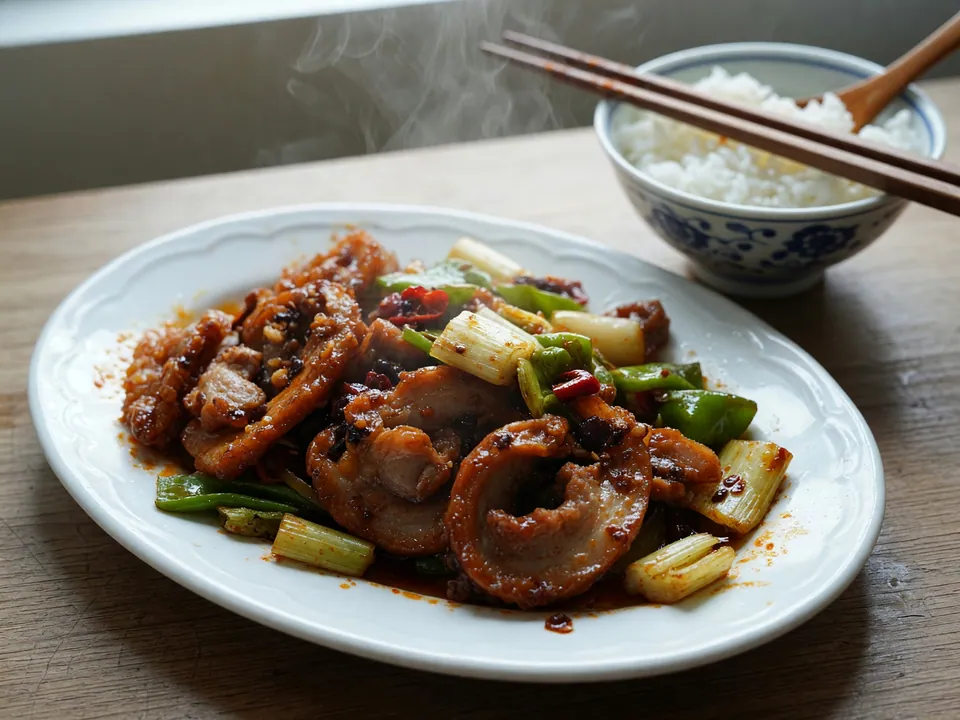
When this Sichuan twice-cooked pork reaches the table, the glossy slices deliver a thrilling contrast of crisp fatty edges, tender meat, and a bold fermented-bean sauce that is spicy, savory, and just a touch sweet. The double-cooking technique renders excess fat while keeping the pork juicy, making it an ideal quick stir-fry once the belly is prepped. Serve it piping hot so every bite stays lively against a mound of steamed rice.
Twice-Cooked Pork (回锅肉)
回锅肉, huíguō ròu
Pronounced hway-gwor roh
- Serves
- 4
- Prep
- 30 min
- Cook
- 45 min
- Total
- 1 hr 15 min
- Level
- Medium
Also nut-free and egg-free.
Allergens: contains gluten, soy. Check labels on packaged ingredients.
Ingredients
Amounts are scaled. Cooking times and pan sizes stay the same.
Method
Slice two thin rounds off the ginger and reserve them; finely mince the rest. Put the pork belly into a medium pot along with the ginger rounds and add cold water until it sits 1 inch above the meat. Bring to a rolling boil over high heat while skimming away surface foam, then lower the heat and simmer gently for 25–30 minutes until the pork is cooked through yet still firm.
Lift the pork out, rinse it under cold running water for about 1 minute, and pat it completely dry. Let it cool until easy to handle, then cut it across the grain into slices 1/8 inch (3 mm) thick.
Set a wok over medium-high heat and warm it thoroughly. Pour in 1 tablespoon of the oil and swirl to coat the bottom. Arrange the pork slices in one layer (cook in batches if the pan is crowded) and leave undisturbed for 1–2 minutes so the edges become golden and curled. Stir-fry an additional 1–2 minutes, then move the pork to a plate.
Lower the heat to medium-low. Add the remaining 1 tablespoon oil, the doubanjiang, and the ground Sichuan peppercorns if desired. Stir constantly for 30–60 seconds until the oil turns reddish and the paste releases a strong aroma, taking care not to let it scorch.
Drop in the sliced garlic and minced ginger; stir-fry for 30 seconds until fragrant.
Turn the heat to high, return the seared pork to the wok, and add the leeks and green peppers. Stir-fry 1–2 minutes so the leeks soften and the peppers stay crisp-tender.
Splash in the Shaoxing wine and soy sauce, sprinkle with the sugar, and toss vigorously for another 30 seconds to create a shiny glaze. Taste and fine-tune seasoning if necessary before serving right away.
Regional variant: Twice-Cooked Pork with Garlic Sprouts (蒜苗回锅肉)
Substitute 6–8 oz (170–225 g) fresh garlic sprouts (蒜苗, suàn miáo), sliced into 2-inch lengths, for the leeks. Add the thicker stem pieces first and cook 30 seconds before adding the leafy portions with the peppers. Traditional renditions sometimes include 1 teaspoon chopped fermented black beans (douchi) at the same time as the doubanjiang.
Cook's notes
- Chill the boiled pork belly in the refrigerator for 15–20 minutes or in the freezer for 10 minutes to make slicing cleaner and more even.
- Authentic Pixian doubanjiang supplies the signature fermented depth and red hue; if using ordinary chili bean paste, reduce the soy sauce slightly because it tends to be saltier.
- Maintain low heat while cooking the doubanjiang so the paste blooms without burning and turning the finished dish bitter.
- Swap the long hot green peppers for milder cubanelle or bell peppers to reduce overall heat.
Serve with
Steamed jasmine rice together with a light green side such as stir-fried bok choy or refreshing cucumber salad; pair with green tea or chilled lager.
Make ahead and storage
The pork can be boiled, cooled, and sliced up to 1 day in advance, then covered and stored in the refrigerator. Complete the stir-fry immediately before serving so the textures stay bright and the dish arrives hot from the wok.