Peruvian Octopus with Olive Sauce (Pulpo al Olivo)
Pulpo al olivo Say it: POOL-poh ahl oh-LEE-voh
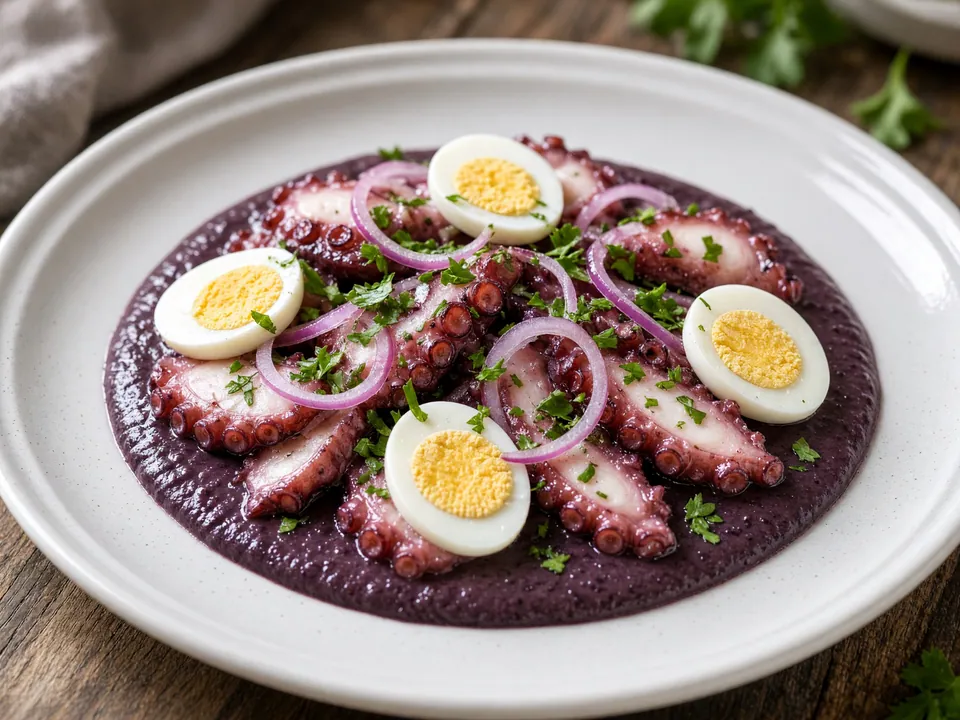
Pulpo al olivo is a beloved Peruvian appetizer that combines tender octopus with a creamy olive sauce inspired by both Japanese and Mediterranean influences. Created in the 1950s by chef Humberto Sato at his Lima restaurant, it has become a classic of Nikkei cuisine. The dish features succulent octopus slices bathed in a silky sauce made from black olives, aji amarillo, and mayonnaise, delivering a perfect balance of briny, spicy, and rich flavors. It is commonly served cold as a starter at family gatherings and coastal restaurants throughout Peru.
Peruvian Octopus with Olive Sauce (Pulpo al Olivo)
Pulpo al olivo
Pronounced POOL-poh ahl oh-LEE-voh
- Serves
- 4
- Prep
- 25 min
- Cook
- 1 hr
- Total
- 1 hr 25 min
- Level
- Medium
Also nut-free.
Allergens: contains egg, fish. Check labels on packaged ingredients.
Ingredients
Amounts are scaled. Cooking times and pan sizes stay the same.
Method
Rinse the octopus thoroughly under cold water. Bring a large pot of water to a boil with the bay leaf, quartered onion, peppercorns, and salt. Using tongs, dip the octopus into the boiling water for 10 seconds, lift it out, and let it cool for 30 seconds. Repeat this dipping process twice more to help tenderize it.
Lower the octopus into the simmering water, reduce heat to medium-low, and cook gently for 45-55 minutes until a knife easily pierces the thickest part of a tentacle. Do not overcook or it will become rubbery. Drain and let cool completely.
Once cool enough to handle, peel off any purplish membrane if desired (optional for tenderness) and cut the tentacles into 1/4-inch (6 mm) slices. Cut any remaining body meat into bite-size pieces. Chill the octopus in the refrigerator while preparing the sauce.
In a food processor or blender, combine the mayonnaise, pitted black olives, aji amarillo paste, lime juice, olive oil, and black pepper. Process until the mixture is smooth and creamy, scraping down the sides as needed. Taste and adjust seasoning with more salt, lime juice, or chili if desired.
Spoon a generous layer of the olive sauce onto a serving platter. Arrange the chilled octopus slices on top of the sauce in an overlapping pattern.
Drizzle a little extra olive oil over the octopus and sprinkle with chopped cilantro or parsley. Garnish with thin slices of hard-boiled egg and the drained red onion rings if using.
Serve immediately while the octopus is cold and the sauce is silky.
Regional variants
Some modern versions incorporate avocado slices or serve the octopus warm on a bed of mashed sweet potato. In some Lima restaurants a touch of soy sauce is added to the olive sauce to deepen the Nikkei influence.
Cook's notes
- If using frozen octopus, thaw it completely in the refrigerator before cooking.
- For the most tender results, freeze the fresh octopus for 24 hours before cooking or use the repeated dipping method described.
- Botija olives give the most authentic Peruvian flavor, but high-quality Kalamata olives work very well as a substitute.
Serve with
Crusty bread, chilled white wine, or Pisco sour
Make ahead and storage
The octopus can be cooked and the sauce prepared up to 2 days ahead and stored separately in the refrigerator. Assemble just before serving.