Basque Piperade (Piperade)
Piperade Say it: pee-peh-RAHD
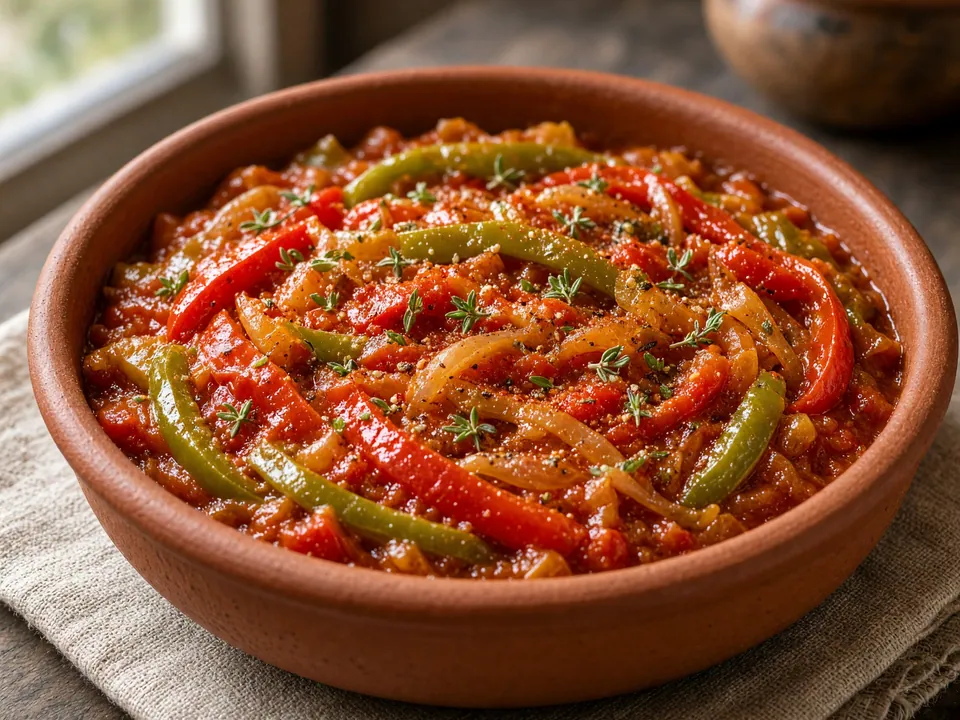
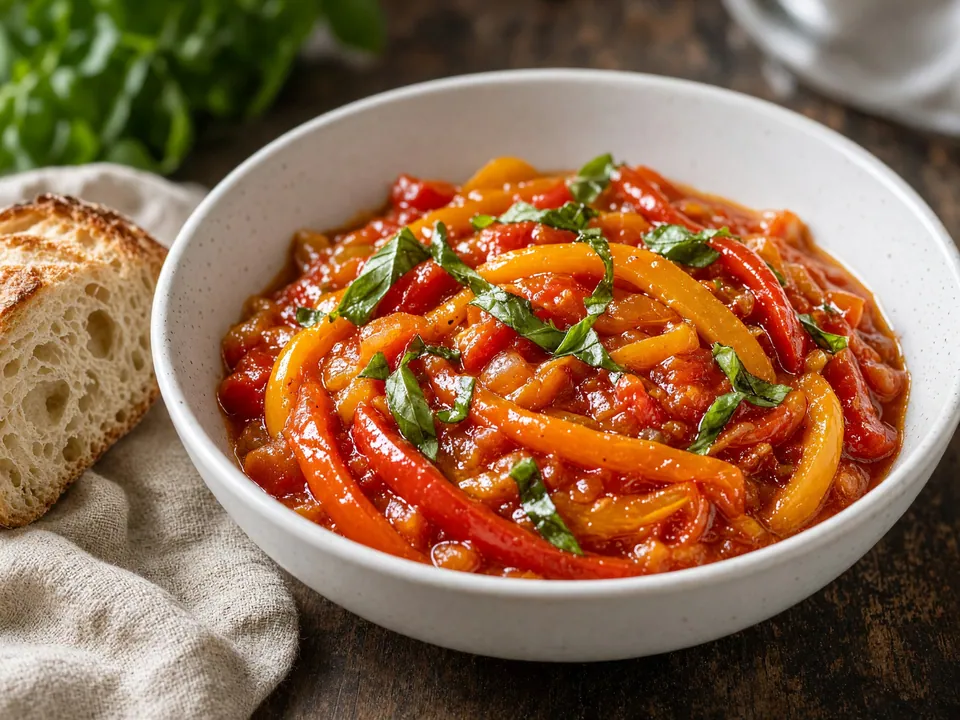
Piperade is a vibrant Basque vegetable stew from the French Basque Country made with sweet peppers, onions, and ripe tomatoes gently simmered with the region’s signature Espelette chili. Bright, slightly sweet, and gently spicy, it captures the sunny flavors of the Pyrenees. Traditionally served as a side dish, it is often enriched at home with scrambled eggs or slices of Bayonne ham, making it a versatile favorite for both everyday meals and festive tables.
Basque Piperade (Piperade)
Piperade
Pronounced pee-peh-RAHD
- Serves
- 4
- Prep
- 20 min
- Cook
- 45 min
- Total
- 1 hr 5 min
- Level
- Easy
Also nut-free and egg-free.
Allergens: none of the major allergens in the listed ingredients. Check labels on packaged ingredients.
Ingredients
Amounts are scaled. Cooking times and pan sizes stay the same.
Method
Heat the olive oil in a large, heavy skillet or Dutch oven over medium heat.
Add the sliced onions and cook, stirring occasionally, until soft and translucent, about 8 minutes.
Stir in the sliced peppers and cook for 10–12 minutes until they begin to soften but still hold their shape.
Add the minced garlic, piment d'Espelette, bay leaf, and thyme; cook for 1 minute until fragrant.
Add the chopped tomatoes with their juices, salt, and black pepper. Stir well.
Reduce heat to low, cover partially, and simmer gently for 25–30 minutes, stirring occasionally, until the vegetables are very soft and the sauce has thickened.
Taste and adjust seasoning. Remove the bay leaf before serving.
For the classic Basque touch, make 4 small wells in the hot piperade, crack in eggs, cover, and cook until the whites are set for a simple piperade aux œufs.
Regional variants
In some Basque households a handful of thinly sliced Bayonne or Serrano ham is sautéed with the onions for a meaty version. Modern cooks sometimes finish the dish with chopped fresh herbs or serve it alongside grilled fish or roasted chicken.
Cook's notes
- Use the best ripe summer tomatoes you can find; canned San Marzano tomatoes work well in winter.
- Piperade tastes even better the next day after the flavors have melded; reheat gently on the stovetop.
- Adjust the heat level by increasing or decreasing the amount of piment d'Espelette to suit your taste.
Serve with
Crusty bread, fried or scrambled eggs, or thin slices of Bayonne ham
Make ahead and storage
Can be made up to 3 days ahead and refrigerated; reheats beautifully on the stovetop with a splash of water if needed.