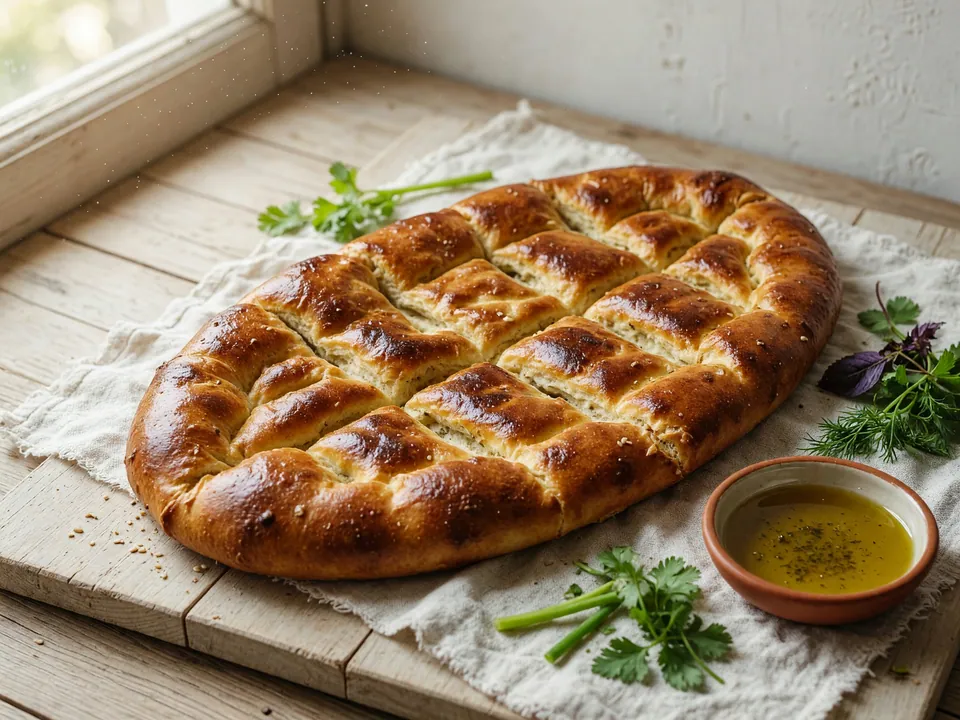
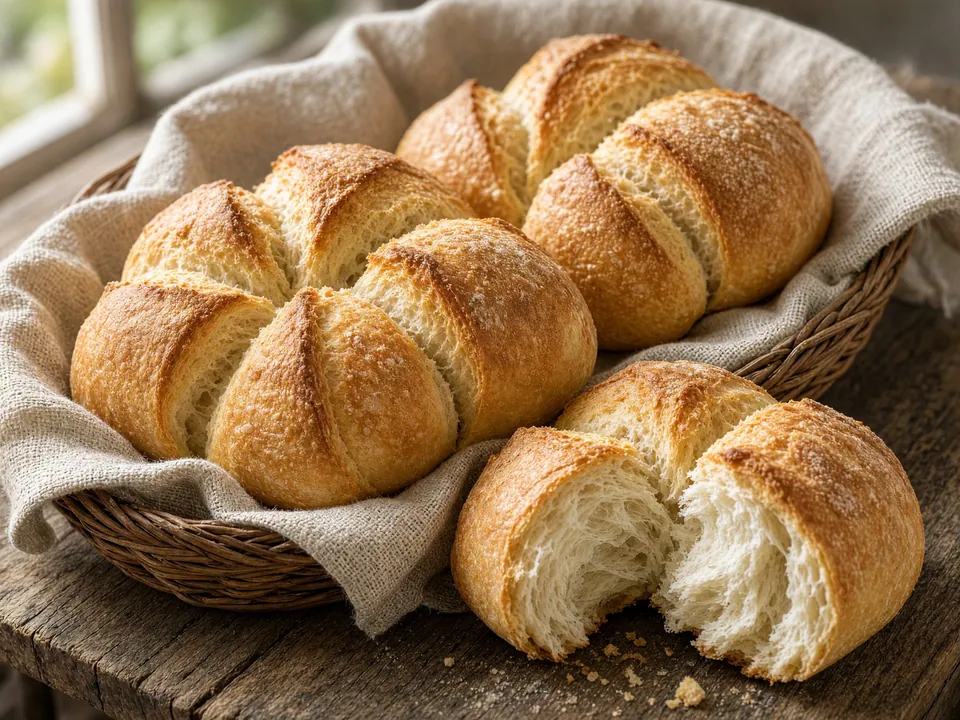
Galician Country Bread (Pan Gallego)
Pan galego Say it: pahn gah-LEH-goh
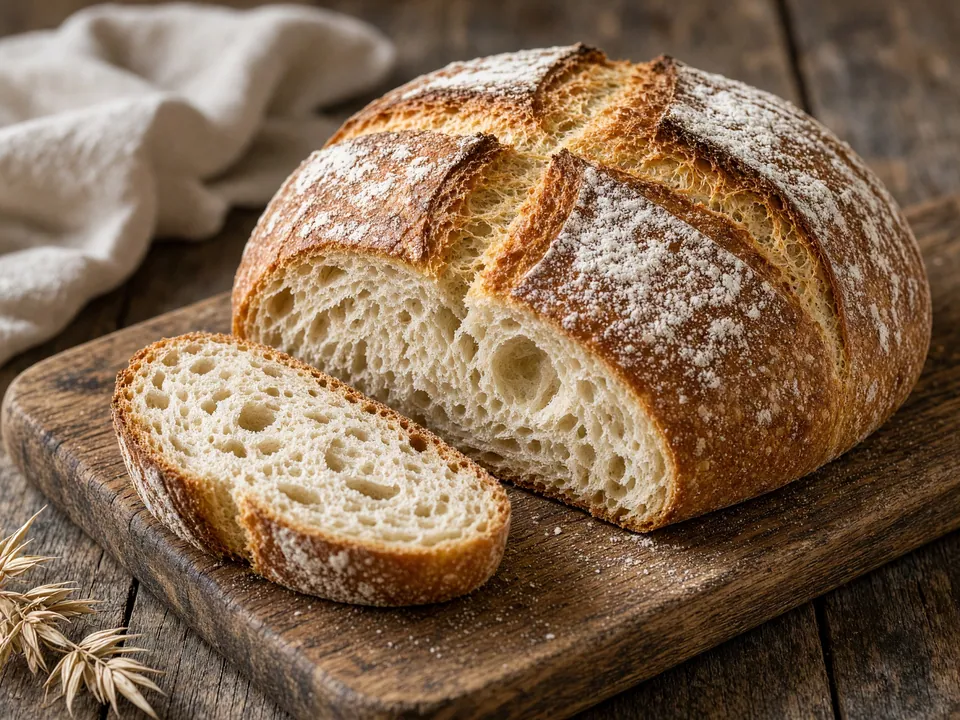
Pan gallego is a large, rustic country bread from Galicia in northwestern Spain. It is the everyday loaf of the region, baked in rounds or long ovals with a thick, crackling crust and a moist, open crumb. Inside, the flavor is clean and wheaty with a gentle tang from a long rise. Galicians eat it with meals, cheese, cured meats, and stews, and it is prized for staying fresh for a day or two.
Galician Country Bread (Pan Gallego)
Pan galego
Pronounced pahn gah-LEH-goh
- Serves
- 4
- Prep
- 25 min
- Cook
- 45 min
- Total
- 1 hr 10 min
- Level
- Medium
Also nut-free and egg-free.
Allergens: contains gluten. Check labels on packaged ingredients.
Ingredients
Amounts are scaled. Cooking times and pan sizes stay the same.
Dough
Method
In a large bowl, whisk the flour, yeast, and salt until evenly combined. Pour in the water and mix with a wooden spoon until a shaggy dough forms, then turn out onto a lightly floured counter.
Knead for 8–10 minutes, until the dough is smooth, elastic, and only slightly tacky; it should spring back when pressed. If it sticks, add flour a tablespoon at a time, but keep the dough soft.
Shape the dough into a ball, place in a lightly oiled bowl, cover, and let rise in a warm spot for 1 1/2–2 hours, until doubled in size.
Turn the dough out, gently deflate, and shape into a tight round or oval. Place seam-side up in a floured proofing basket or a bowl lined with a floured kitchen towel.
Cover and proof for 45–60 minutes, until the dough looks puffed and a floured finger pressed into the side springs back slowly. Meanwhile, heat the oven to 475°F (245°C) with a Dutch oven or baking stone inside.
Turn the loaf seam-side down onto parchment paper. Dust with flour and score the top with a cross or one long slash, about 1/2 inch (1 cm) deep.
Carefully lower the loaf into the hot Dutch oven, cover, and bake for 20 minutes. Remove the lid, reduce the oven to 450°F (230°C), and bake 20–25 minutes more, until deep golden brown and the loaf sounds hollow when tapped.
Transfer to a wire rack and cool for at least 1 hour before slicing, so the crumb sets.
Regional variant: Pan de Cea
In Cea, Ourense, the loaf is traditionally made with a sourdough starter rather than instant yeast, given a longer fermentation, and shaped as a round with a deep cross score. To adapt this recipe, replace the yeast with 1 cup (240 g) active 100% hydration sourdough starter, reduce the flour to 3 1/2 cups (440 g) and water to 1 1/4 cups (300 ml), and let the dough rise 4–6 hours before shaping.
Cook's notes
- Let the baked loaf cool fully before cutting; a hot loaf can taste gummy.
- For a darker, blistered crust, bake the uncovered loaf 5 minutes longer, watching closely.
- No Dutch oven: bake on a preheated baking stone or heavy tray and put a pan of boiling water on the oven floor for steam.
Serve with
Serve with Galician cheese such as tetilla, cured ham, or olive oil; it is also the everyday bread for stews and soups.
Make ahead and storage
Best the day it is baked. Keep cut-side down at room temperature for 1–2 days, or freeze whole or sliced for up to 1 month; refresh in a hot oven.