Lebanese Clotted Cream (Ashta)
عشطة AshtaSay it: ASH-tah
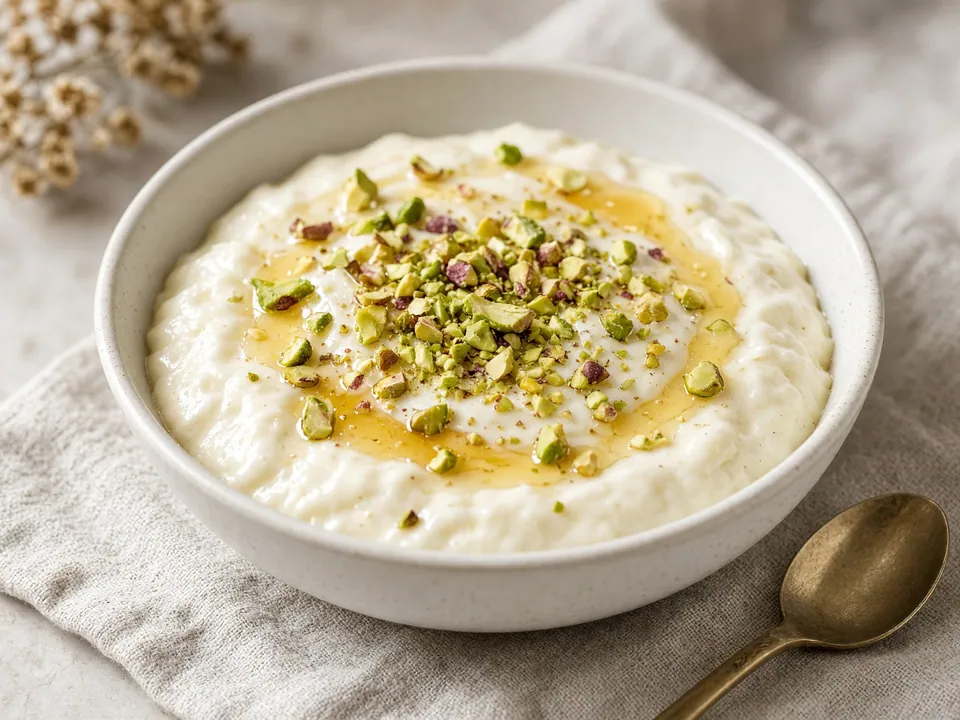
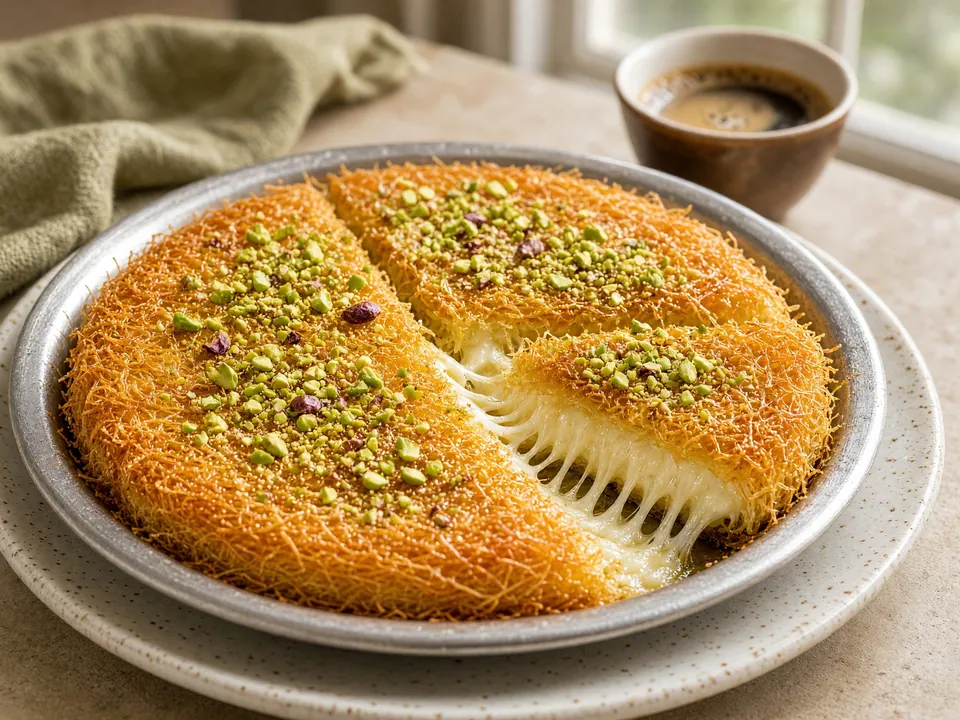
Ashta is Lebanon’s silky clotted cream, a gently set dessert made from milk and cream touched with lemon and orange blossom water. It is spooned into small bowls and finished with honey and pistachios, or used to fill Lebanese sweets such as knefeh. The texture is rich but light, with a faint floral perfume and a clean, milky sweetness. Making it at home is a slow, simple simmer that rewards patience with a soft, spoonable cream.
Lebanese Clotted Cream (Ashta)
عشطة, Ashta
Pronounced ASH-tah
- Serves
- 4
- Prep
- 10 min
- Cook
- 45 min
- Total
- 55 min
- Level
- Medium
Also egg-free.
Allergens: contains milk, nuts. Check labels on packaged ingredients.
Ingredients
Amounts are scaled. Cooking times and pan sizes stay the same.
For the ashta
For serving
Method
Pour the milk, cream, and sugar into a heavy-bottomed saucepan. Warm over medium-low heat, stirring often, until the sugar dissolves and small bubbles ring the edge, about 185°F (85°C); do not let it boil.
Stir in the lemon juice gently, once or twice only. Reduce the heat to the lowest setting and keep the mixture at a bare simmer, uncovered, for 35–45 minutes, stirring every 5 minutes and skimming off the foam that rises.
Simmer until the mixture has reduced by about one-third, to roughly 3 cups (720 ml), and coats the back of a spoon; it should look like thin custard with a few soft flecks, not vigorous curds.
Remove from the heat and stir in the orange blossom water. Let the ashta cool in the pan for 10 minutes, then pour into a serving bowl or four small dishes.
Cool to room temperature, then cover and refrigerate for at least 4 hours, until set and cold. The surface should be softly set and a spoon should leave a gentle mound.
Just before serving, scatter the chopped pistachios over the top and drizzle with honey. Serve cold.
Regional variants
Some cooks add a few drops of rose water along with the orange blossom water, or serve ashta with fresh fruit. In Lebanon it is also used as a filling for knefeh and mafroukeh.
Cook's notes
- Keep the heat low after adding lemon: a hard boil can make the cream grainy rather than silky.
- If the ashta separates in the fridge, stir it gently before serving; small curds are normal in the traditional acid-set method.
- Use a wide heavy pan so the milk reduces evenly without scorching.
Serve with
Honey, chopped pistachios, and small glasses of Lebanese tea or coffee.
Make ahead and storage
Store covered in the refrigerator for up to 3 days; serve cold and stir gently if any liquid separates.