Linguiça filipina (Longganisa)
Longganisa Diga: long-gah-NEE-sah
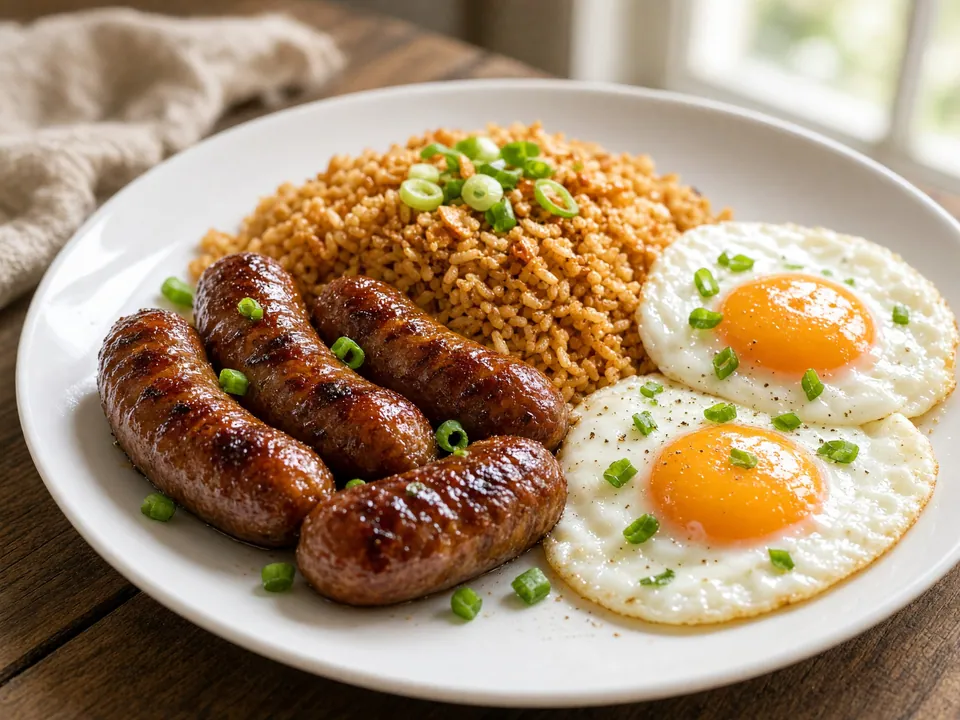
Longganisa são as icônicas linguiças de porco doces e alhosas das Filipinas. Encontradas em mesas de café da manhã em todo o país, elas formam o coração da refeição clássica silog ao lado do sinangag (arroz frito com alho) e ovos fritos. O estilo mais difundido é avermelhado graças ao urucum, agradavelmente doce pelo açúcar, azedinho pelo vinagre e carregado de alho. Esse equilíbrio cria um sabor distintamente filipino que o diferencia de outras linguiças curadas ao redor do mundo.
Linguiça filipina (Longganisa)
Longganisa
Pronúncia long-gah-NEE-sah
- Rende
- 6
- Preparação
- 30 min
- Cozimento
- 20 min
- Total
- 50 min
- Nível
- Médio
Também sem nozes e sem ovos.
Alergênicos: nenhum dos principais alergênicos nos ingredientes listados. Verifique os rótulos dos ingredientes embalados.
Ingredientes
As quantidades foram ajustadas. Tempos de cozimento e tamanhos de formas permanecem os mesmos.
Modo de preparo
Combine the ground pork, brown sugar, vinegar, minced garlic, salt, black pepper, annatto powder, and curing salt (if using) in a large bowl. Mix thoroughly with your hands until the mixture becomes sticky and the ingredients are evenly distributed, about 5 minutes.
Cover the bowl and refrigerate the mixture for at least 4 hours or overnight to allow the flavors to meld.
If using hog casings, rinse them well and soak in water. For the traditional skinless Filipino style, prepare 4-inch (10 cm) squares of food-safe plastic film or wax paper.
Divide the meat mixture into 20–24 portions. For skinless longganisa, place each portion on a square of plastic, roll tightly into a log shape, and twist the ends to seal. For cased sausages, stuff the mixture into the hog casings and twist into 4-inch (10 cm) links.
Refrigerate the formed sausages for another 2 hours or freeze for 30 minutes to firm up before cooking.
To cook, heat 2 tablespoons of oil in a large skillet over medium heat. Add the sausages (remove plastic if using skinless) and fry until golden brown on all sides, about 8–10 minutes.
Add 1/4 cup (60 ml) water to the pan, cover, and simmer for 5 minutes until the internal temperature reaches 160°F (71°C) and the sausages are fully cooked through.
Uncover and continue cooking until the water evaporates and the sausages develop a caramelized, slightly sticky exterior, 3–5 minutes more.
Variantes regionais
Vigan longganisa is garlicky and savory with minimal sugar, while Lucban longganisa uses oregano and is chunkier. Chorizo de Cebu is shorter, sweeter, and often smoked.
Notas do cozinheiro
- The curing salt gives the traditional reddish color and helps with preservation; omit it if you plan to eat the sausages within a few days.
- Adjust the sugar to your taste—some regions prefer it sweeter while others lean more savory.
- Uncooked longganisa can be frozen for up to 3 months; thaw overnight in the refrigerator before cooking.
Sirva com
Garlic fried rice (sinangag), fried eggs sunny-side up, and a side of vinegar dipping sauce.
Antecipe e armazenamento
Uncooked sausages keep in the refrigerator for 3 days or can be frozen for up to 3 months. Cooked sausages reheat well in a skillet with a splash of water.