Sweet and Sour Spare Ribs (Tángcù Páigǔ)
糖醋排骨 tángcù páigǔSay it: tahng-tsoo pie-goo
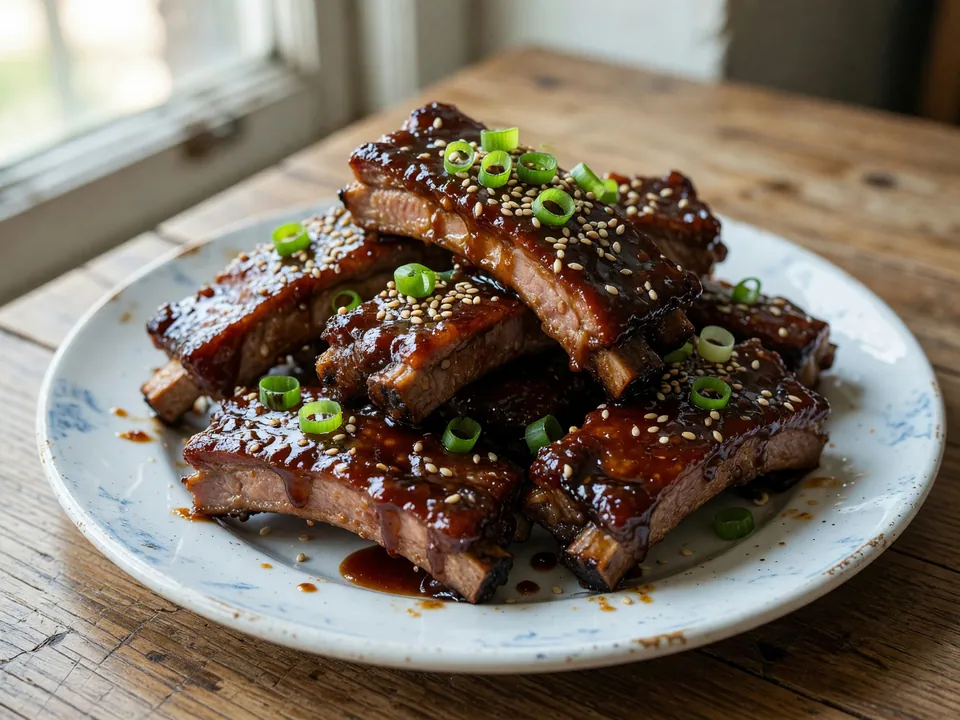
Once these tender spare ribs coated in a glossy sweet-and-sour glaze hit the table, the first bite delivers an irresistible contrast of deep caramel richness and bright black-vinegar tang that keeps everyone reaching for seconds. This Shanghai-style preparation starts by blanching the ribs then building a mahogany sauce from caramelized sugar and Chinkiang vinegar, creating sticky, finger-licking pieces without any ketchup.
Sweet and Sour Spare Ribs (Tángcù Páigǔ)
糖醋排骨, tángcù páigǔ
Pronounced tahng-tsoo pie-goo
- Serves
- 3
- Prep
- 30 min
- Cook
- 40 min
- Total
- 1 hr 10 min
- Level
- Medium
Also nut-free and egg-free.
Allergens: contains gluten, soy, sesame. Check labels on packaged ingredients.
Ingredients
Amounts are scaled. Cooking times and pan sizes stay the same.
For blanching
For the sauce
For garnish
Method
Place the ribs inside a wok or large pot and pour in cold water until fully submerged. Drop in the ginger slices, scallion segments, and Shaoxing wine. Raise the heat to high and boil for 2–3 minutes while removing any surface foam that appears. Pour everything into a colander, rinse the ribs with warm water, and dry them thoroughly using paper towels.
Heat a clean wok on low and pour in the oil along with the crushed rock sugar. Stir continuously for 3–4 minutes until the sugar completely dissolves and reaches a rich amber to reddish-brown shade; remove from heat immediately if any smoke appears.
Toss the thoroughly dried ribs into the caramelized sugar mixture and cook over medium heat while stirring for about 2 minutes so each piece becomes evenly coated and develops a shiny reddish-brown surface.
Pour in the light soy sauce together with the initial 3 tablespoons of black vinegar and continue stir-frying for 1 minute. Include the star anise if desired, then add hot water until the ribs are barely covered (roughly 1 1/2 cups / 360 ml). Bring the liquid to a gentle simmer, place a lid on top, and maintain the lowest heat setting for 25 minutes, turning the ribs once or twice until they become tender yet hold their shape.
Take off the cover, raise the temperature to medium, and allow the sauce to boil and thicken while stirring frequently for 8–10 minutes until it turns glossy and coats the ribs completely. Stay attentive toward the end to avoid scorching the sugar.
Switch off the heat and mix in the remaining 1 tablespoon of black vinegar right before plating to preserve its fresh aroma. Move the ribs to a serving dish, scatter the sliced scallion and toasted sesame seeds on top, and present the dish warm or at room temperature.
Regional variant: Wuxi Sweet and Sour Ribs (Wúxī tángcù páigǔ)
Prepare the Wuxi style using identical rib sections yet raise the rock sugar amount to approximately 1/3 cup (65 g) and swap in dark soy sauce for the light variety. Simmer the ribs inside the sauce for 40–50 minutes until they reach maximum tenderness, then reduce the liquid into an almost candied coating. These ribs are classically presented cold or at room temperature and occasionally include a bit of red yeast rice to intensify the crimson hue.
Cook's notes
- Caramelizing the sugar demands constant attention on the lowest flame possible; if smoke begins rising, immediately lift the wok away from the heat for several seconds to prevent burning.
- Removing all moisture from the blanched ribs is essential because leftover water causes dangerous splattering when it meets the hot caramel and stops the pieces from developing uniform color.
- When Chinkiang black vinegar is unavailable, blend two parts balsamic vinegar with one part rice vinegar to achieve comparable sweet and tangy layers.
Serve with
Steamed jasmine rice and a side of stir-fried greens like bok choy or gai lan.
Make ahead and storage
Store cooled ribs in the refrigerator for up to 3 days; reheat gently in a pan with a splash of water, or enjoy cold.