Bengali Prawn Coconut Curry (Chingri Malai Curry)
চিংড়ি মালাই কারি Chingri Malai CurrySay it: CHING-ree mah-LYE kuh-ree
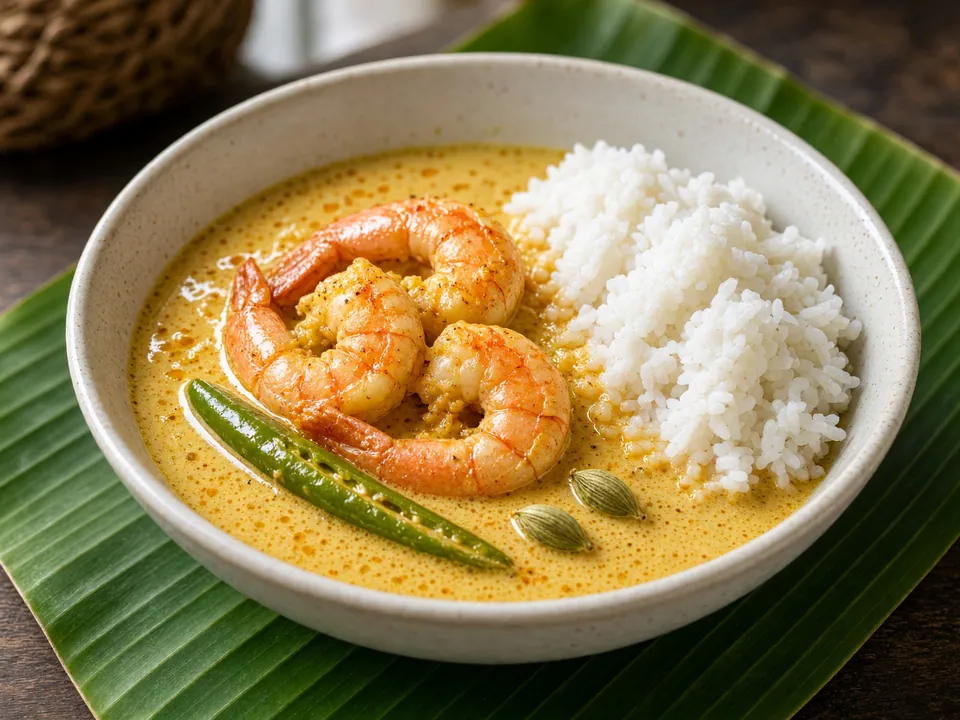
Chingri malai curry is Bengal's gentlest celebration of prawns: plump prawns simmered in a pale, silky coconut-milk gravy scented with ginger, green cardamom and a whisper of garam masala. Despite the name — malai means cream — the traditional gravy is built on coconut, with a spoonful of ghee stirred in at the end for richness. It is festive food, cooked for weddings, family gatherings and long Sunday lunches, and it tastes mild, fragrant and faintly sweet against the sweetness of the prawns.
Bengali Prawn Coconut Curry (Chingri Malai Curry)
চিংড়ি মালাই কারি, Chingri Malai Curry
Pronounced CHING-ree mah-LYE kuh-ree
- Serves
- 4
- Prep
- 20 min
- Cook
- 30 min
- Total
- 50 min
- Level
- Medium
Also nut-free and egg-free.
Allergens: contains shellfish, milk. Check labels on packaged ingredients.
Ingredients
Amounts are scaled. Cooking times and pan sizes stay the same.
For the prawns
For the curry
Method
Pat the prawns dry with kitchen paper and rub them with the turmeric and salt. Leave them to sit for 10 minutes while you prepare everything else.
Heat 2 tbsp (30 ml) of the ghee or mustard oil in a wide pan over medium-high heat. Sear the prawns for about 1 minute per side, until they turn pink and curl, then lift them out onto a plate — they will finish cooking in the gravy.
Lower the heat to medium, add the remaining 1 tbsp (15 ml) ghee and drop in the bay leaves, cardamom, cloves and cinnamon. Sizzle for 20–30 seconds, until the whole spices smell warm and fragrant and the bay leaf darkens slightly.
Add the onion paste, ginger paste and garlic paste. Cook for 8–10 minutes, stirring often and scraping the base of the pan, until the raw smell is gone, the paste turns pale golden and the oil begins to separate at the edges.
Stir in the turmeric and chili powder with a splash of water to stop them scorching, and cook for 1 minute until the masala deepens in colour and thickens around the spoon.
Pour in the coconut milk, add the sugar and a good pinch of salt, and bring to a gentle simmer. Cook for 5–6 minutes, stirring now and then, until the gravy coats the back of a spoon — keep the heat low so it does not split.
Return the prawns and their resting juices to the pan with the green chilies. Simmer gently for 3–4 minutes, until the prawns are just opaque through the centre and the gravy clings to them.
Stir in the coconut cream and garam masala and cook for 1 minute more, then drizzle over the finishing ghee. Take the pan off the heat and let it rest for 5 minutes before serving, so the flavours settle.
Regional variants
Many Bengali cooks use pungent mustard oil instead of ghee for a sharper, more old-fashioned flavour, and large freshwater golda or bagda prawns, or even lobster, are used for special occasions. A restaurant-style version adds a spoon of thick coconut cream and extra ghee just before serving.
Cook's notes
- Do not boil the curry hard once the coconut milk goes in — a bare simmer keeps the gravy smooth and prevents it from splitting.
- Prawns overcook in seconds; pull them off the heat the moment they are opaque so they stay sweet and springy.
- Use thick, unsweetened coconut milk rather than a light or watery brand, or the gravy will taste thin.
Serve with
Steamed gobindobhog or basmati rice, or luchi puris; a wedge of lime on the side.
Make ahead and storage
Best eaten straight away, but it can be cooked a few hours ahead and reheated very gently over low heat with a splash of water.