Okinawan Braised Pork Belly (Rafute)
ラフテー RafuteSay it: rah-FOO-teh
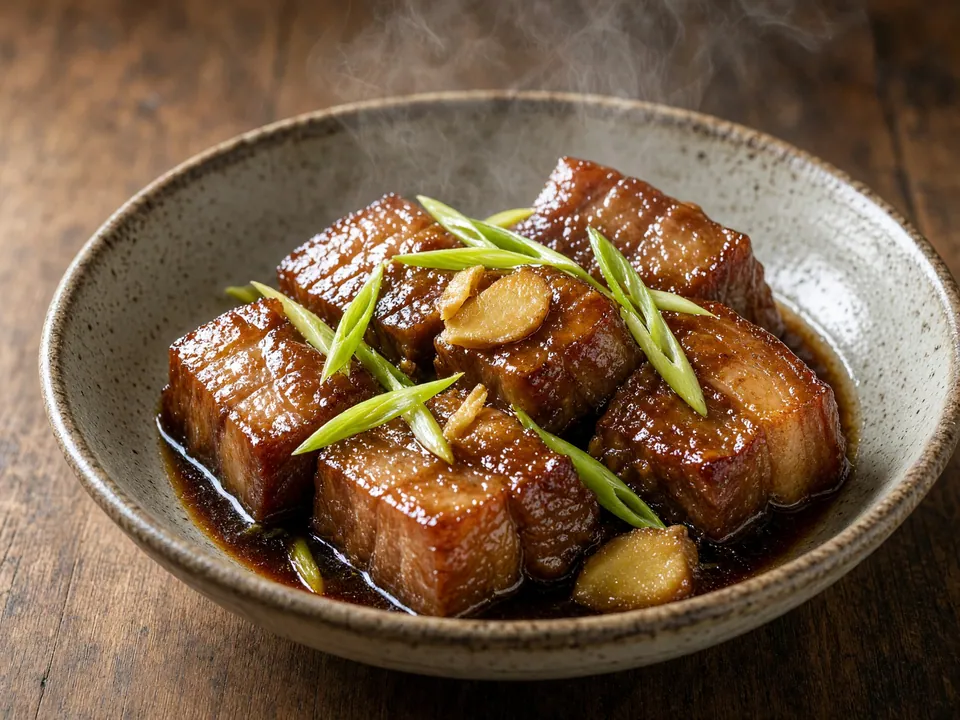
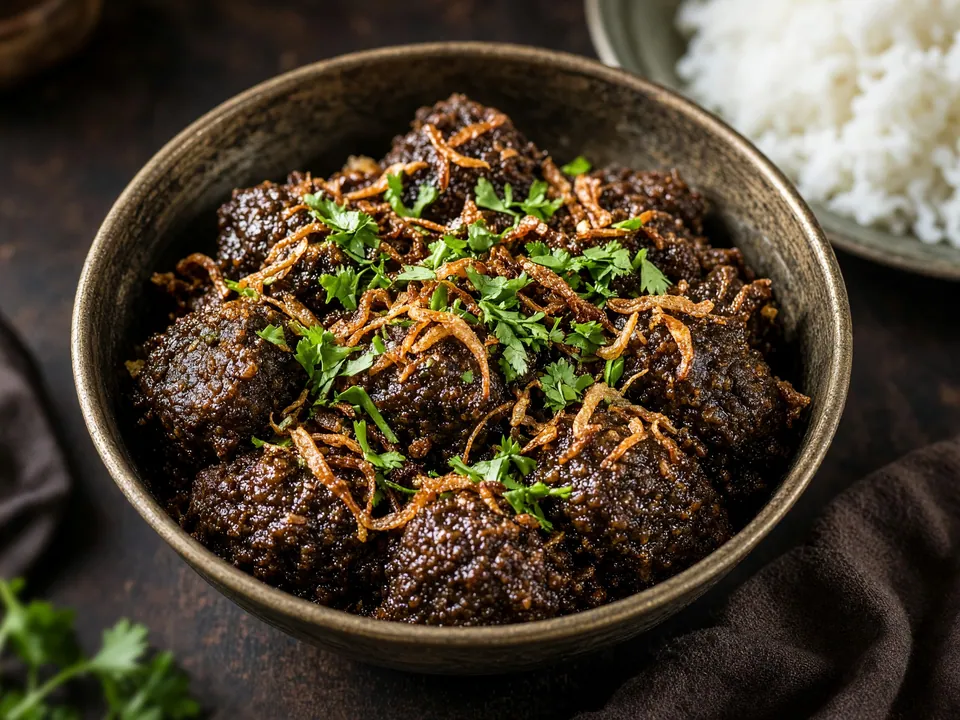
Rafute is a classic Okinawan dish of pork belly slowly simmered until meltingly tender in a sweet-savory broth of soy sauce, awamori (Okinawan rice liquor), sugar, and ginger. It reflects the strong influence of Chinese cooking on the islands and was historically prepared for special occasions and festivals. The long braise transforms the rich pork into silky, deeply flavored bites that are a beloved part of Okinawan home cooking and izakaya menus.
Okinawan Braised Pork Belly (Rafute)
ラフテー, Rafute
Pronounced rah-FOO-teh
- Serves
- 4
- Prep
- 15 min
- Cook
- 2 hr 30 min
- Total
- 2 hr 45 min
- Level
- Medium
Also nut-free and egg-free.
Allergens: contains gluten, soy. Check labels on packaged ingredients.
Ingredients
Amounts are scaled. Cooking times and pan sizes stay the same.
Method
Bring a large pot of water to a boil. Add the pork belly and blanch for 5 minutes to remove impurities. Drain and rinse under cold water.
Cut the blanched pork belly into 2-inch (5 cm) cubes. Place the cubes in a clean heavy pot or Dutch oven.
Add the 6 cups (1.4 L) water, awamori, brown sugar, soy sauce, mirin, ginger slices, and smashed garlic to the pot. Stir gently to combine.
Bring the mixture to a boil over medium-high heat, then reduce to a very low simmer. Cover with a drop-lid (or a circle of parchment paper) and simmer for 2 to 2½ hours until the pork is fork-tender and the fat is translucent.
Remove the lid and increase the heat slightly. Simmer uncovered for 15–20 minutes more, spooning the sauce over the meat occasionally, until the liquid has reduced to a glossy glaze.
Turn off the heat and let the pork rest in the sauce for 10 minutes before serving. Skim any excess fat from the surface if desired.
Regional variants
Some cooks add a splash of rice vinegar during the final reduction for extra brightness, or include a dried chili for subtle heat. In modern Okinawan homes it is sometimes finished with a sprinkle of sansho pepper.
Cook's notes
- Awamori gives the most authentic flavor; if unavailable, a strong shochu or decent sake works well.
- The dish tastes even better the next day after the flavors have melded; reheat gently in the sauce.
- Serve the pork in bite-size pieces with plenty of the reduced braising liquid spooned over the top.
Serve with
Steamed white rice, bitter melon stir-fry (goya champuru), and a cold Okinawan beer or awamori.
Make ahead and storage
Rafute keeps well refrigerated in its sauce for up to 4 days and freezes beautifully; reheat slowly on the stovetop.