Portugees paasbrood (Folar da Páscoa)
Folar da Páscoa Zeg het: FOH-lar dah PAHS-koh-ah
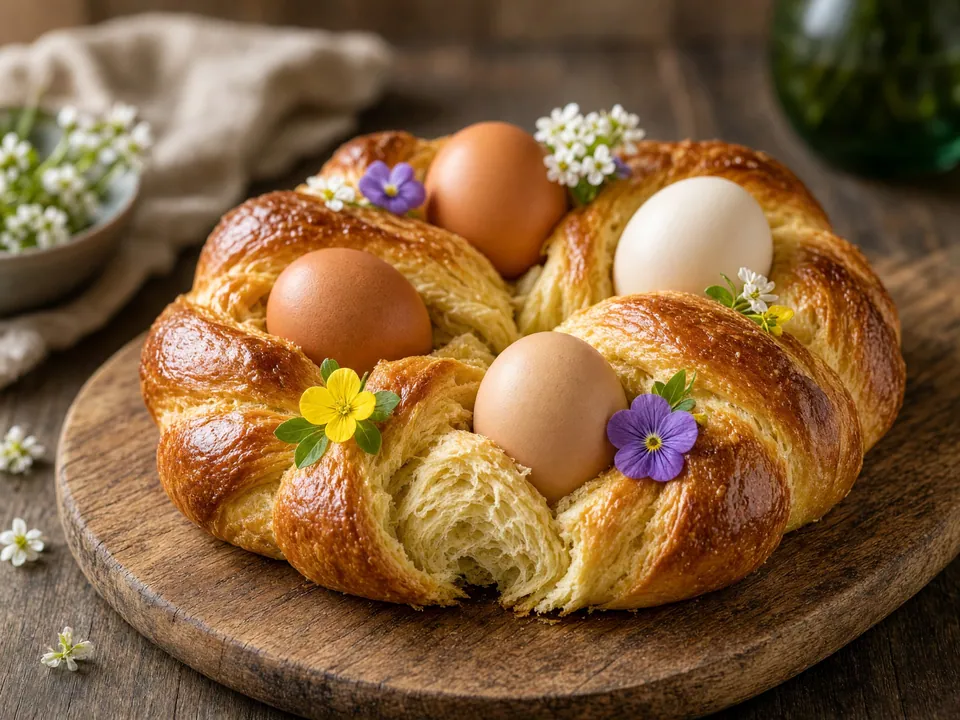
Folar da Páscoa is een traditioneel Portugees zoet brood dat tijdens de paasvieringen in het hele land wordt genoten. Zacht, licht zoet en verrijkt met boter en eieren, het wordt vaak gebakken met hele hardgekookte eieren in het deeg genesteld, wat wedergeboorte symboliseert. In de noordelijke Trás-os-Montes-regio bevat een hartige versie vlees zoals gerookte worst en ham. Families delen het brood op paaszondag, soms met een speciale zegening, waardoor het zowel een feestelijke traktatie als een betekenisvol onderdeel van de feesttafel is.
Portugees paasbrood (Folar da Páscoa)
Folar da Páscoa
Uitgesproken FOH-lar dah PAHS-koh-ah
- Voor
- 8
- Voorbereiding
- 30 min
- Bereiding
- 35 min
- Totaal
- 1 uur 5 min
- Niveau
- Gemiddeld
Ook notenvrij.
Allergenen: bevat gluten, melk, ei. Controleer etiketten op verpakte ingrediënten.
Ingrediënten
Hoeveelheden zijn aangepast. Bereidingstijden en panformaten blijven hetzelfde.
Bereiding
In a small bowl, dissolve the yeast in the warm milk with 1 teaspoon of the sugar. Let stand 5-10 minutes until foamy.
In a large mixing bowl or stand mixer, combine the remaining sugar, salt, 2 eggs, softened butter, lemon zest and anise seeds if using. Mix until smooth.
Add the yeast-milk mixture and 3½ cups (440 g) of the flour. Mix until a soft dough forms, then gradually add the remaining flour until the dough is smooth and slightly tacky but not sticky.
Knead by hand or with a dough hook for 8-10 minutes until the dough is elastic and pulls away from the sides of the bowl. Place in a lightly oiled bowl, cover and let rise in a warm spot until doubled, about 1½ hours.
Punch down the dough and divide into two equal pieces. Roll each piece into a long rope, then twist the two ropes together. Form the twisted rope into a round or oval loaf on a parchment-lined baking sheet.
Gently press the 4 whole hard-boiled eggs into the dough at even intervals, tucking them halfway in so they remain visible. Cover loosely and let rise again for 30-45 minutes until puffy.
Preheat oven to 350°F (175°C). Brush the dough generously with the egg-yolk glaze.
Bake for 30-35 minutes until the bread is deep golden brown and sounds hollow when tapped on the bottom. Cool on a wire rack before serving.
Regionale variant: Trás-os-Montes Savory Folar
Omit the sugar, lemon zest and anise. Add 1 teaspoon paprika and black pepper to the dough. Knead in 7 oz (200 g) chopped smoked Portuguese sausage (linguiça or chouriço) and 5 oz (140 g) diced cured ham or pork belly after the first rise. Shape into a round loaf without the whole eggs, brush with egg wash and bake until golden. This hearty meat-filled version is traditional in the northern Trás-os-Montes region.
Opmerkingen van de kok
- The hard-boiled eggs are traditionally left in their dyed or natural shells during baking; they become very firm but are mainly decorative and can be removed before eating.
- For best flavor, use good-quality butter and fresh lemon zest. The anise seeds give a subtle licorice note typical in many Portuguese Easter breads.
- If the dough rises too quickly in a warm kitchen, place it in the refrigerator for the first rise to develop better flavor.
Serveer met
Traditionally served with butter, cheese, or alongside Easter lamb and red wine.
Van tevoren maken en bewaren
Best eaten the day it is baked. Store leftovers in an airtight bag for up to 2 days or freeze sliced for up to 1 month; reheat gently in a low oven.