Pan de centeno islandés (Rúgbrauð)
Rúgbrauð Dilo: ROOG-browth
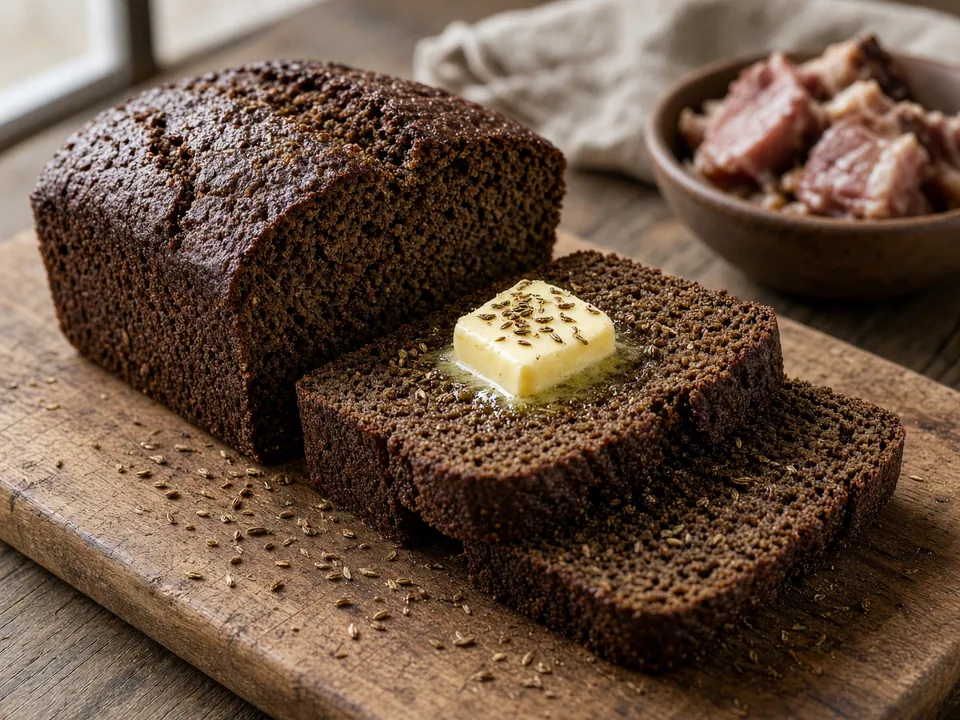
El rúgbrauð es un pan de centeno denso, oscuro y dulce que ha sido un alimento básico en las cocinas islandesas durante siglos. Tradicionalmente se hornea en una olla tapada colocada en el suelo cerca de un manantial de agua geotérmica, y sale con un color rico, casi como de chocolate, y una textura húmeda similar a un pastel. Ligeramente dulce gracias a la melaza y al centeno, se come durante todo el año, especialmente en el desayuno o con cordero ahumado y mantequilla durante la temporada navideña. Su sabor único y su miga densa lo hacen inmediatamente reconocible como una comida reconfortante islandesa.
Pan de centeno islandés (Rúgbrauð)
Rúgbrauð
Se pronuncia ROOG-browth
- Raciones
- 10
- Preparación
- 15 min
- Cocción
- 4 h
- Total
- 4 h 15 min
- Nivel
- Fácil
También sin frutos secos y sin huevo.
Alérgenos: contiene gluten, leche. Revisa las etiquetas de los ingredientes envasados.
Ingredientes
Las cantidades están ajustadas. Los tiempos de cocción y tamaños de sartén se mantienen iguales.
Preparación
Preheat the oven to 200°F (95°C). Grease a 9 × 5-inch (23 × 13 cm) loaf pan and line it with parchment paper.
In a large bowl, whisk together the rye flour, all-purpose flour, baking powder, baking soda, and salt.
In a separate bowl, combine the buttermilk, molasses, and brown sugar until the sugar dissolves.
Pour the wet ingredients into the dry ingredients and stir with a wooden spoon until a thick, sticky batter forms. Do not overmix.
Transfer the batter to the prepared loaf pan and smooth the top with a spatula. The surface will be quite wet.
Cover the pan tightly with aluminum foil, crimping the edges so steam cannot escape.
Bake on the center rack for 4 hours. The bread is done when it feels firm to the touch through the foil and a skewer inserted in the center comes out clean.
Remove from the oven, uncover, and let cool in the pan for 15 minutes before turning out onto a wire rack to cool completely.
Variantes regionales
Algunos panaderos islandeses añaden un puñado de pasas o dátiles picados a la masa para obtener una versión con fruta. Los hornos modernos han reemplazado en gran medida la cocción geotérmica, pero el método a baja temperatura y lento sigue siendo esencial.
Notas del cocinero
- The long, low-temperature bake is what gives rúgbrauð its signature dark color and moist texture; do not increase the temperature.
- Buttermilk can be replaced with 1 ½ cups (360 ml) milk plus 1 ½ Tbsp (22 ml) lemon juice or vinegar if needed.
- Store in an airtight container; the bread tastes even better the next day.
Servir con
Sliced thin and spread with butter, often paired with smoked lamb (hangikjöt), pickled herring, or cheese.
Preparación anticipada y conservación
El rúgbrauð se conserva bien hasta 5 días a temperatura ambiente en una bolsa hermética. También se congela muy bien; córtalo en rebanadas antes de congelar y tuéstalo directamente congelado.