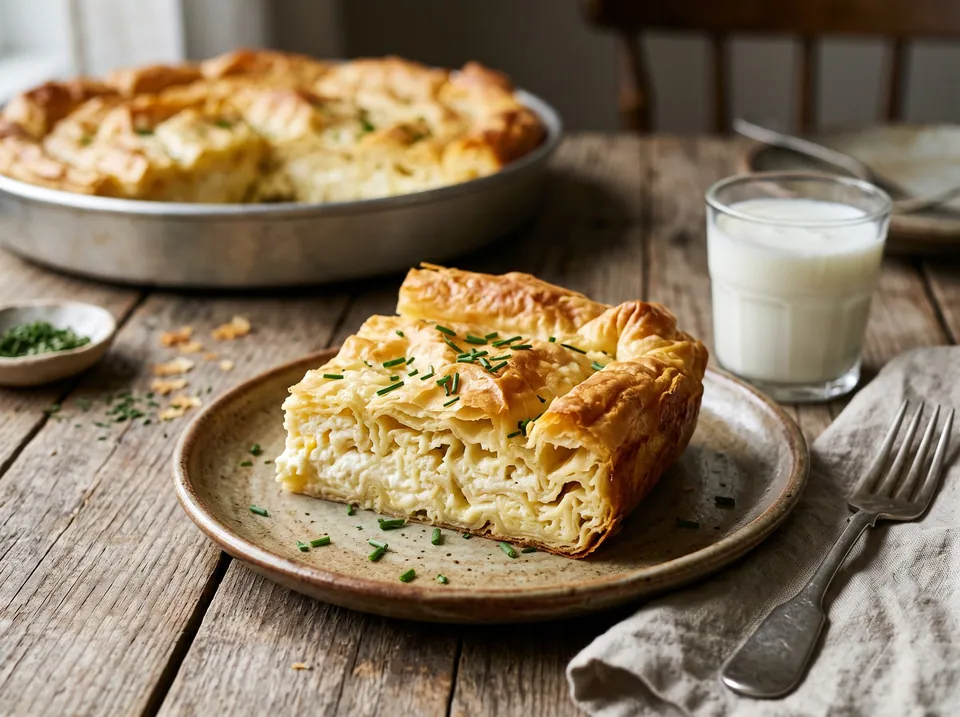
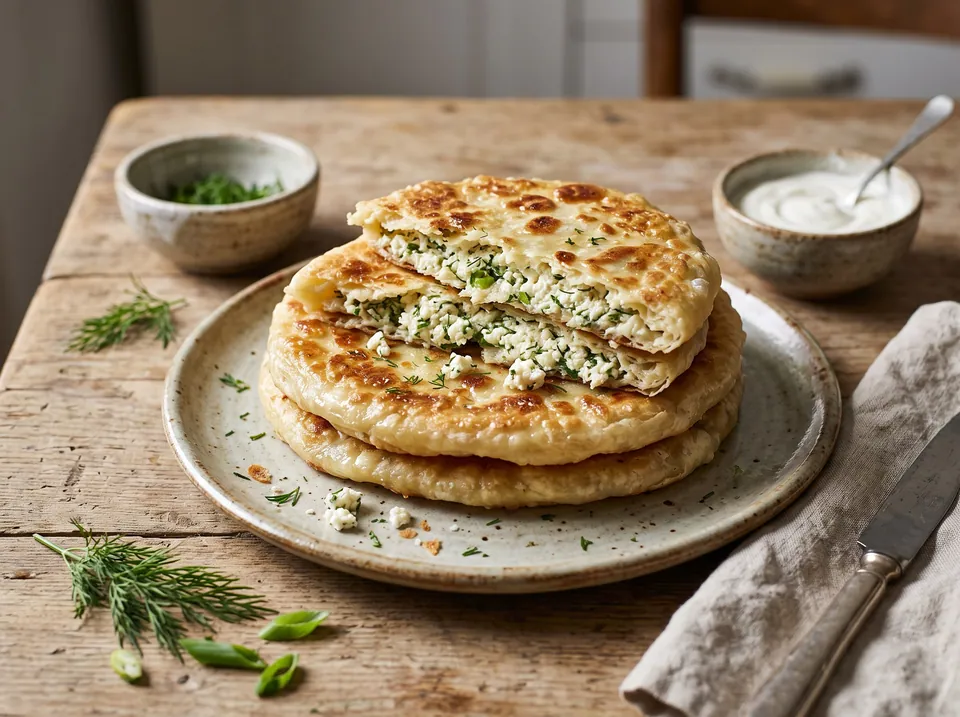
Estonian Savoury Meat Pies (Pirukad)
pirukad Say it: PEE-roo-kahd

Biting into these golden Estonian hand pies reveals a tender, faintly sweet crust giving way to a juicy, peppery blend of beef, pork, onion, dill, and hard-boiled egg. The satisfying contrast of soft yeast dough and savory filling has made pirukad a staple at gatherings, cafeterias, and casual eateries across the country. This recipe delivers a dozen portable pies using a classic minced-meat center that stays moist yet firm enough for neat handheld eating.
Estonian Savoury Meat Pies (Pirukad)
pirukad
Pronounced PEE-roo-kahd
- Serves
- 6
- Prep
- 45 min
- Cook
- 20 min
- Total
- 1 hr 5 min
- Level
- Medium
Also nut-free.
Allergens: contains gluten, milk, egg. Check labels on packaged ingredients.
Ingredients
Amounts are scaled. Cooking times and pan sizes stay the same.
Dough
Filling
Egg wash
Method
Stir together the warmed milk, instant yeast, and sugar inside a spacious bowl and allow the mixture to become bubbly over roughly 5 minutes. Blend in the egg along with the salt and softened butter until uniform, then incorporate the 3 cups of flour. Stir initially with a spoon before transferring the mass to a floured counter and kneading vigorously for 8–10 minutes until the texture turns smooth and springy; incorporate minimal additional flour solely if the dough clings excessively.
Transfer the kneaded dough into a bowl lightly coated with oil, drape a moist towel across the top, and position it in a warm area so it can expand to twice its original size during 1 to 1 1/2 hours.
Prepare the filling concurrently with the dough proofing. Warm the tablespoon of butter inside a frying pan set to medium temperature, introduce the chopped onion, and sauté while stirring until the pieces soften and acquire a pale golden hue after 5–7 minutes. Mix in the ground beef and pork together with the half-teaspoon of salt and the black pepper. Continue cooking and crumbling the meats until they lose all pink coloration and excess moisture disappears, requiring 8–10 minutes. Set the pan aside until the contents reach room temperature, then fold through the coarsely cut hard-boiled egg plus the fresh dill. Should the mixture appear overly firm, incorporate 1–2 tablespoons of beef stock or water to achieve a moist but not runny consistency.
Deflate the risen dough and portion it into 12 uniform segments of approximately 2 oz (55 g) each. Shape every segment into a compact sphere, cover all of them with a cloth, and permit them to relax for 10 minutes.
Set the oven to preheat at 375°F (190°C) while preparing two sheet pans covered with parchment.
Flatten each rested dough ball on a floured work surface into a circle measuring 4–5 inches (10–12 cm) across and roughly 1/4 inch (6 mm) thick. Deposit 1–2 tablespoons of the thoroughly cooled filling at the center of every circle. Bring one side of the dough across to enclose the filling in a semicircular form, expel trapped air, and crimp the seam securely shut. Reinforce the closure by pressing with fork tines or by twisting the rim decoratively. Arrange each pie seam-down on the lined pans, keeping 2 inches (5 cm) between them.
Drape the assembled pies lightly and allow them to puff up during a second rise of 20–30 minutes.
Whisk the egg yolk with the tablespoon of milk to create a glaze and apply it evenly over each pie surface. Place the sheets into the oven and bake for 15–18 minutes, switching their positions midway through, until the pastries develop a rich brown color and produce a hollow sound when the base is tapped.
Move the finished pies onto a cooling rack and wait a minimum of 10 minutes prior to serving them while still warm.
Regional variant: Cabbage and egg pirukad (kapsa-munapirukad)
Substitute the meat filling with roughly 4 cups (300 g) of very finely shredded cabbage. Cook the cabbage along with the onion and a small amount of caraway seeds in butter until it becomes tender and shows light browning after 10–12 minutes, then season appropriately, allow it to cool, and combine with the chopped hard-boiled egg. Proceed with filling and baking identically to the meat version; this cabbage alternative is naturally vegetarian.
Cook's notes
- Ensure the prepared meat mixture has cooled fully prior to enclosing it inside the dough; residual warmth risks melting the butter layers and complicating the sealing process.
- Seal every seam with strong pressure while eliminating internal air to stop the pies from splitting open while they bake.
- Aim for a supple yet non-sticky dough consistency; introduce extra flour sparingly by the tablespoon during kneading so the baked crust remains tender instead of becoming chewy.
Serve with
Serve warm with a cup of clear beef or chicken broth, a glass of kefir, or as part of a cold table.
Make ahead and storage
Freeze shaped, unbaked pirukad on a tray, then store in a bag for up to 2 months; bake from frozen, adding 3–5 minutes. Baked pirukad keep 2 days in an airtight container and reheat in a 350°F (175°C) oven.