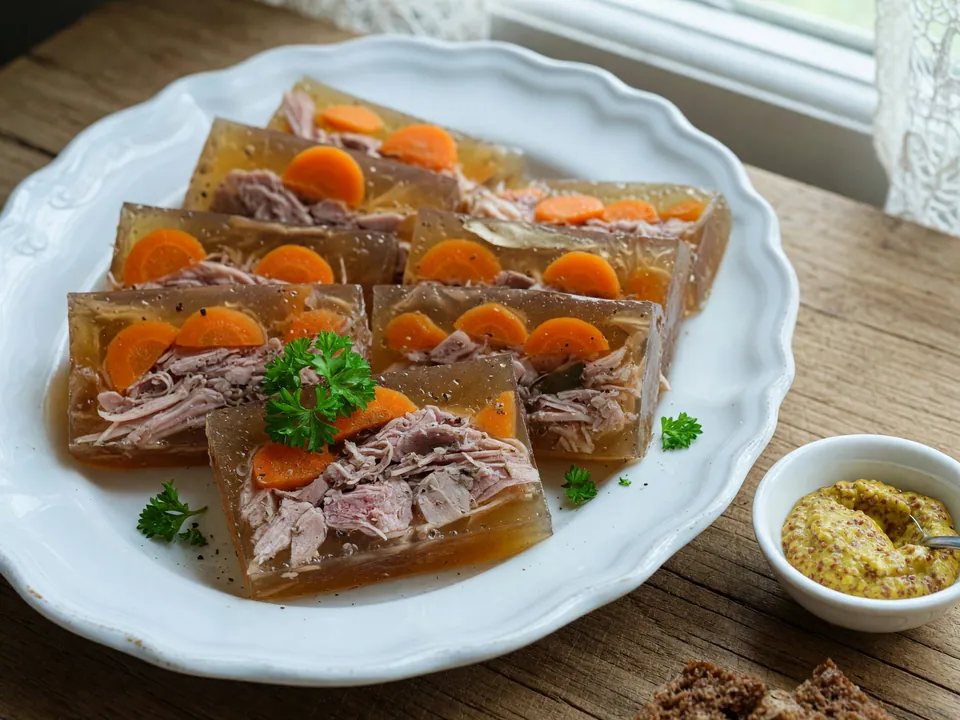
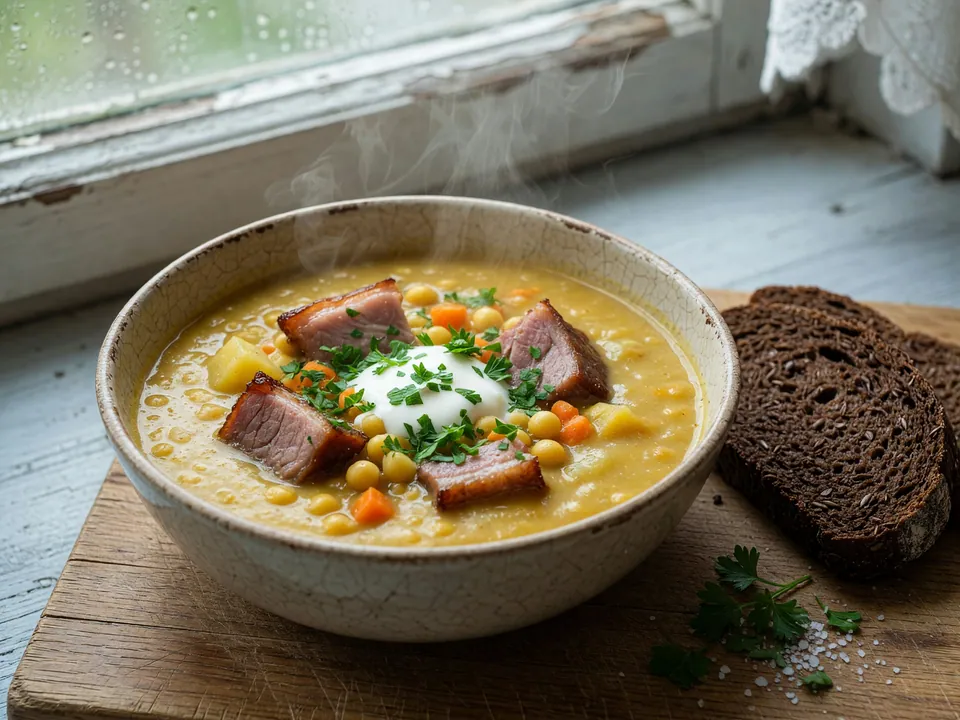
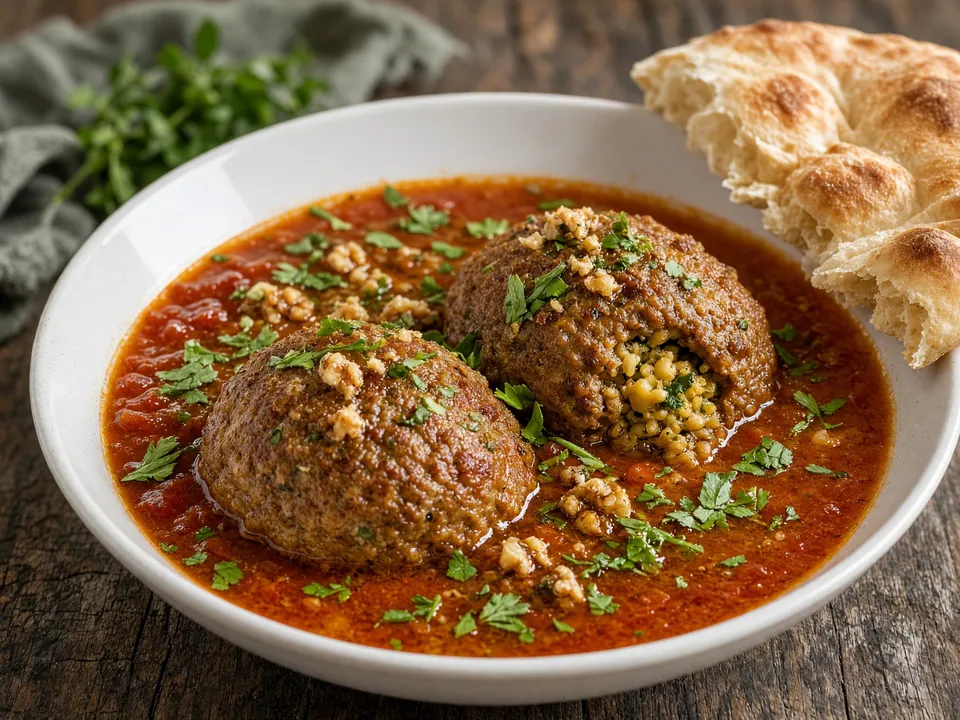
Estonian Roast Pork with Sauerkraut (Seapraad hapukapsaga)
Seapraad hapukapsaga Say it: SEH-ah-prahd HAH-poo-kahp-sah-gah
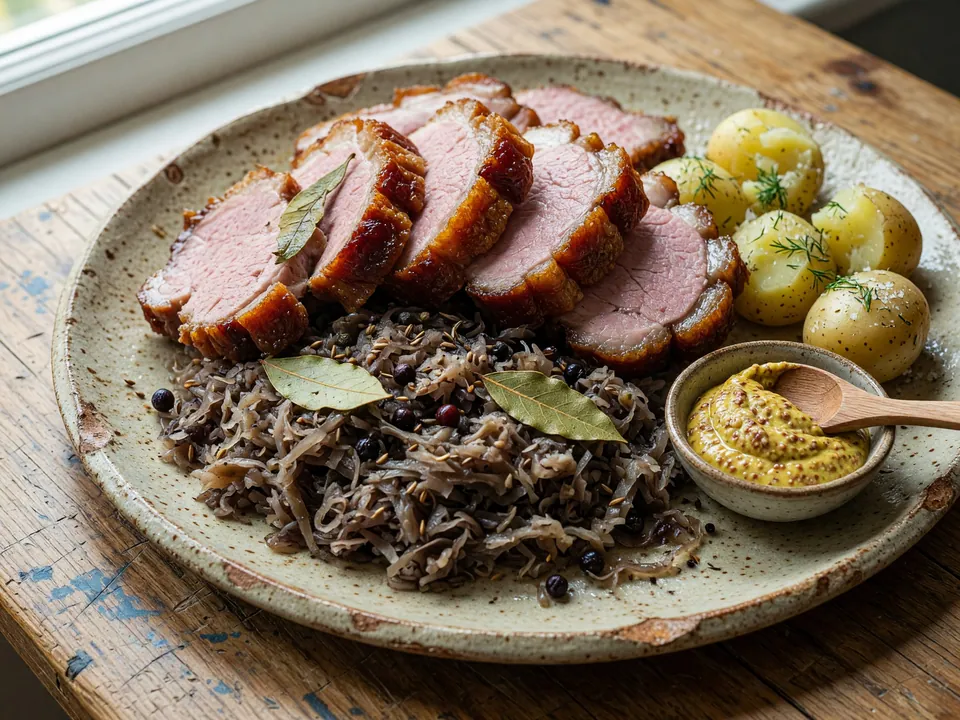
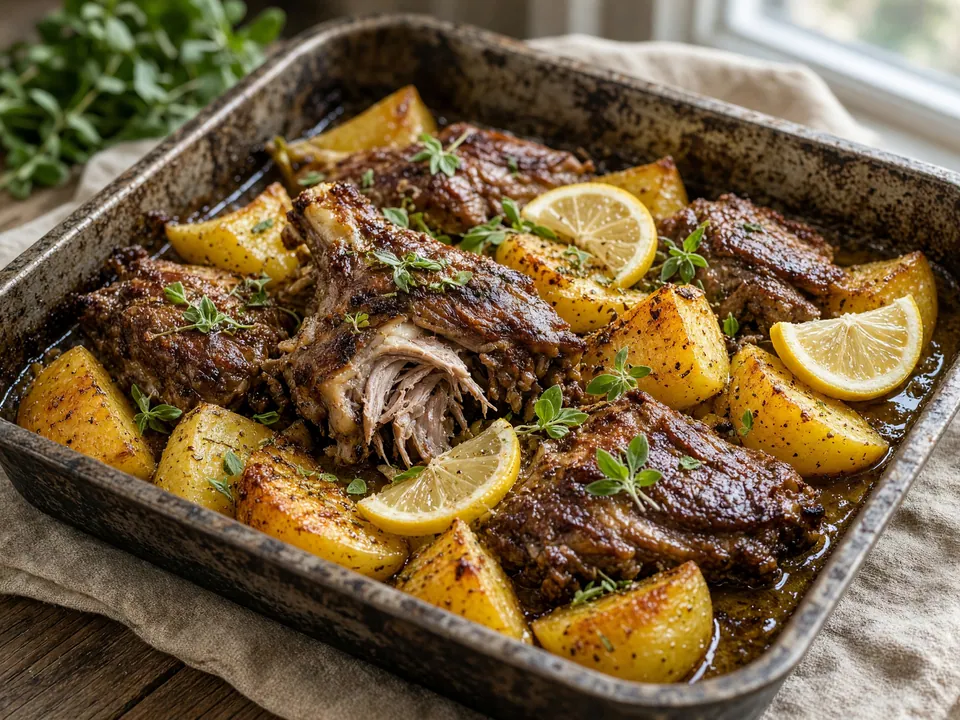
When this succulent pork emerges from the oven, the meat melts into tender shreds while the tangy sauerkraut develops a mellow sweetness that perfectly balances each forkful, creating an irresistibly cozy winter meal that comes together in one pot for effortless entertaining.
Estonian Roast Pork with Sauerkraut (Seapraad hapukapsaga)
Seapraad hapukapsaga
Pronounced SEH-ah-prahd HAH-poo-kahp-sah-gah
- Serves
- 6
- Prep
- 40 min
- Cook
- 3 hr
- Total
- 3 hr 40 min
- Level
- Medium
Also nut-free and egg-free.
Allergens: none of the major allergens in the listed ingredients. Check labels on packaged ingredients.
Ingredients
Amounts are scaled. Cooking times and pan sizes stay the same.
Pork
Sauerkraut
For serving
Method
Set the oven temperature to 350°F (175°C). Dry the pork thoroughly and season it evenly with salt and pepper on every surface. Warm 1 tbsp of lard in a heavy Dutch oven over medium-high heat, then sear the pork until it develops a rich brown crust on all sides, taking 8–10 minutes total. Transfer the meat to a separate plate.
Pour the remaining 2 tbsp of lard into the same pot, lower the heat to medium, and cook the sliced onions until they turn translucent with golden edges, about 5–7 minutes. Mix in the caraway seeds along with the bay leaves and let them sizzle briefly for half a minute.
Incorporate the sauerkraut, chosen liquid, and optional sweetener. Combine everything thoroughly and allow the mixture to reach a gentle simmer. Position the seared pork atop the vegetables with the fatty side facing upward, then secure the pot with its lid or a sheet of aluminum foil.
Place the covered pot inside the preheated oven and allow it to roast between 2.5 and 3 hours, continuing until the pork yields easily to a fork and the sauerkraut edges show caramelization. Inspect the contents midway through at the 1.5-hour mark and introduce a small amount of water if any dryness appears.
During the last 20–30 minutes of roasting, uncover the pot to promote additional browning on the pork surface and to concentrate the sauerkraut mixture.
Allow the roasted pork to rest for 10 minutes before transferring it to a cutting board and slicing it across the grain into portions. Arrange the slices over the prepared sauerkraut and accompany with boiled potatoes.
Regional variant: Sauerkraut with barley (hapukapsad odraga)
Mix 1/2 cup (100 g) pearl barley into the pot immediately before the sauerkraut, then raise the liquid volume to 1.5 cups (360 ml). As the pork continues roasting, the barley absorbs flavors, swells, and contributes body while imparting a subtle nutty character that makes the dish more substantial. Continue cooking until the grains soften completely and excess moisture disappears, supplementing with water as required.
Cook's notes
- Select a well-marbled cut of shoulder or neck to retain moisture throughout the extended cooking period; leaner loin cuts tend to dry out during this type of preparation.
- Leave the sauerkraut unrinsed to preserve its characteristic sharp acidity; only a quick rinse followed by squeezing is recommended when the batch tastes excessively sharp.
- Enhance the overall savoriness by incorporating a freshly grated apple or a measure of apple juice directly into the sauerkraut layer prior to oven time.
Serve with
Boiled potatoes, strong mustard, and dark rye bread, with a glass of cold beer or kali.
Make ahead and storage
The sauerkraut and pork keep refrigerated for up to 3 days; reheat gently in a covered pot with a splash of water, as the flavours deepen overnight.