Iranian Stone Bread (Nan-e Sangak)
نان سنگک Nan-e SangakSay it: NAHN-eh sahn-GAHK
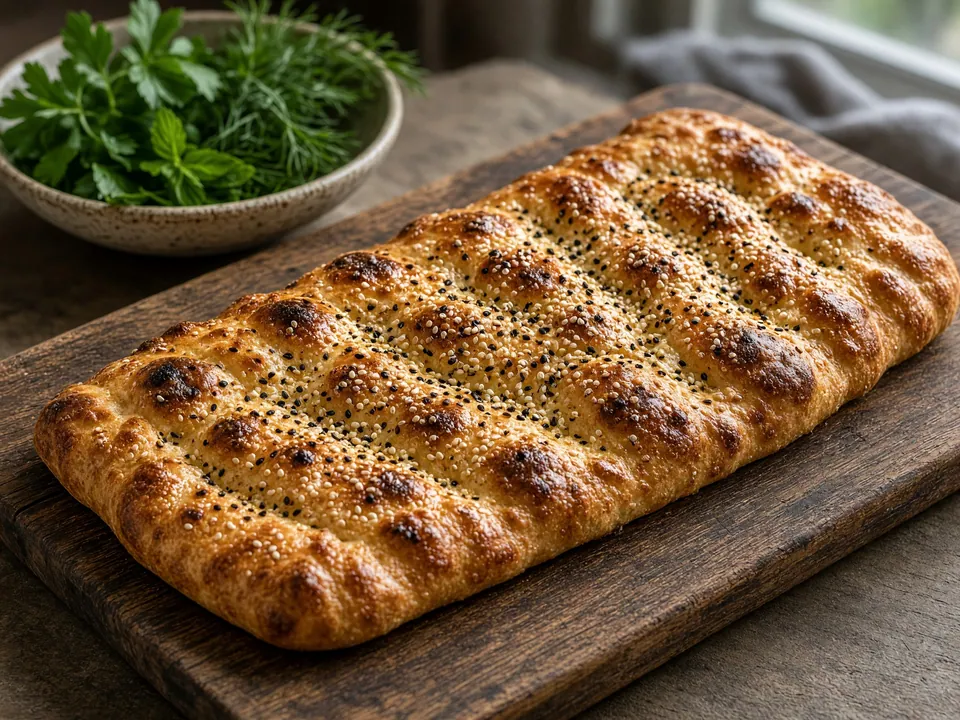
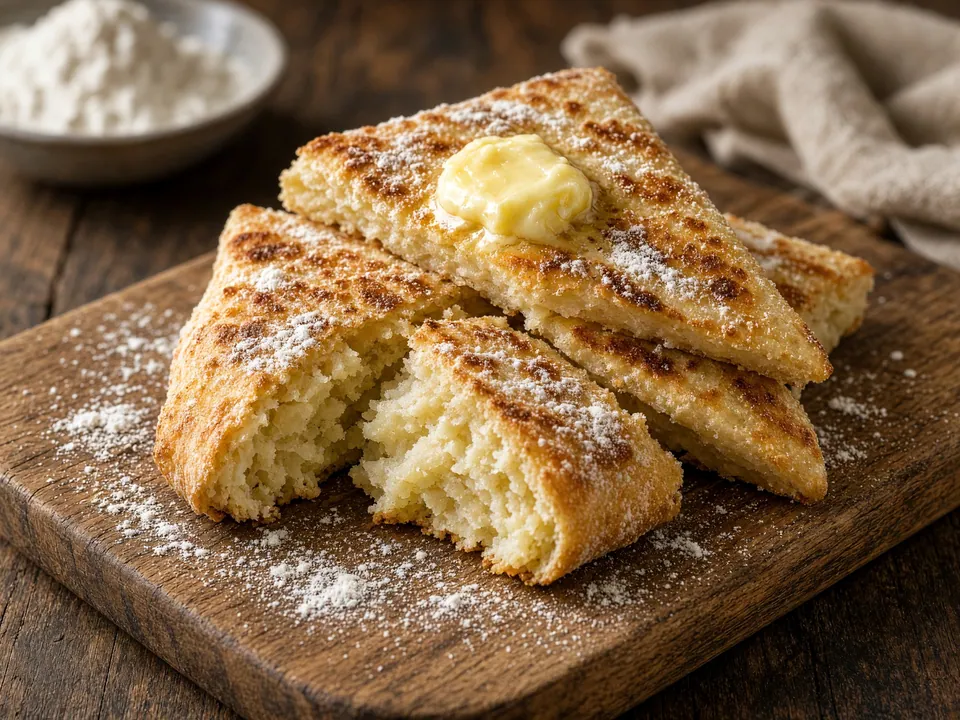
Nan-e sangak is Iran’s beloved whole-wheat flatbread famous for being baked directly on a bed of hot river pebbles, which creates its signature dimpled, blistered surface and lightly smoky flavor. This long, thin bread has been a daily staple across Iran for centuries, traditionally baked in wood-fired ovens at bakeries where bakers use long paddles to slide the dough onto the scorching stones. The result is chewy in the center with crisp, golden edges and a pleasant nuttiness from the whole wheat. Its name literally translates to “stone bread,” celebrating the unique pebble-baking technique that sets it apart from other Iranian flatbreads.
Iranian Stone Bread (Nan-e Sangak)
نان سنگک, Nan-e Sangak
Pronounced NAHN-eh sahn-GAHK
- Serves
- 4
- Prep
- 30 min
- Cook
- 25 min
- Total
- 55 min
- Level
- Medium
Also nut-free and egg-free.
Allergens: contains gluten. Check labels on packaged ingredients.
Ingredients
Amounts are scaled. Cooking times and pan sizes stay the same.
Method
In a large mixing bowl, dissolve the yeast in the warm water and let it sit for 5–7 minutes until frothy.
Add the whole-wheat flour, all-purpose flour, salt, and vegetable oil. Stir until a shaggy dough forms, then turn it out onto a lightly floured surface.
Knead the dough for 8–10 minutes until it is smooth, elastic, and soft but not sticky. The dough should spring back when lightly pressed.
Place the dough in a lightly oiled bowl, cover with a damp kitchen towel, and let it rise in a warm place for about 1 hour or until doubled in size.
While the dough rises, preheat the oven to 475°F (245°C). Spread a single layer of clean, food-safe river pebbles or small oven-safe stones (½ inch / 1 cm size) on a large rimmed baking sheet and heat them in the oven for at least 30 minutes until very hot.
Punch down the risen dough and divide it into 4 equal pieces. On a lightly floured surface, gently stretch each piece into a rough rectangle about 12 × 8 inches (30 × 20 cm) and roughly ¼ inch (6 mm) thick. Do not use a rolling pin; the irregular shape is traditional.
Carefully pull the hot baking sheet from the oven. Lift one stretched dough and drape it over the hot pebbles; it will start to bubble and dimple immediately from the heat.
Quickly sprinkle the top generously with a mix of sesame and nigella seeds. Return to the oven and bake 6–8 minutes until the bread is golden on top with crisp, blistered edges and dark toasted spots on the bottom.
Using a long spatula or peel, lift the bread off the stones, brush away any clinging pebbles, and wrap it in a clean towel to keep it soft while you bake the remaining loaves.
Regional variants
Some regional bakers mix in a small amount of barley flour for deeper flavor or use poppy seeds along with or instead of sesame. In modern home kitchens without pebbles, a very hot pizza stone or cast-iron griddle is sometimes substituted, though the characteristic pebble dimples will be less pronounced.
Cook's notes
- Only use smooth, thoroughly washed and oven-safe river stones or unglazed quarry tiles; never use painted, glazed, or decorative stones.
- The bread is best eaten fresh and warm; reheating on a hot skillet or in a hot oven briefly revives the crisp texture.
- For extra authenticity, lightly char the stones on a grill before the first use to add a subtle smoky note.
Serve with
Fresh herbs, feta, walnuts, and tea for breakfast; or alongside stews, kebabs, and salads for lunch or dinner.
Make ahead and storage
Best enjoyed the same day. Store cooled bread in an airtight bag up to 2 days or freeze up to 1 month; reheat directly from frozen in a hot oven or on a skillet.