Uzbek Flatbread (Obi Non)
Obi non Say it: oh-bee NON
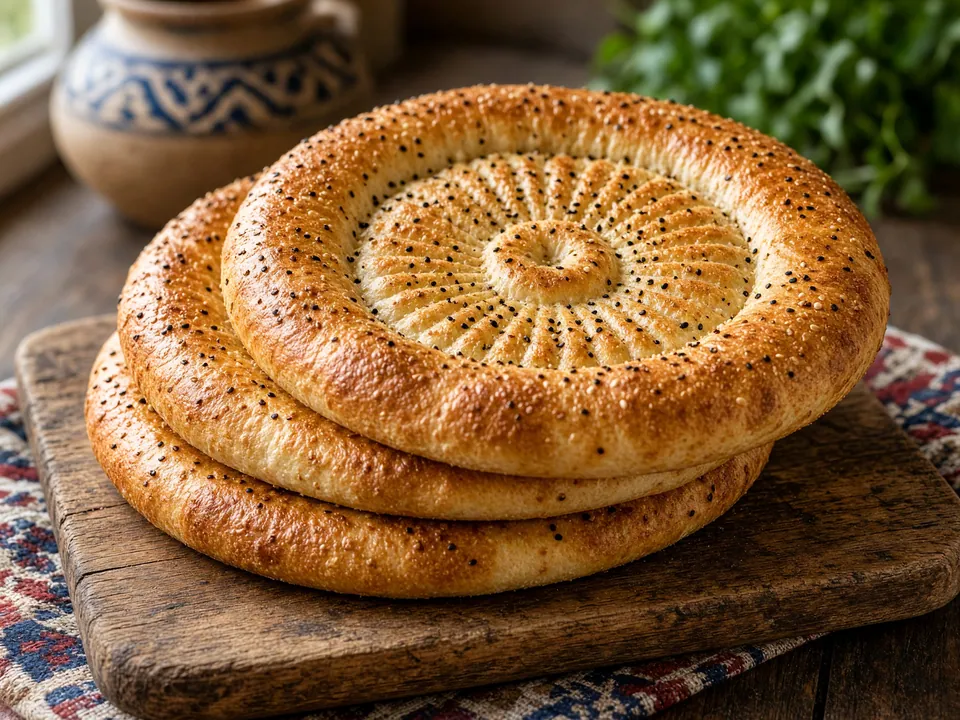
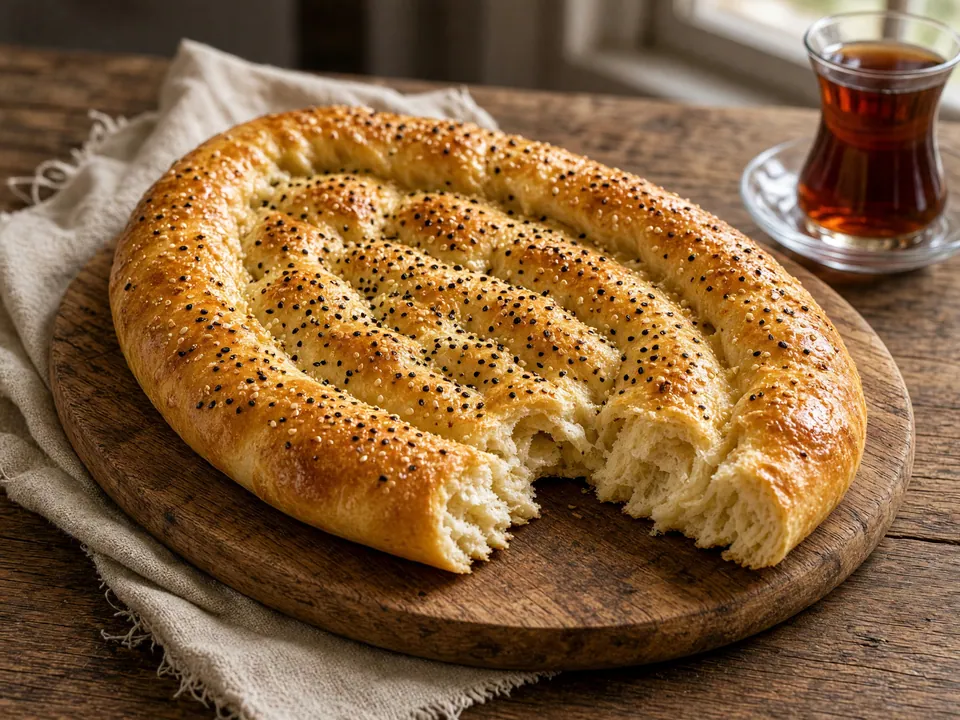
Obi non is the beloved everyday flatbread of Uzbekistan, baked fresh in homes and tandoor ovens across the country. Its name means "water bread," reflecting the simple dough of flour, water, salt, and yeast. Each round loaf has a thick, golden crust, a chewy interior, and a distinctive stamped pattern in the center created with a chekich. Eaten at every meal with tea, pilaf, or grilled meats, it symbolizes hospitality and is traditionally placed on the table first as a sign of respect.
Uzbek Flatbread (Obi Non)
Obi non
Pronounced oh-bee NON
- Serves
- 4
- Prep
- 25 min
- Cook
- 15 min
- Total
- 40 min
- Level
- Medium
Also nut-free and egg-free.
Allergens: contains gluten. Check labels on packaged ingredients.
Ingredients
Amounts are scaled. Cooking times and pan sizes stay the same.
Method
In a small bowl, dissolve the yeast in 1/4 cup (60 ml) of the warm water and let it stand for 5-10 minutes until frothy.
In a large mixing bowl, combine the flour and salt. Make a well in the center and add the yeast mixture, remaining warm water, and oil. Mix until a shaggy dough forms.
Turn the dough onto a lightly floured surface and knead for 8-10 minutes until smooth, soft, and elastic. The dough should spring back when lightly pressed.
Place the dough in a lightly oiled bowl, cover with a damp cloth or plastic wrap, and let it rise in a warm spot for 1 to 1 1/2 hours until doubled in size.
Punch down the risen dough and divide it into 4 equal pieces. Shape each piece into a smooth ball, cover, and let rest for 15 minutes.
Preheat your oven to 475°F (245°C) with a baking stone or heavy baking sheet inside. If you have a tandoor, heat it according to its instructions.
On a floured surface, flatten each ball into a 7-8 inch (18-20 cm) round about 1/2 inch (1 cm) thick, leaving the edges slightly thicker than the center. Use a fork or traditional chekich stamp to create a decorative pattern of dots or lines in the center.
Brush the tops lightly with water and sprinkle with sesame or nigella seeds. Transfer carefully to the hot stone or baking sheet.
Bake for 10-15 minutes until the breads are golden brown with darker, crisp edges and sound hollow when tapped on the bottom.
Wrap the hot breads in a clean kitchen towel and let them rest for 5 minutes before serving.
Regional variants
Regional versions differ slightly by seed topping: sesame seeds are common in Tashkent while nigella or onion seeds appear in the Fergana Valley. Some families add a little yogurt or milk to the dough for extra softness.
Cook's notes
- For the most authentic look and texture, use a chekich (Uzbek bread stamp) to create the traditional pattern in the center.
- If you don't have a baking stone, an inverted cast-iron skillet in the oven works well to mimic tandoor heat.
- Obi non is best eaten fresh and warm; leftover bread can be revived by sprinkling with water and reheating in a hot oven for a few minutes.
Serve with
Hot green tea, plov (pilaf), shashlik (kebabs), or soups. Traditionally torn and shared at the table.
Make ahead and storage
Best fresh, but can be baked ahead and frozen. Thaw and reheat in a 400°F (200°C) oven for 5 minutes after sprinkling lightly with water.