Herb Rice with Fish (Sabzi Polo ba Mahi)
سبزی پلو با ماهی Sabzi Polo ba MahiSay it: sab-zee po-loh bah mah-hee
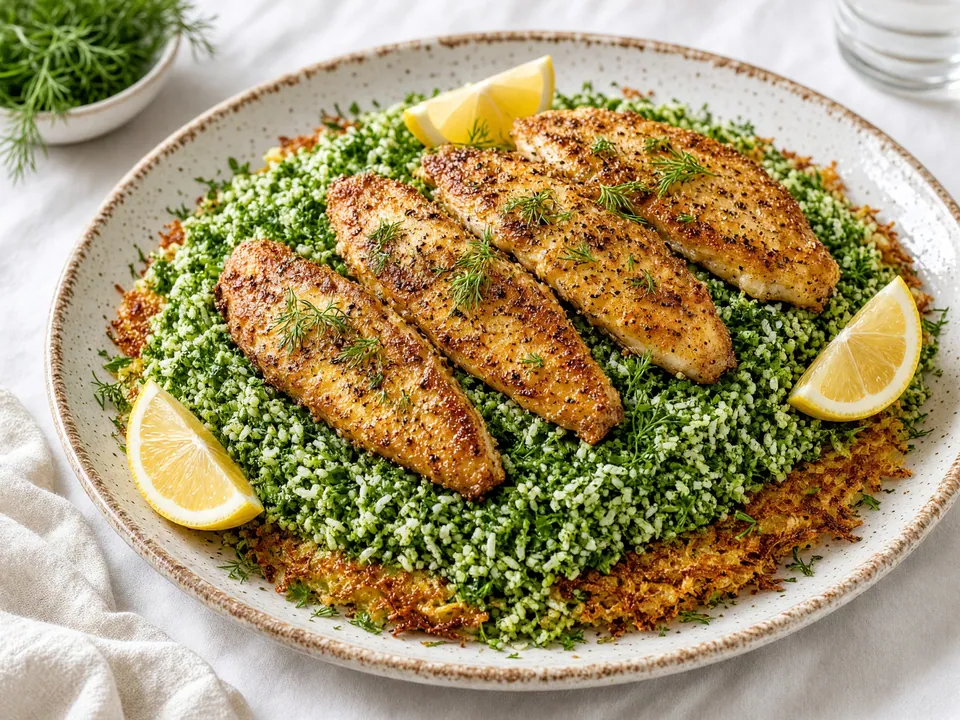
Sabzi Polo ba Mahi is the beloved traditional meal served across Iran during Nowruz, the Persian New Year celebration marking the arrival of spring. Fragrant basmati rice is layered with a generous mix of fresh chopped herbs including dill, parsley, cilantro, and chives, creating a vibrant green pilaf that symbolizes renewal. It is paired with crispy pan-fried white fish fillets whose golden crust represents prosperity and life. This aromatic, herb-packed rice dish is the centerpiece of the Nowruz table, bringing families together for a fresh and festive feast.
Herb Rice with Fish (Sabzi Polo ba Mahi)
سبزی پلو با ماهی, Sabzi Polo ba Mahi
Pronounced sab-zee po-loh bah mah-hee
- Serves
- 4
- Prep
- 40 min
- Cook
- 50 min
- Total
- 1 hr 30 min
- Level
- Medium
Also nut-free and egg-free.
Allergens: contains gluten, fish. Check labels on packaged ingredients.
Ingredients
Amounts are scaled. Cooking times and pan sizes stay the same.
Method
Rinse the basmati rice in several changes of cold water until the water runs clear. Soak in a bowl of cold water with 1 tablespoon salt for 30 minutes, then drain thoroughly.
Bring a large pot of well-salted water to a rolling boil. Add the drained rice and boil for 5-6 minutes until the grains are just al dente. Drain and rinse briefly under cold water to stop the cooking process.
In a large mixing bowl, combine the chopped dill, parsley, cilantro, chives, turmeric, 1 1/2 teaspoons salt, and 3 tablespoons of the oil. Add the parboiled rice and gently toss until the herbs are evenly distributed and the rice is lightly coated.
Place a large nonstick pot over medium heat and add 2 tablespoons of oil. Spread a thin layer of the herb-rice mixture across the bottom. Mound the remaining rice into a gentle pyramid shape. Use the handle of a wooden spoon to poke 4-5 holes through the mound to allow steam to escape.
Wrap the pot lid in a clean kitchen towel, cover tightly, and reduce heat to low. Steam for 25-30 minutes until the rice is fully cooked and a golden, crispy tahdig has formed on the bottom.
While the rice steams, pat the fish fillets completely dry with paper towels. Season both sides generously with salt, black pepper, and a light sprinkle of turmeric.
Spread the flour on a plate. Lightly dredge each fillet in flour, shaking off any excess. Heat 3-4 tablespoons oil in a large skillet over medium-high heat.
Fry the fish fillets in batches for 3-4 minutes per side until deep golden brown, the edges are crisp, and the fish flakes easily with a fork. Transfer to a paper-towel-lined plate to drain.
To serve, either invert the entire pot onto a large platter to reveal the golden tahdig or spoon the green rice onto plates and break the tahdig into pieces to serve alongside. Arrange the crispy fish fillets next to the rice and garnish with lemon wedges.
Regional variants
Some Iranian families stir a small handful of dried fenugreek leaves or a few tablespoons of barberries into the rice for added aroma and subtle tartness. In northern coastal regions near the Caspian Sea, the fish is sometimes simply seasoned and grilled over charcoal instead of pan-fried.
Cook's notes
- Use the freshest herbs possible; the rice should appear vividly green. Wash and dry the herbs thoroughly before chopping to avoid excess moisture.
- For the crispiest tahdig, choose a heavy-bottomed nonstick pot and resist lifting the lid during the final steaming.
- Any firm white fish works well; ask your fishmonger for the freshest sustainable option available that day.
Serve with
Kuku sabzi (herb omelette), fresh spring herbs, radishes, pickled vegetables (torshi), and lemon wedges.
Make ahead and storage
The herb rice can be cooked up to 2 hours in advance and kept warm in the covered pot. Fry the fish just before serving for the best texture.