Nagoya Grilled Eel Rice Bowl (Hitsumabushi)
ひつまぶし HitsumabushiSay it: hee-tsoo-MAH-boo-shee
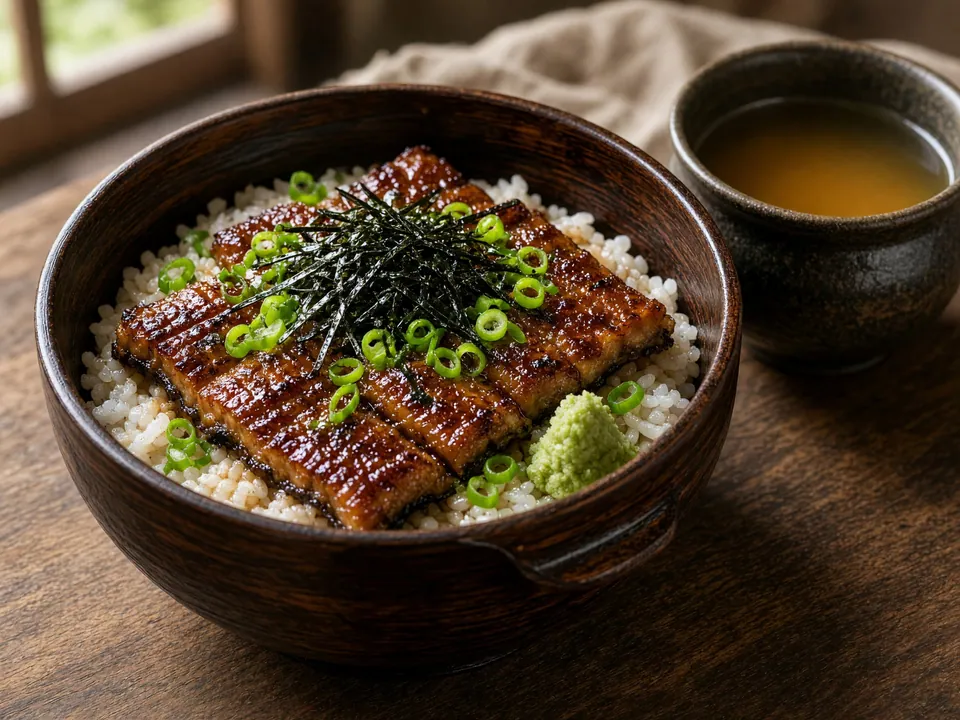
Hitsumabushi is Nagoya's celebratory eel dish: lacquered, charcoal-grilled eel glazed with a sweet soy tare, laid over hot steamed rice in a wooden bowl. What sets it apart is how it is eaten — the rice is divided into four portions. The first is plain, the second is brightened with nori, wasabi and scallion, the third becomes a savoury ochazuke with hot dashi poured over, and the last is eaten any way you like best. The contrast of smoky eel, clean rice and fragrant broth makes it memorable.
Nagoya Grilled Eel Rice Bowl (Hitsumabushi)
ひつまぶし, Hitsumabushi
Pronounced hee-tsoo-MAH-boo-shee
- Serves
- 4
- Prep
- 20 min
- Cook
- 40 min
- Total
- 1 hr
- Level
- Medium
Also nut-free and egg-free.
Allergens: contains gluten, soy, fish. Check labels on packaged ingredients.
Ingredients
Amounts are scaled. Cooking times and pan sizes stay the same.
Rice
Eel and tare
To serve
Method
Rinse the rice in a bowl of cold water, changing the water three or four times until it runs almost clear, then drain and let it sit in a sieve for 10 minutes. Put it in a heavy pot with the 2 1/2 cups (600 ml) water, bring to a boil over medium-high heat, then cover, reduce the heat to low and cook for 12 minutes without lifting the lid.
Take the pot off the heat and let it stand, still covered, for 10 minutes so the grains finish steaming. Fluff gently with a wet rice paddle — the rice should be glossy but separate, not sticky-mashed.
While the rice cooks, stir the soy sauce, mirin, sake and sugar in a small saucepan and simmer over low heat for 2–3 minutes, until the sugar dissolves and the sauce coats a spoon lightly. Set the tare aside.
Heat the grill or broiler to high and line a tray with foil. Cut the eel fillets into 2-inch (5 cm) pieces, lay them skin-side down on the foil and brush generously with tare.
Grill 3–4 minutes, until the glaze bubbles and the edges darken and crisp slightly, then brush once more with tare and give them another minute. Watch closely — the sugar in the sauce scorches quickly.
Taste the hot dashi and season it very lightly with a pinch of salt or a few drops of soy sauce; it should stay delicate and clean, since the eel carries the salt.
Divide the hot rice among four deep bowls or one large wooden hitsumabushi bowl, scatter the grilled eel on top and spoon over the remaining tare from the tray.
Serve at once, with the shredded nori, sliced scallions, wasabi, sansho pepper and pickles in small dishes alongside, and the pot of hot dashi on the table.
To eat, divide the rice in the bowl into four roughly equal sections: eat the first plain, add nori, scallion and wasabi to the second, pour hot dashi over the third to make a loose ochazuke, and finish the fourth with whatever combination you liked best.
Regional variant: Unaju (うな重) — Eel over Rice in a Lacquered Box
Skip the dashi, the four-way serving and the small condiment dishes. Grill the eel exactly as above, then lay it over hot rice in a lacquered box and pour over a little extra tare. It is eaten straight through with sansho pepper or pickles on the side, richer and sweeter than hitsumabushi.
Cook's notes
- Vacuum-packed kabayaki from an Asian grocery is the practical choice outside Japan; refresh it under the grill rather than in a microwave so the glaze caramelises.
- Cook the rice a little firmer than usual — it softens further when the dashi is poured over at the table.
- Keep the dashi light; a strong, salty broth overpowers the sweet tare on the eel.
Serve with
Hot green tea or cold beer, with Japanese pickles and a clear soup on the side.
Make ahead and storage
Grill the eel and make the tare and dashi up to a day ahead; reheat the eel briefly under the grill just before serving. Cook the rice fresh.