Newarski świąteczny talerz (Samay Baji)
समय बजि Samay BajiPowiedz to: suh-MAY bah-JEE
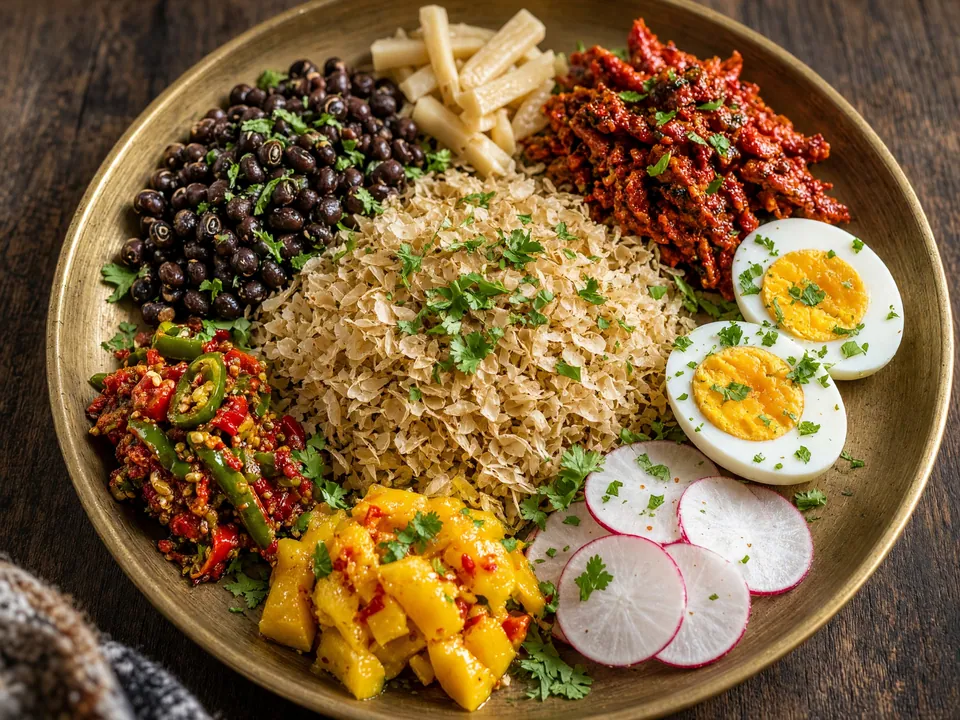
Samay Baji to ikoniczny świąteczny talerz ludu Newari z Doliny Kathmandu. Ta kolorowa kompozycja jest tradycyjnie przygotowywana na specjalne okazje, festiwale i ceremonie religijne. W jej sercu znajduje się spłaszczony ryż (baji) podawany obok pikantnego grillowanego buffalo choila, gotowanej fasoli czarnookiej, jajka na twardo, świeżego imbiru, plastrów rzodkwi i różnorodnych pikli. Połączenie tekstur i odważnych smaków — chrupiących, pikantnych, słonych i kwaśnych — czyni go ukochanym centralnym elementem Newarskiej gościnności.
Newarski świąteczny talerz (Samay Baji)
समय बजि, Samay Baji
Wymowa: suh-MAY bah-JEE
- Porcje
- 4
- Przygotowanie
- 30 min
- Gotowanie
- 25 min
- Razem
- 55 min
- Poziom
- Średni
Także bezorzechowe.
Alergeny: zawiera jajko. Sprawdź etykiety na opakowaniach składników.
Składniki
Ilości zostały przeskalowane. Czasy gotowania i rozmiary naczyń pozostają takie same.
Przygotowanie
Rinse the beaten rice gently under cold water in a colander until the water runs mostly clear. Drain well and spread on a clean kitchen towel to air-dry for 15 minutes until slightly crisp but still soft.
Place the black-eyed peas in a medium pot, cover with water by 2 inches (5 cm), and bring to a boil. Reduce heat and simmer for 20–25 minutes until tender but not mushy. Drain, rinse with cold water, and set aside. Season with ½ tsp salt.
Bring a small pot of water to a boil. Gently lower in the eggs and boil for 9 minutes. Transfer to an ice bath, peel, and halve lengthwise. Set aside.
In a large bowl, combine the meat cubes with turmeric, 1 tsp chili powder, cumin, half the minced garlic, ½ tsp salt, and 2 tbsp (30 ml) mustard oil. Mix thoroughly and let marinate for 15 minutes.
Heat 2 tbsp (30 ml) mustard oil in a heavy skillet or wok over medium-high heat. Add the marinated meat and stir-fry for 8–10 minutes until browned and cooked through. Remove from heat and let cool slightly.
For the choila seasoning, mix the cooked meat with the remaining garlic, chopped green chilies, lemon juice, remaining chili powder, and chopped cilantro. Adjust salt and spice to taste. Drizzle with 1 tbsp mustard oil and toss until glossy.
Arrange the platter. place a generous mound of beaten rice in the center of a large serving plate. Surround it with separate piles of choila, seasoned black-eyed peas, halved boiled eggs, ginger matchsticks, and radish slices.
Serve immediately with small bowls of assorted Nepali pickles on the side. Drizzle a little extra mustard oil over the choila and rice if desired for extra aroma.
Warianty regionalne
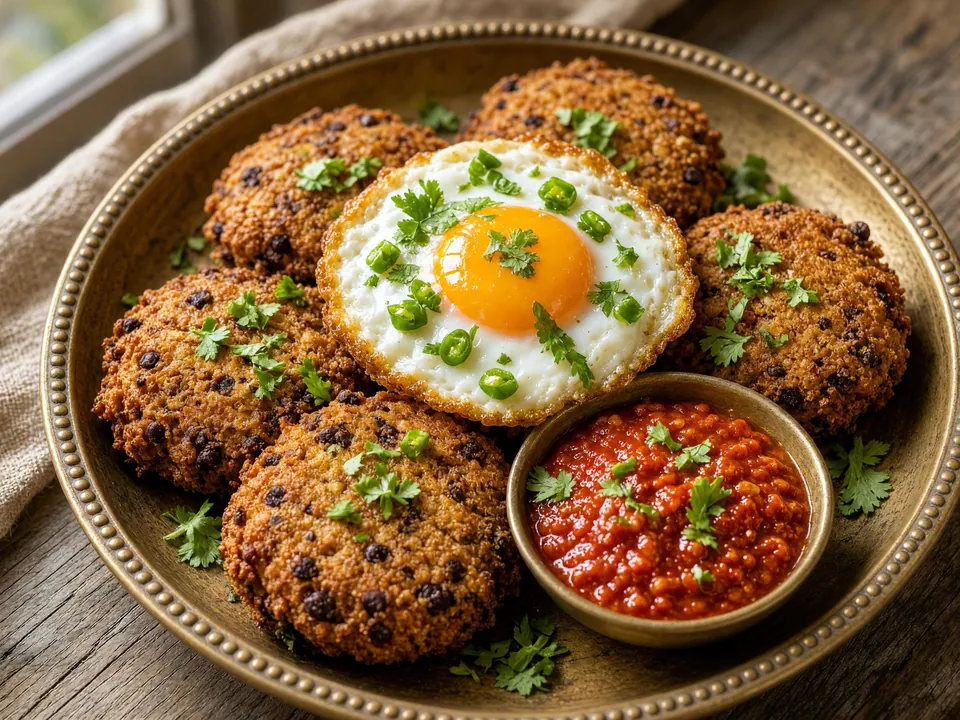
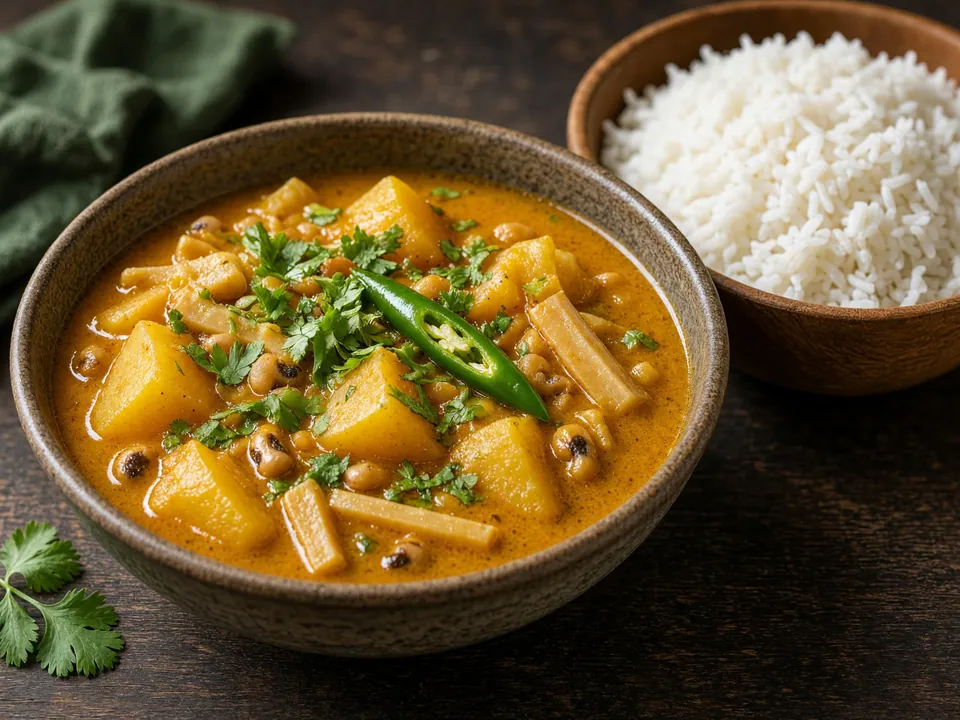
In some Newari households, barbecued or smoked meat replaces the stir-fried choila for deeper flavor. Modern versions occasionally include fried soybeans, aloo tama (potato and bamboo shoot curry), or a small portion of bara (lentil patties).
Uwagi kucharza
- Beaten rice should be rinsed just enough to soften it slightly while keeping its signature chew; over-soaking makes it soggy.
- Mustard oil gives the authentic pungent flavor—use it sparingly if you are not used to its strength, or substitute with a neutral oil plus a pinch of mustard powder.
- The platter is meant to be shared and assembled just before serving so the rice stays crisp and the choila remains warm.
Podawać z
Traditionally eaten with aila (Newari rice wine) or strong black tea; also pairs well with thukpa or kwati during festivals.
Przygotowanie z wyprzedzeniem i przechowywanie
Prepare choila, beans, and eggs up to 1 day ahead and refrigerate. Bring to room temperature and assemble with fresh beaten rice and pickles just before serving.