What Do Romanians Eat Besides Sarmale?
Besides sarmale, Romanians eat a wide range of dishes: cornmeal porridge called mămăligă, grilled skinless sausages called mici, sour soups known as ciorbe, braised chicken paprikash, cheese pastries, and sweet celebration breads and doughnuts. Sarmale is one famous dish, but it shares the table with these foods and many others.
Mămăligă: cornmeal at the center of the plate
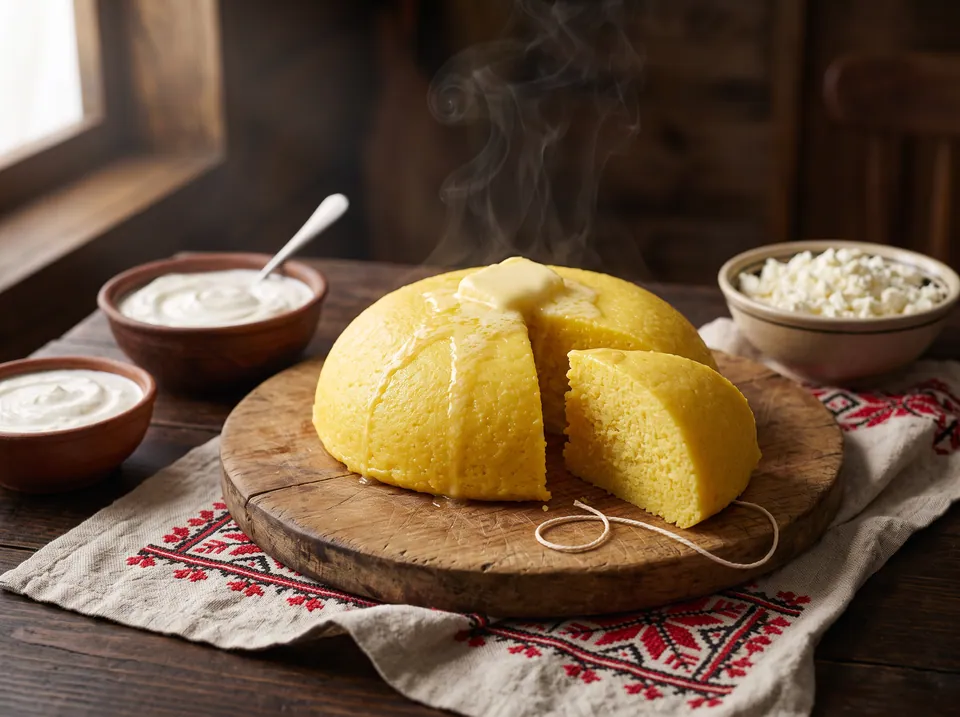
Mămăligă is a golden cornmeal porridge made from water, salt, and stone-ground cornmeal. A home version uses 4 cups (1 liter) water, 1 teaspoon salt, and 1¼ cups (200 g) coarse or medium cornmeal. It cooks in about 25 minutes: whisk the cornmeal into boiling salted water in a narrow stream, simmer until thick and shiny, then cover and cook on the lowest heat, scraping the bottom every 5 minutes.
The texture is sturdy and slightly gritty, which makes it good for mopping up stews and sauces. Serve it soft from the pot, or let it set for 10 minutes and unmold it as a rounded loaf. It appears at breakfast with milk or fried eggs, at lunch next to sarmale or braised meat, and on the side with telemea cheese or feta, sour cream, butter, and fried eggs. Across Romania it often stands in for bread. Mămăligă recipe
Mici: grilled sausages for outdoor gatherings
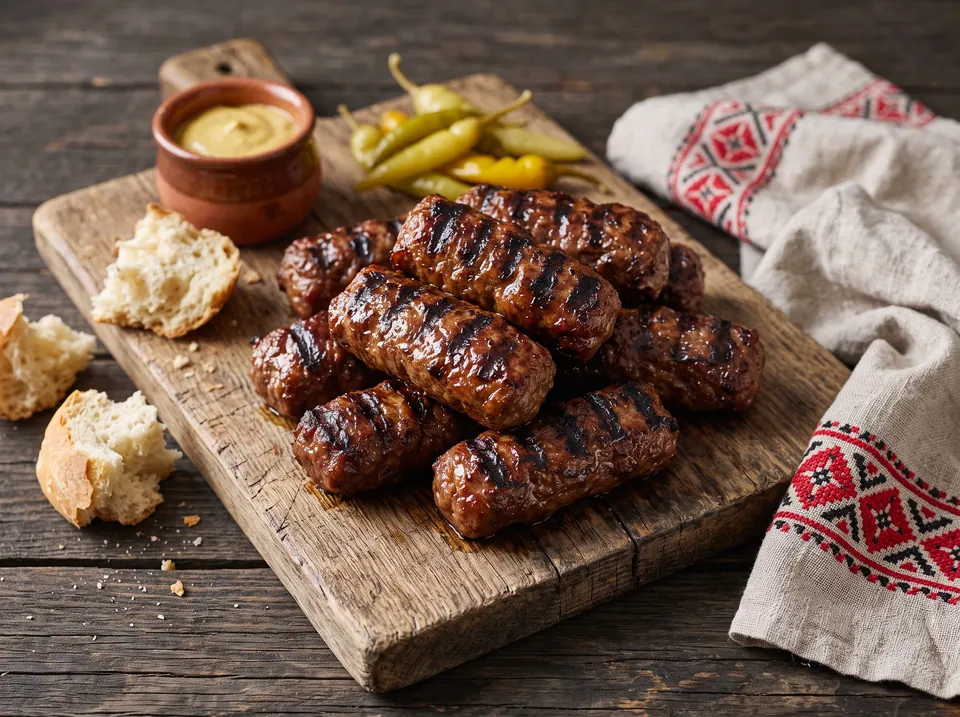
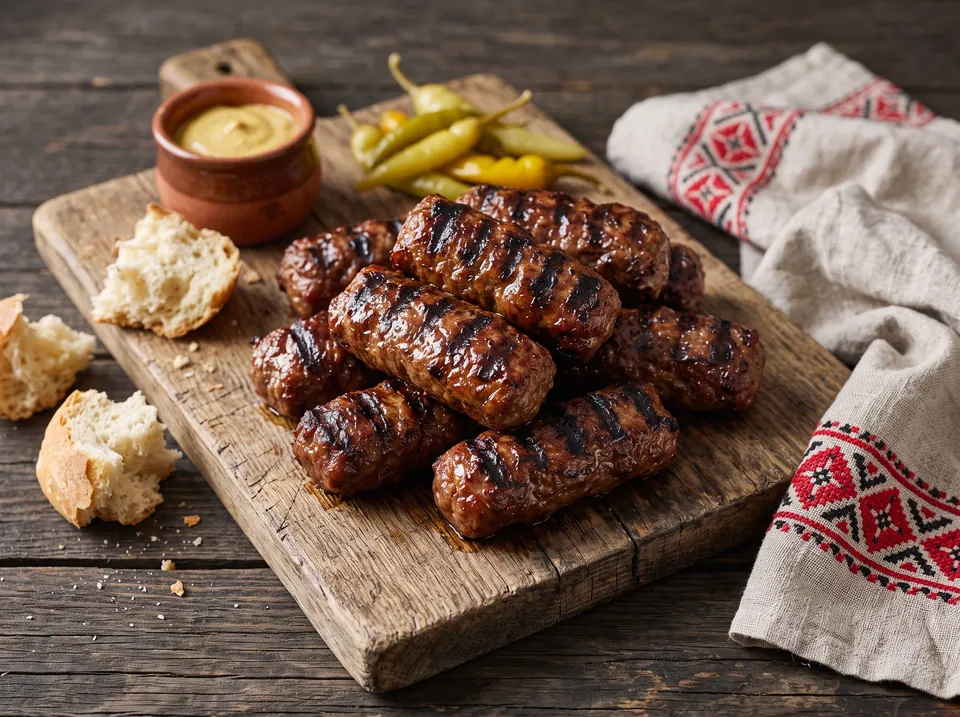
Mici are skinless sausages made from beef chuck or blade and fatty pork shoulder. The seasoning includes crushed garlic, salt, black pepper, dried thyme, ground allspice, and sweet paprika. Cold unsalted beef bone broth and a little baking soda go into the mixture, and the meat is worked hard until glossy, tacky, and stretchy. It then rests in the refrigerator for at least 12 hours or overnight.
The chilled mixture is shaped into cylinders about 3 to 4 inches (8 to 10 cm) long and 1¼ to 1½ inches (3 to 4 cm) wide, roughly 2 oz (50 g) each. Grill them over a very hot charcoal or gas fire for 8 to 10 minutes, flipping three times with tongs. The outside should be dark brown and a little crisp, while the center stays tender and moist. Serve mici with strong yellow mustard, soft white rolls, pickled green tomatoes, and an ice-cold beer. Mici recipe
Ciorbe: sour soups with body
Ciorbă is a sour soup, and it covers more than one bowl. Two useful examples show the range.
Ciorbă de burtă is a creamy tripe soup. Beef tripe and beef soup bones simmer with onion, carrot, celery root, parsley root, bay leaf, and peppercorns for 2 to 2.5 hours. The broth is strained, the tripe is sliced into thin strips, and the soup is finished with a mixture of sour cream, egg yolks, crushed garlic, and white wine vinegar. Keep it below a boil after the cream goes in so it stays smooth. Serve it very hot with extra sour cream, pickled peppers, and mujdei, a garlic sauce. Ciorbă de burtă recipe
Ciorbă de fasole cu afumătură is a smoked bean soup. Dried white beans soak overnight, then simmer with smoked pork ribs or smoked ham hock, onion, carrot, celery root, red bell pepper, garlic, tomato paste, sweet paprika, thyme, and bay leaf. The beans cook for 60 to 75 minutes. The soup is soured with white vinegar or lemon juice, seasoned, and finished with fresh parsley. Serve it with crusty bread, sliced fresh onion, and pickled peppers. Smoked bean soup recipe
Papricaș de pui: chicken braised with paprika
Papricaș de pui is Romania’s chicken paprikash, a slow-braised stew from Transylvania and Banat. Chicken pieces are browned in oil or lard, then cooked with plenty of soft onion, garlic, and sweet paprika. Stock or water goes in, and the chicken simmers covered for 30 to 35 minutes, until tender and cooked through.
The sauce is finished off the heat with sour cream whisked with a tablespoon of flour. Warm it gently for 3 to 5 minutes without boiling, so the sauce thickens and stays creamy. Serve papricaș with soft dumplings made from flour, eggs, salt, and water, plus pickled cucumbers or a sharp cabbage salad. Chicken paprikash recipe
Plăcintă, papanași, and cozonac
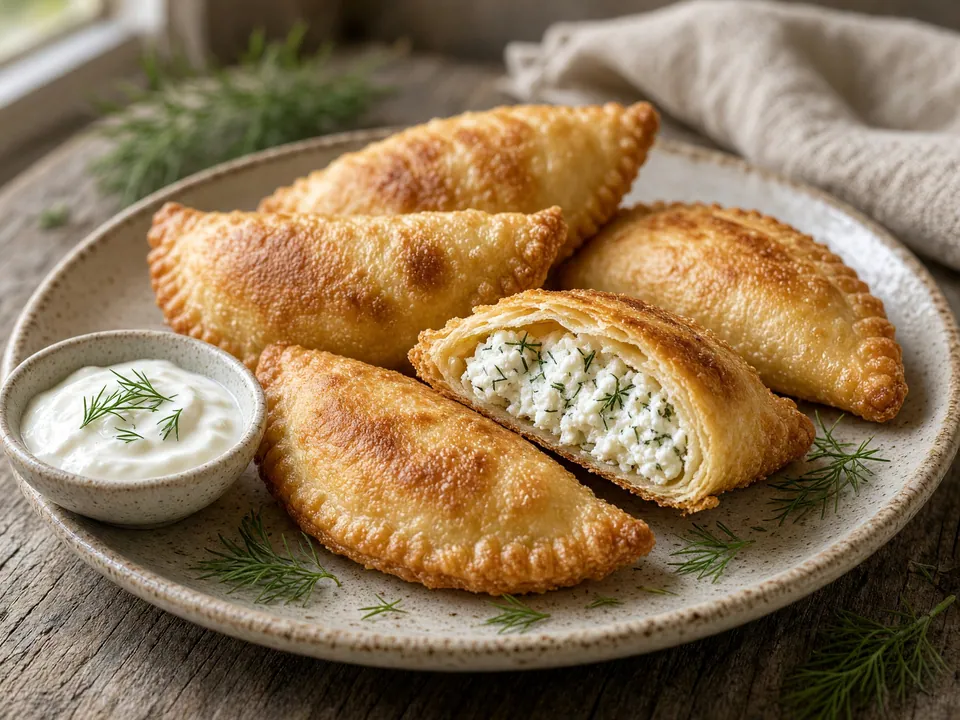
Plăcintă cu brânză is a stuffed cheese pastry. The dough uses flour, salt, warm water, sunflower oil, and a little white vinegar; it rests for 20 minutes before being rolled thin. The filling combines crumbled telemea or feta with brânză de vaci or drained cottage cheese, eggs, sour cream, dill, and black pepper. The pastries are pan-fried for 2 to 3 minutes per side until deep golden and crisp. They can also be baked at 400°F (200°C) for 20 to 25 minutes. Serve them warm with sour cream or plain yogurt and a tomato-cucumber salad. Cheese plăcintă recipe
For sweets, papanași are cheese doughnuts with a crisp fried shell and a tender center, served hot with sweetened sour cream and berry jam. Cozonac is a sweet, pull-apart bread with a walnut and cocoa filling, appearing on Romanian tables for Christmas, Easter, and celebrations. A slice is served at room temperature with coffee, milk, or a sweet dessert wine.
Sarmale may be the dish people know first, but the Romanian table is broader: cornmeal, grilled sausages, sour soups, paprika-braised chicken, cheese pastries, and celebration baking all have a place.