Sarmale vs. Dolma: What Is the Difference?
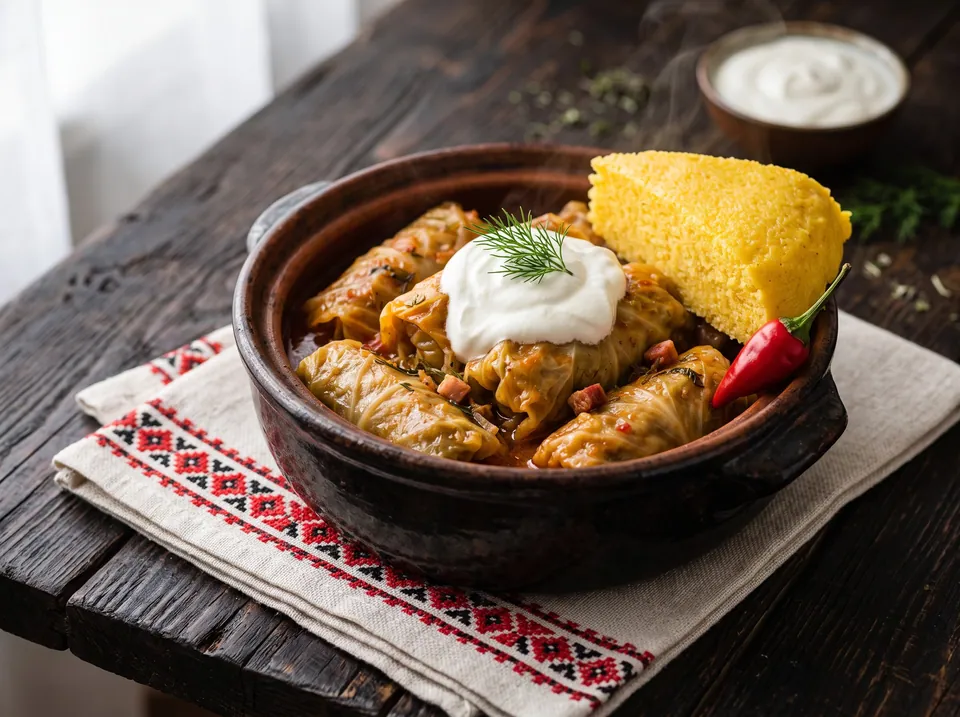
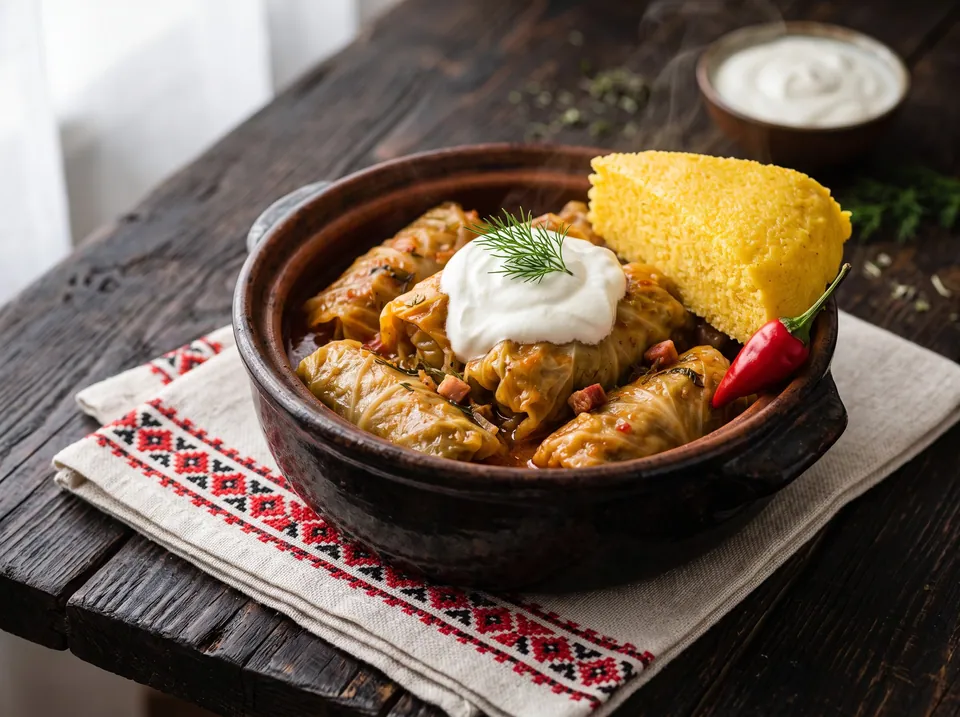
Sarmale are Romanian cabbage rolls—fermented cabbage leaves wrapped around pork, rice, onion and herbs, then simmered for hours. Dolma is the stuffed-leaf side of the comparison: vine leaves (or other leaves) wrapped around a lamb-or-beef and rice filling, often perfumed with fresh herbs and served with garlic yogurt. The quick way to tell them apart is the wrapper, the meat, the seasoning and the final plate.
The wrapper changes everything
Sarmale start with fermented cabbage. The leaves are sour, sturdy and slightly translucent after cooking. They are separated, tough veins trimmed, and any very salty leaves rinsed. The rolls are packed into a Dutch oven or clay pot with smoked bacon or ribs and bay leaves, then cooked slowly until the cabbage is completely soft. A vine-leaf version of sarmale exists too: Romanian cabbage rolls (sarmale) can be made with brined or blanched grape leaves, extra dill and rice in the filling, and a tomato-dill cooking sauce.
Dolma-style rolls usually use grape vine leaves. Fresh leaves are blanched briefly; brined leaves are rinsed and soaked. The leaves are smaller and more delicate than cabbage, so the rolls are finger-sized and the filling is spooned in smaller amounts. Armenian tolma and Azerbaijani yarpaq dolması both use vine leaves. Bosnian japrak can use vine leaves, Swiss chard or collard leaves, which makes it a bridge between the two worlds.
Bulgarian sarmi sit in the middle. Bulgarian cabbage and vine-leaf rolls (sarmi) use sour cabbage leaves, brined grape leaves or a mix of both. That flexibility is useful: the same filling can be wrapped in whichever leaf is at hand.
What goes inside
The filling is where the flavors divide most clearly. Sarmale are pork-led. Ground pork shoulder is mixed with cooked onion, medium-grain rice, dill, thyme, black pepper and a little salt. The mixture is moistened with water or light stock. Smoked bacon or smoked pork ribs are traditional in the pot, and tomato paste can be added if the cabbage is not sour enough. The overall effect is savory, smoky and sour.
Dolma fillings are more herb-forward. Armenian tolma combines ground beef and lamb with rice, onion, tomato paste, butter or oil, parsley, cilantro, dill, mint, dried basil, salt, pepper and paprika. Azerbaijani yarpaq dolması uses ground lamb, rice, grated onion, cilantro, dill, mint, olive oil or butter, salt and pepper. The herbs are not a garnish; they are part of the bulk and aroma.
Bulgarian sarmi add another profile: ground pork or a pork-beef mix with onion, carrot, rice, tomato juice, parsley, sweet paprika and chubritsa (summer savory). Bosnian japrak uses beef and lamb with rice, onion, garlic, tomato paste, paprika and parsley, then simmers in a tomato-paprika liquid. Those additions make japrak darker and richer than a plain vine-leaf dolma.
Cooking time and texture
Sarmale are a long cook. The rolls simmer for 2½ to 3 hours, either on a very low stovetop or in a covered pot at 350°F (175°C). That time softens the fermented cabbage and lets the rice swell. The pot should be checked now and then; a splash of hot water keeps the rolls from drying out. After cooking, they rest for 10 to 15 minutes.
Dolma are faster. Armenian tolma simmers for 45 to 60 minutes, and Azerbaijani yarpaq dolması for 50 to 60 minutes. Bulgarian sarmi take 90 to 120 minutes, and Bosnian japrak takes 1 hour 45 minutes to 2 hours. The difference comes from the wrapper: vine leaves tenderize quickly, while sour cabbage and chard need more time. In every case, the rolls are packed seam-side down and weighted with a plate or lid so they stay closed.
How they are served
Sarmale are served hot, with soft polenta, sour cream and hot pickled peppers. The polenta soaks up the sour, smoky juices. Bosnian stuffed leaves (japrak) are served warm with crusty bread and sour cream or thick yogurt, plus pickled peppers or a tomato salad. Bulgarian sarmi come with plain yogurt or a cucumber-yogurt salad and bread.
Dolma are often served warm or at room temperature with garlic yogurt. Armenian stuffed vine leaves (tolma) are paired with a cool garlic yogurt sauce, fresh herbs and lavash. Stuffed vine leaves (yarpaq dolması) go with garlic yogurt, lavash or tandir bread and a tomato-cucumber salad. That cool, tangy sauce is a marker of the dolma table.
A word on the names
The names overlap, which is why the question keeps coming up. Sarmale is the Romanian plural; sarmi is the Bulgarian form. Japrak comes from the Turkish word yaprak, meaning leaf. Dolma and tolma name the filled-leaf idea in Turkish and Armenian cooking. The word sarma also appears in sweets: Turkish pistachio roll baklava (fıstıklı sarma) is a rolled pistachio baklava, not a savory leaf roll. So sarma can mean a roll, and dolma points to a stuffed leaf or vegetable.
Dolma also extends beyond leaves. Armenian mixed summer tolma stuffs zucchini, bell peppers, tomatoes and onions with the same meat-rice mixture, then layers them with cabbage and vine leaves and cooks them with an onion-tomato sauce and optional quince, apple or prunes.
Which should you cook?
Choose sarmale when you want a slow, sour, smoky dish for a holiday table. The long simmer is the point, and the pot holds well for leftovers; the rolls keep in their liquid for up to four days or can be frozen. Choose dolma when you want a herbier, tangier roll that can be served warm or at room temperature. It is faster and works well as part of a spread with yogurt and bread. If you cannot decide, make Bulgarian sarmi: they let you use cabbage, vine leaves or both, with a paprika-and-tomato filling that borrows from each side.