Uruguayan Asado: Common Mistakes and How to Fix Them
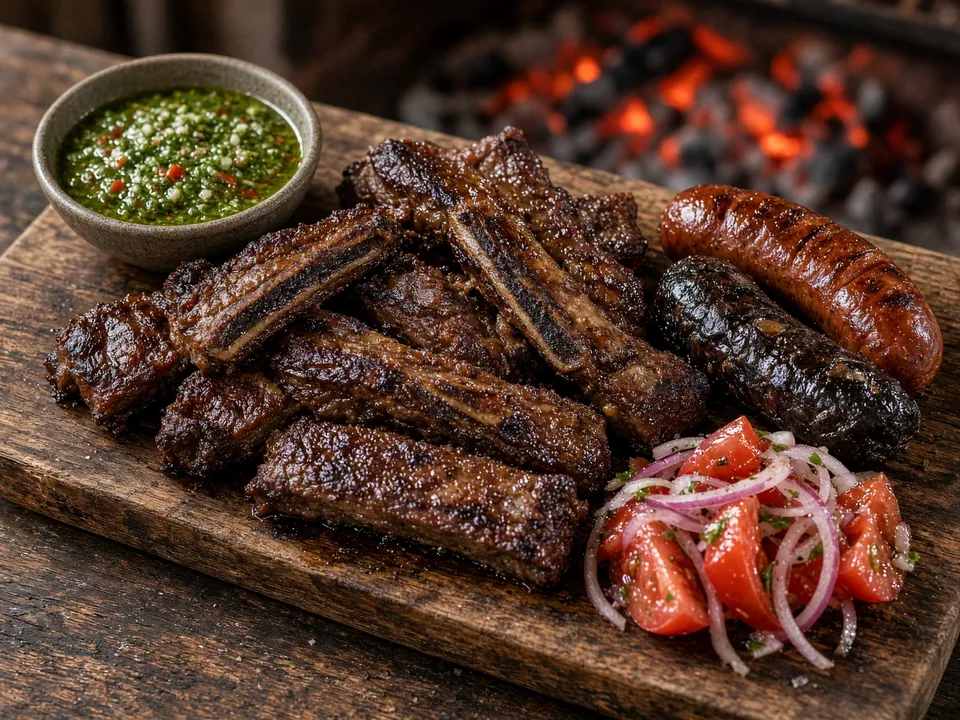
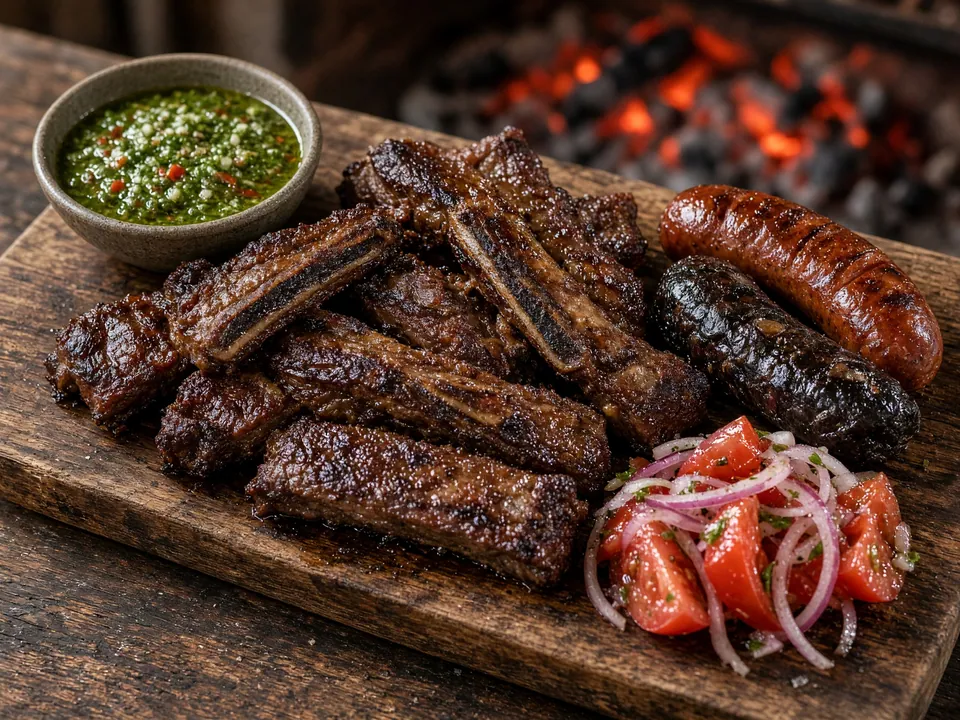
Uruguayan asado is often translated as mixed grill, but the name undersells it. It is a way of cooking over wood or charcoal: meat set over gentle embers, cooked in stages, seasoned simply, and served as it comes off the fire. The mistakes that spoil it at home are rarely about secret ingredients. They are about heat, timing, and leaving the meat alone.
A reliable starting point is the Uruguayan mixed grill recipe, but the notes below explain where home cooks usually go wrong.
Building a fire that is too hot
The biggest mistake is treating asado like a hot dog grill. Flames are not cooking heat; they are fuel burning off. Wait until the wood has collapsed into glowing coals and a light ash has formed. If the fire is still snapping, spread the coals or wait.
Set up two heat zones: a bank of embers for searing and a cooler area for finishing. This is not fussy restaurant technique. It is how you cook a thick short rib without burning the outside before the center is ready.
Never add lighter fluid to a lit fire. Start with a chimney or a small pyramid of wood or charcoal. Keep extra fuel burning at the edge so you can add embers, not fresh fuel, to the grill.
Choosing the wrong cuts
Lean steaks and pre-cut stir-fry beef are poor stand-ins. Asado relies on cuts with fat, bone, and connective tissue: asado de tira (short ribs), vacío (flank), entraña (skirt), and thick cuts of beef. Chorizo and morcilla are part of the mix. Ask the butcher to cut ribs across the bone into strips. Thickness should be even.
Small pieces cook fast and dry. Keep cuts large, then slice after cooking.
Over-marinating and under-salting
Uruguayan asado does not need a wet marinade. Beef is usually seasoned with coarse salt; chimichurri is a table condiment, not a baste. A heavy marinade can mask the beef and cause flare-ups from sugar and oil.
Salt thick cuts properly. A light sprinkle on a thin skirt is enough; a thick rib needs more. Salt before grilling, and taste after resting. For chicken and pork, a simple brine or salt water can help, but keep it plain.
Flipping, poking, and pressing
Meat needs contact with the grill to form a crust. Constant flipping prevents that. Turn when the meat releases easily or when one side is browned. Use tongs, not a fork. Poking holes lets juices run onto the coals.
Do not press steaks or sausages with a spatula. Do not prick chorizo. The juices that drip cause flare-ups and leave the meat drier.
Crowding the grill and cooking everything at once
Home cooks often load the grill and then panic. A crowded grill steams meat and makes the heat uneven. Cook in waves: chorizo and morcilla first, then vegetables or offal, then beef. Keep finished pieces on a warm part of the grill away from the coals.
Rest meat before slicing. A few minutes gives the juices time to settle. If you slice immediately, they end up on the board instead of in the meat.
Slicing too soon and against the grain
Different cuts need different treatment. Skirt and flank should be sliced against the grain, on a slight diagonal. Asado de tira can be cut between the bones or into thick strips. Do not dice it into small cubes.
Slice only what will be eaten. Asado is best served hot in stages. Put the rest back over low heat or keep it covered away from the fire.
Forgetting the table
Chimichurri is standard, but it should be spooned over the meat at the table. Salsa criolla, a simple onion and tomato relish, is another common partner. Bread, a sharp salad, and potatoes are enough.
Beans can be a good side for a mixed grill, especially when feeding a crowd. A dish such as Brazilian tropeiro beans is hearty enough to stand beside grilled meat without competing with it.
A simple checklist before the meat goes on
- The fire has burned down to embers.
- A cooler zone is ready.
- Cuts are thick and even.
- Coarse salt is within reach.
- Tongs, a board, and a sharp knife are ready.
- Sides and chimichurri are made before cooking starts.
None of these fixes requires special equipment. It requires resisting the urge to rush the fire and the meat.
For cuts, quantities, and a full method, use the asado recipe.