What Makes Amritsari Kulcha Different
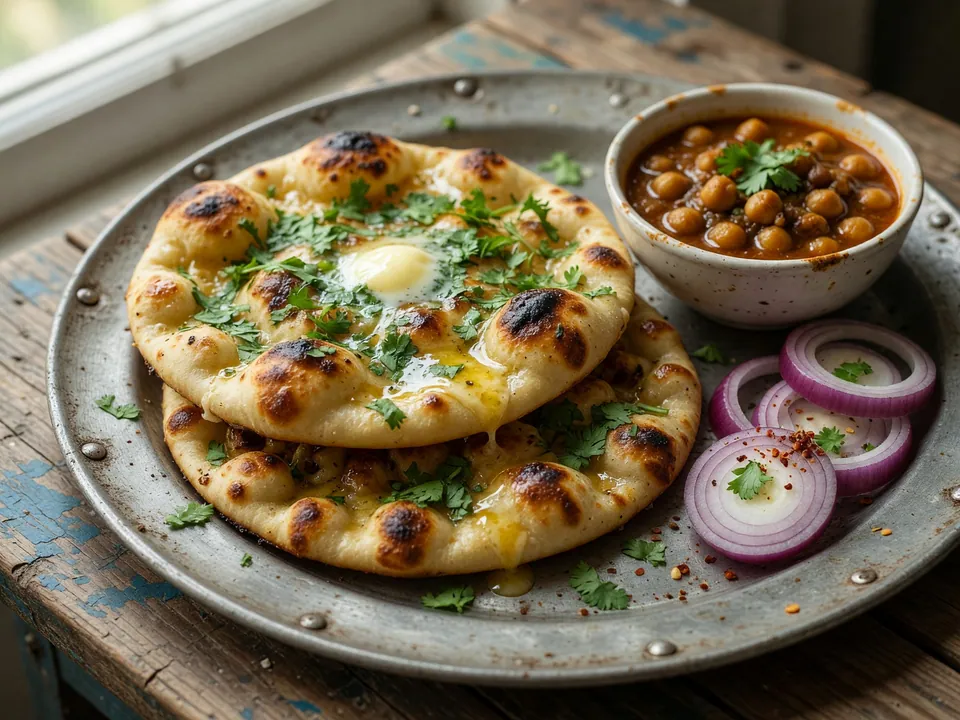
Amritsari kulcha is often called a stuffed naan. It is not. The bread from Amritsar has its own dough, its own folds, and its own place on the table. It usually arrives with chole, onions, and chutney, not as a side to a curry. The differences start before the dough touches the tandoor.
A firm dough, folded for layers
Amritsari kulcha starts with maida, the fine white flour used for many tandoor breads. Yogurt, milk, ghee, salt, and leavening go into the dough. Some kitchens use yeast; many use baking powder and baking soda. The dough is mixed firm rather than slack. It rests, then gets rolled, brushed with ghee, folded, and rolled again. That folding creates the flaky layers. A naan is stretched from a softer dough and has a looser, puffier crumb. The Amritsari kulcha recipe uses the fold-and-roll method; it is the step that separates this bread from a plain tandoori flatbread.
The filling is part of the bread
The classic filling is spiced potato: boiled and mashed, with green chilli, coriander, cumin, and salt. Paneer, onion, or a mix of potato and paneer are common too. The filling is not a thin smear. It is a generous spoonful sealed inside the dough, then rolled gently so the layers stay intact. In Delhi's chole-kulcha stalls, kulcha often means a plain, soft, round bread with no filling. That bread is made for scooping. Amritsari kulcha is a complete bread, savory enough to eat on its own.
Tandoor char changes the crust
Amritsari kulcha is traditionally slapped into a tandoor. The high heat puffs the bread, blisters the surface, and cooks the filling through. The result is a crisp shell with a soft, layered interior. Many home cooks use a tawa and finish the bread over a flame. That works, but the character changes: less smoke, less char, a more even crust. A griddled Delhi-style kulcha is a different bread, even when the flour and filling look similar.
The plate in Amritsar
In Amritsar, the plate is consistent: a hot kulcha, a bowl of chole, sliced onions, green chutney, and often a dab of butter. The bread is the center of the meal, not an accessory. That serving style matters. A naan or roti is usually ordered alongside a main dish; an Amritsari kulcha comes with its own curry and salad. The butter is not a garnish. It melts into the hot surface and softens the crust. The bread also rewards fast eating. As it cools, the crust firms and the layers compress.
How it differs from naan
Naan and kulcha both come from the tandoor, and both use white flour. The similarities end there. Naan is usually larger, softer, and stretched into a teardrop. It can be plain, brushed with butter, or topped with garlic and coriander, as in butter garlic naan. Kulcha is smaller, rounder, and built in layers. The stuffing adds another dimension. A stuffed naan exists on restaurant menus, but it is not the same as the folded, sealed Amritsari kulcha.
How it differs from paratha and bhatura
Aloo paratha is the closest comparison for home cooks. Both are stuffed with spiced potato. But paratha is usually made with whole wheat flour and cooked on a tawa with ghee. It is softer, more pliable, and served with yogurt or pickle. Amritsari kulcha uses white flour, gets a tandoor char, and is served with chole. Bhatura is also served with chole, but it is deep-fried and puffy, with no layers or filling. Tandoori roti is plainer still: whole wheat, unleavened, and cooked until firm.
The word kulcha is broader than the dish
In much of north India, kulcha can mean a simple leavened bread, often smaller than naan and cooked on a griddle. In Amritsar, the word signals a stuffed, layered tandoor bread. The same name covers different breads in different places. That is why a menu needs to say Amritsari kulcha, not just kulcha. The bread is a regional specialty with a clear style, not a generic flatbread with a filling.
What to watch for at home
At home, the useful checks are simple. The dough should be firm enough to roll without sticking but soft enough to seal. The filling should be cool and dry; wet potato tears the dough. Roll gently after stuffing. Preheat the tandoor or tawa well. Serve immediately.
For a first attempt, keep the filling modest. The bread is forgiving, but the layers are the point. A well-made kulcha has crisp edges, a soft center, and enough butter to make the crust shine.