Beef and Guinness Pie: 7 Mistakes to Avoid
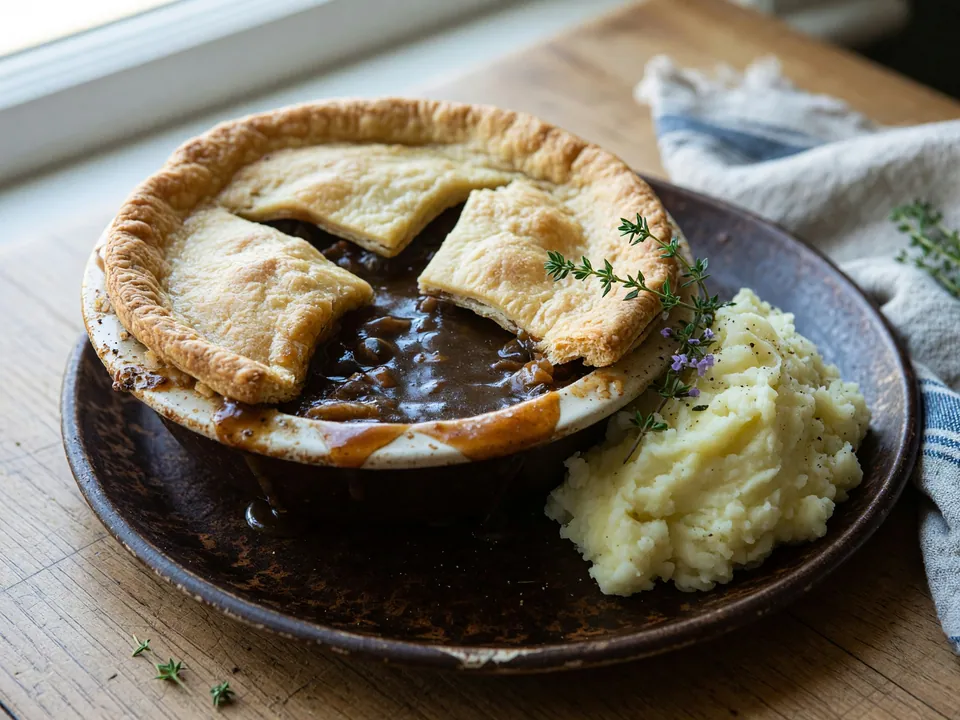
A proper beef and Guinness pie is one of the great pub dishes: dark, glossy gravy, beef that falls apart under a fork, and a pastry lid that shatters when you cut it. It is also surprisingly easy to get wrong. Most of the problems come from rushing the stew or mishandling the pastry — not from the recipe itself. Here are the mistakes that matter most, and what to do instead.
Using the wrong cut of beef
Stewing steak, chuck, or shin are the right choices. They are full of connective tissue that melts into gelatin during a long cook, which is what gives the gravy body and the meat its unctuous texture. Lean cubes from the leg or sirloin turn dry and stringy after two hours in the oven.
Cut the meat into large chunks, roughly 4–5 cm. Small cubes overcook and lose their identity in the sauce.
Skipping the sear, or crowding the pan
Browning is where the flavour starts. Pat the beef dry, season it, and brown it in batches over high heat. If the pieces touch and steam instead of searing, you lose the deep roasted notes that make the pie taste like more than the sum of its parts.
Take the time to do two or three batches. The pan should sizzle loudly the moment the meat goes in.
Adding the Guinness without reducing it
Beer brings bitterness as well as depth. Pour it in after the meat is browned, scrape up the fond, and let it bubble for a couple of minutes before adding stock. This drives off some of the raw hop character.
Use a stout you would happily drink. Very hoppy or very strong beers can overwhelm the beef. A standard Guinness works because it is smooth and only moderately bitter.
Undercooking the stew
This is the single biggest cause of disappointing pie. The filling needs a gentle simmer — on the hob or in a low oven — for at least two hours, often closer to two and a half. The meat should be tender enough to crush against the side of the pan with a spoon.
The gravy must also reduce. If it is thin when it goes under the pastry, it will bubble up and make the base soggy. Simmer uncovered at the end until it coats a spoon, and taste for salt.
Filling the pie while the stew is hot
Let the filling cool completely, ideally chill it overnight. Cold filling holds its shape, does not steam the pastry from below, and the flavours improve. If you are short on time, spread the stew in a wide dish and cool it quickly before assembling.
Overworking the pastry
Shortcrust or rough puff both work, but keep the butter cold and handle the dough as little as possible. Overworked pastry turns tough and shrinks away from the dish. Rest it in the fridge for at least 30 minutes before rolling.
Puff pastry benefits from a hot oven, around 200°C, for the first 15–20 minutes so it puffs before the filling can weigh it down. Then lower to about 180°C to finish. Brush the top with beaten egg and cut a small steam hole in the centre.
Forgetting the pie needs to rest
Straight from the oven, the gravy is molten and will flood the plate. Give the pie ten to fifteen minutes before cutting. The filling sets slightly, the pastry crisps, and the slices hold together.
Getting the whole thing right
Our beef and Guinness pie recipe walks through the full method, including the stew and the pastry. If you enjoy the deep, slow-cooked flavours of that dish, the same patience pays off elsewhere: a Brazilian black bean purée rewards a long, unhurried simmer, and a smoky aubergine and tahini dip is all about charring the vegetable properly before blending.
For a lighter bake built on slow-cooked peppers, try this Albanian pepper and curd cheese bake. And if you want a fast, punchy weeknight dish with no oven time, a Thai crab curry stir-fry comes together in minutes once the paste is ready.
None of these dishes need special equipment. They need attention at the points that matter: browning, reducing, cooling, and resting. Get those right and the pie will taste like it came from a good pub kitchen.