Sfiha Technique: Dough, Topping and the Open-Faced Bake
Open-faced meat pies look simple: dough, meat, oven. Sfiha rewards a few small controls. The dough must be soft enough to stretch, the topping must be drier than it looks, and the bake must set the base before the juices soak in. The complete method is in the Syrian open-faced meat pies (sfiha) recipe. What follows is the technique behind it, so a tray of pies makes sense rather than just getting made.
Mix a dough that feels slightly too soft
Sfiha dough is a yeast dough, often softened with milk, oil or yogurt. It should come together and clear the side of the bowl, but still feel tacky. A stiff dough is easier to handle and harder to shape: it springs back, tears at the rim, and makes a thick base. Add water a spoonful at a time instead. Knead until smooth and elastic, then cover and let it rise until doubled. A soft dough presses into rounds without a fight. If the dough is warm and slack, chill it briefly before shaping; cold dough is easier to press than warm dough. Keep the bench and your hands lightly oiled rather than heavily floured, so the surface stays supple.
Make the topping a spread, not a filling
The meat topping is where moisture decides the result. Use minced lamb or beef with some fat, finely grated onion, chopped tomato, pine nuts, pomegranate molasses and spices. The mixture should hold together when pressed, not drip. Grate the onion and squeeze it dry. Seed and drain the tomato, then chop it small. Mix the meat with the seasoning first, then fold in the vegetables. Do not add stock or extra liquid. If the mixture sits, salt will pull water from the onion and tomato; drain it before using, or mix it just before shaping. Pomegranate molasses gives the familiar tang, but a little goes a long way. Too much and the topping turns wet and dark before the base is ready. Some cooks add tahini or yogurt to the meat; both work, but they make the topping heavier, so spread it thinner.
Press a shallow well
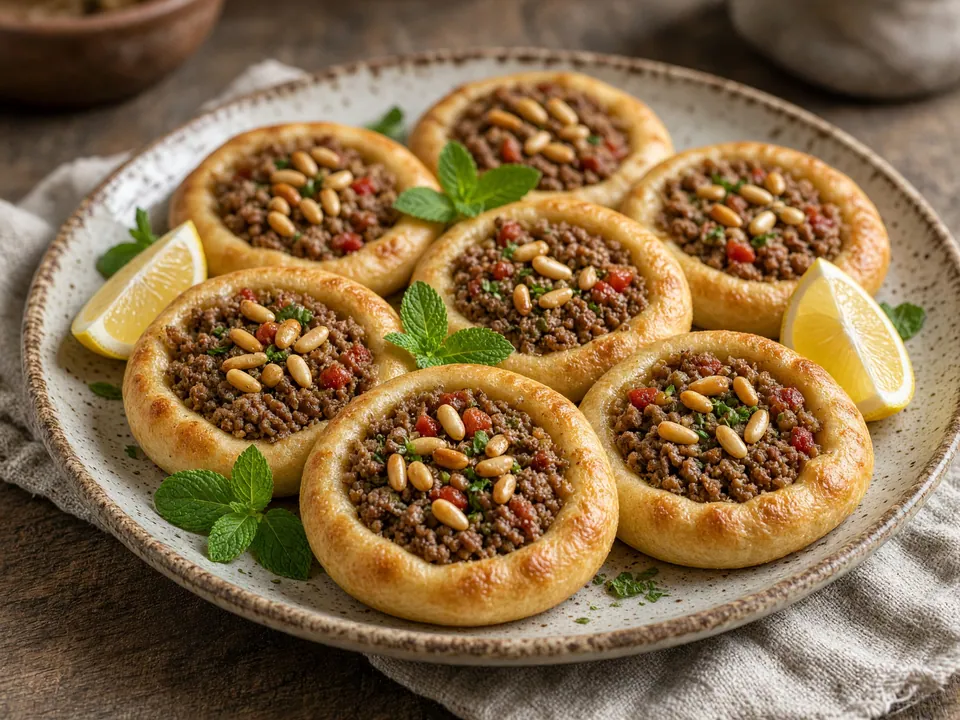
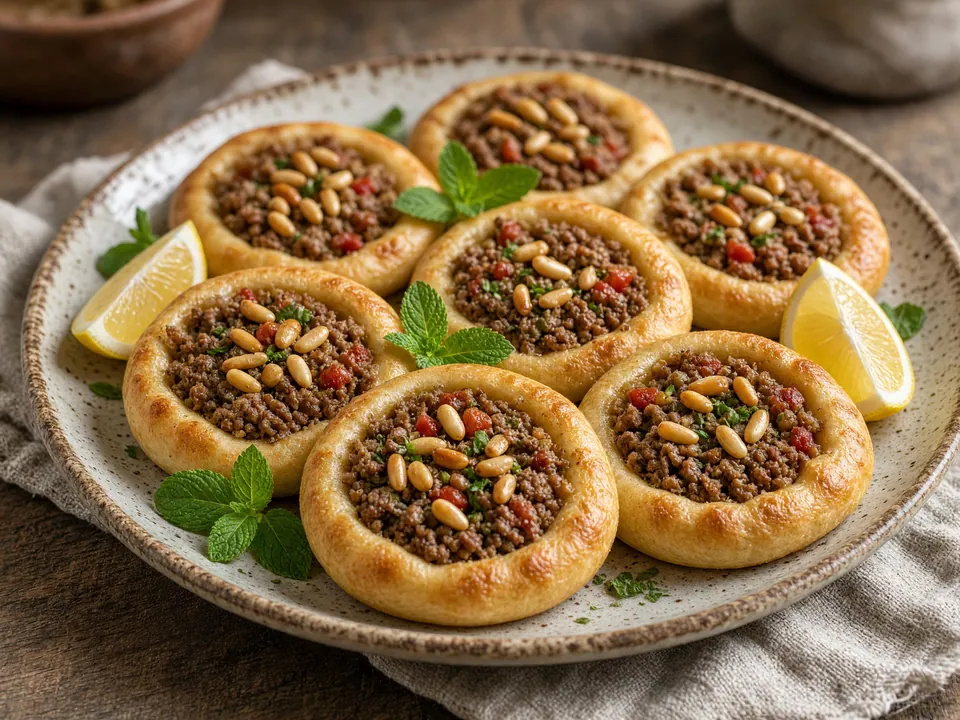
Divide the risen dough into portions and roll each into a round. Aim for a base thin enough to bake through but strong enough to hold meat. Press the center down with your fingertips to make a shallow well, leaving a raised rim. This rim is not decoration. It holds the topping and gives the edges a head start in the oven. Spread the meat in a thin, even layer, then press it gently into the dough so it adheres. Do not mound it in the middle. A thick pile steams the center and leaves the rim pale. If the topping looks generous, use less per pie and make more pies. The shaping step in the sfiha recipe is a useful check for the border and thickness.
Bake hot, on a hot surface
Preheat the oven with a baking tray or stone inside. A hot surface sets the bottom of the dough quickly, which is the best defense against a soggy center. Slide the pies onto the hot tray, leaving space between them. Bake at high heat until the rims are browned and the topping is cooked through. If the oven runs unevenly, rotate the tray once. If the topping browns before the base, move the tray lower or reduce the top heat. Do not open the oven door repeatedly; let the base do its work. For very juicy toppings, a light drizzle of oil around the rim helps browning, but it will not fix a topping that was too wet to begin with.
Read the pie, then adjust
Judge the finished pie by three points: the rim should be crisp, the center should be set rather than wet, and the topping should be browned at the edges. If the center is pale and soft, the topping was too wet or the base too thick. If the rim cracks, the dough was too stiff. If the meat is dry, the oven was too hot or the pie stayed in too long. These are not failures; they are adjustments for the next tray. Keep notes on dough softness and topping weight, not just timings, because timings shift with oven and dough temperature.
Serve while the base is still crisp
Sfiha are at their best warm, not piping hot. Let them sit for a minute so the topping settles, then serve with yogurt, lemon, parsley or sumac. If they must wait, reheat them on a tray in a hot oven; a microwave softens the base. Leftover topping can be cooked as a small panful and spooned over flatbread, but do not store it on the dough. The full Syrian open-faced meat pies (sfiha) recipe has quantities and timing; use this guide to make the technique your own.