Küftə Bozbaş: How Azerbaijan's Meatball Soup Stands Apart
A soup with a family name
Küftə bozbaş is not just a meatball soup in Azerbaijani cooking. It belongs to the bozbaş family, a group of lamb-and-chickpea soups that includes parça bozbaş and sits close to piti. The word küftə points to the meatballs; bozbaş describes the broader bowl of lamb broth, chickpeas and vegetables. That double identity explains most of what makes it different.
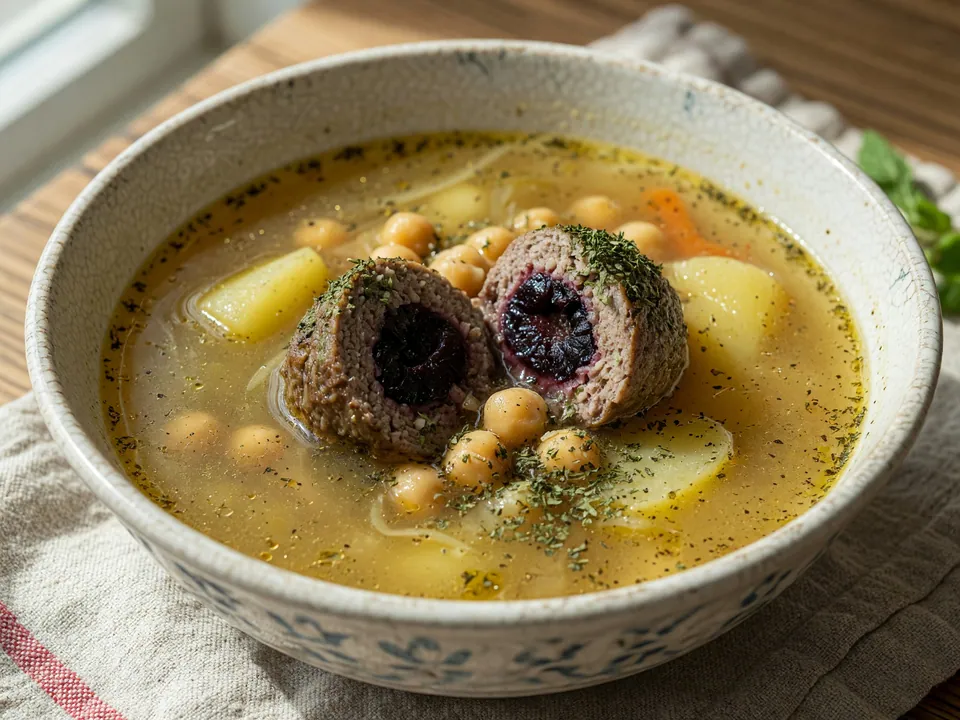
In Azerbaijan, bozbaş is home food. It arrives in deep bowls with bread, fresh herbs and pickles. The broth is savoury but not heavy. Chickpeas give it body. The meatballs make it a full meal. Our Küftə Bozbaş recipe follows that model: minced lamb, rice, onion and chickpeas in a clear, tomato-tinted broth.
What goes into the Azerbaijani version
The meatballs are the first marker. They are made from minced lamb, often with beef, mixed with grated onion, rice, egg and pepper. The rice is not a side starch. It helps bind the meat and gives the meatballs a soft, almost dumpling-like centre. They are shaped larger than the tiny meatballs used in many Turkish soups and slipped into simmering broth rather than browned first.
Chickpeas are the second marker. Dried chickpeas are soaked and cooked until tender. They are not a garnish; they are part of the soup's structure. Potatoes and onion add bulk. Tomato paste or fresh tomatoes give colour and a mild sweetness. Some cooks add a dried sour plum or a little lemon juice at the end. Others finish with dill, mint or coriander. The broth stays relatively clear. It is not thickened with flour, egg yolk or cream.
Seasoning is restrained: salt, black pepper, maybe saffron or dried herbs in some kitchens. The dish relies on lamb broth and chickpeas more than on a long spice list. That is a useful contrast with neighbouring soups, which often build flavour through souring agents, walnuts or thickeners.
How it differs from parça bozbaş
Parça bozbaş is the closest relative. It uses the same chickpea-and-lamb broth idea, but the meat arrives as pieces, often on the bone, rather than as meatballs. The result is a different texture: chunks of lamb to pull apart, a broth that tastes more of bone and simmering, and no rice inside the meat. Our Parça Bozbaş recipe shows that version.
Küftə bozbaş is softer and more rounded. The rice in the meatballs slightly clouds the broth. The meatballs hold the seasoning. If parça bozbaş is a lamb soup with chickpeas, küftə bozbaş is a chickpea soup with lamb meatballs at its centre. The difference is small on paper and obvious in the bowl.
How it differs from piti
Piti is the richer, more ceremonial neighbour. It is cooked in individual clay pots, often sealed and baked or simmered slowly. Lamb, chickpeas, chestnuts and dried fruit can go into the pot. The broth is served first, then the solids are mashed and eaten with bread. Our Piti recipe gives the full picture.
Küftə bozbaş is simpler and more everyday. It is cooked in one pot on the stove. There is no sealed pot, no chestnut-and-fruit layer, and no separate broth course. The meatballs and chickpeas stay together in the bowl. Piti is a slow, layered dish; küftə bozbaş is a family soup.
How it differs from nearby meatball soups
Turkish küfte çorbası is the nearest meatball-soup comparison. Turkish versions often use small meatballs, potatoes, carrots and a lemon-egg finish. The broth can be thin and bright. Küftə bozbaş uses larger meatballs, chickpeas and a tomato base. It does not rely on egg-lemon thickening. The Azerbaijani bowl is more savoury and chickpea-led, less tart and less silky.
Iranian kufteh is another cousin, but not the same dish. Kufteh Tabrizi is a large stuffed meatball, often served with its own sauce or broth, and the stuffing can include rice, split peas, dried fruit and nuts. Küftə bozbaş meatballs are smaller, simpler and cooked in the soup. The dish is a soup first, not a meatball first.
Georgian kharcho moves in a different direction. Beef, rice, walnuts and sour plum give it a thicker, tangier character. Chickpeas are not the main event. The soup is sour and nutty; küftə bozbaş is mild, lamby and chickpea-rich.
Persian abgoosht, also called dizi, shares lamb and chickpeas with bozbaş, but it is a mashed dish served with bread. There are no meatballs in the usual abgoosht. The broth may be drunk separately. Küftə bozbaş keeps its components intact and needs no mashing.
What to look for in the bowl
A good küftə bozbaş has a clear broth with a little tomato colour, not a thick purée. The chickpeas should be tender but whole. The meatballs should be soft enough to cut with a spoon but not falling apart. Potato pieces should hold their shape. The finish is fresh, not heavy: herbs, bread and pickles on the side.
The soup also shows how Azerbaijani cooks use rice. In plov, rice is the centre. In küftə bozbaş, it is a quiet binder inside the meat. That small detail separates the dish from Turkish meatball soups and from the chunkier parça bozbaş.
A bowl that knows its family
Küftə bozbaş is best understood as a member of the bozbaş family, not as a generic meatball soup. Chickpeas, lamb broth and large rice-bound meatballs define it. Parça bozbaş removes the meatballs; piti adds clay pots, chestnuts and dried fruit; Turkish and Iranian versions change the meatball size, the thickener or the serving style. The Azerbaijani bowl sits in the middle: simple, savoury and built for bread.