Syrian Food: What to Cook First and Why
Build a mezze base first
Syrian meals often open with mezze, and that is the best place to start. Hummus, mutabbal and muhammara need no special equipment, can be made ahead, and teach the balance of tahini, lemon and spice that runs through the cuisine. Make hummus from dried chickpeas if you can: simmer until they crush easily, then blend with tahini, lemon juice, garlic and a little ice water. Spoon it onto a plate, make a well, and finish with olive oil, Aleppo pepper and parsley. For mutabbal, char eggplant until the skin collapses and the flesh is smoky. Mix with tahini, yogurt, lemon and garlic, keeping it a little chunky. Muhammara is the third bowl: roasted red peppers, walnuts, pomegranate molasses, breadcrumbs, cumin and Aleppo pepper pulsed to a coarse paste. Serve all three with warm bread, pickles and olives. This is a low-risk first meal with high reward.
Add the herb salads
Tabbouleh and fattoush come next because they show how Syrian cooks use herbs, acid and texture. Tabbouleh is not a grain salad with a little parsley. Parsley is the main ingredient, with fine bulgur, mint, tomato, lemon and olive oil in support. Soak the bulgur in hot water until tender, drain well, and dry the parsley thoroughly before chopping. Fattoush depends on sumac and toasted pita. Dress lettuce, tomato, cucumber, radish and mint with lemon, olive oil and sumac, then add the pita just before serving so it stays crisp. These salads are useful alongside richer dishes, and they teach the Syrian preference for bright, clean flavours.
Make sfiha your first baked dish
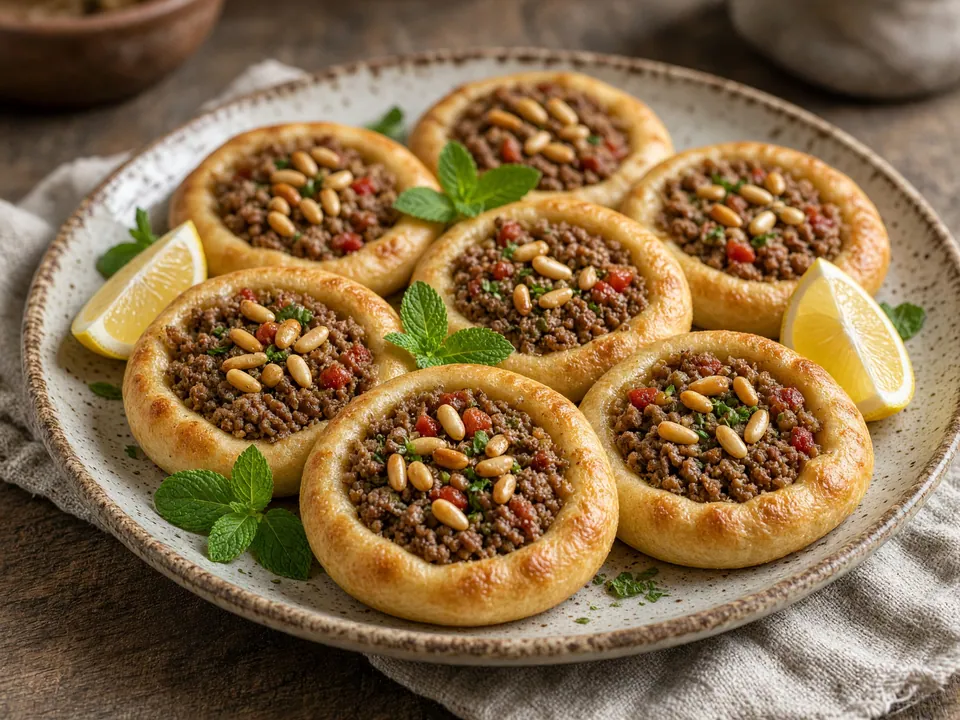
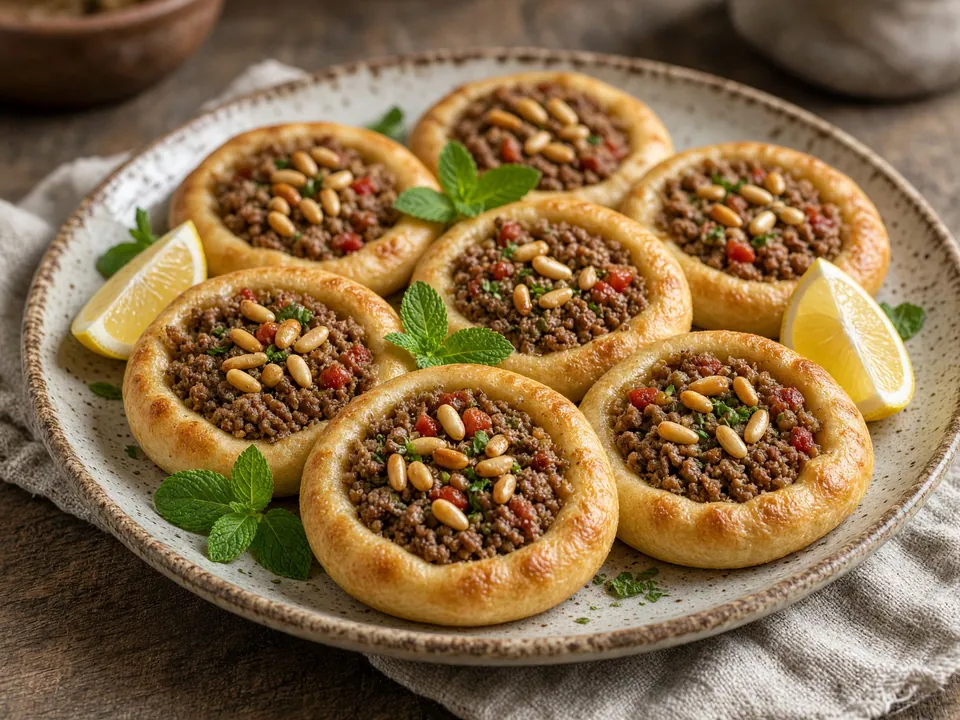
For a first Syrian bake, choose Syrian open-faced meat pies (sfiha). Sfiha are forgiving: a simple dough or flatbread base topped with minced lamb or beef, onion, tomato, pine nuts and a sharp, spiced mix of pomegranate molasses, baharat and Aleppo pepper. The topping should be spread thin, not piled high. Bake in a hot oven until the edges brown and the meat is cooked through. Eat them with yogurt, lemon wedges and pickles. Sfiha teach two useful skills at once: handling a soft dough and seasoning meat without overworking it. They also reheat well, which makes them practical for a first cooking project.
Try kibbeh when you want a challenge
Kibbeh is the next step. The word covers many dishes, but the classic shell is made from fine bulgur, minced meat and onion, then stuffed with spiced meat, onion and pine nuts. The dough needs patience. Keep your hands wet, work the mixture until it holds, and shape small oval shells rather than large ones. Fry them carefully, or bake them in a tray for a simpler version. Kibbeh labanieh cooks the same parcels in a warm yogurt sauce. Make kibbeh after sfiha because it builds on the same spiced meat and bulgur pantry, but asks for more precision. Do not rush the stuffing or the shaping.
Keep mujaddara and molokhia in the rotation
Mujaddara is the weeknight dish to learn: lentils, rice and a deep pile of caramelized onions. Cook the onions slowly until dark and sweet, reserve some for the top, and use the rest in the pot. Cumin and black pepper are enough. Molokhia is a green leaf stew, often made with chicken broth, garlic and coriander. It is served over rice and needs little more than good broth and a careful hand with the garlic. These dishes are less about technique than timing. They round out a Syrian table and show that the cuisine is not only mezze and grilled meat.
Finish with grilled dishes and a sweet
Shish kebab and shawarma belong near the end of the learning curve because they depend on marinades and heat control. For shish kebab, cube lamb shoulder, marinate with onion, garlic, lemon, olive oil and Aleppo pepper, then grill hot and fast. Shawarma at home is usually chicken thighs with vinegar, garlic, spices and a long marinade, cooked in a hot oven or on a grill pan. For dessert, baklava, ma'amoul and knafeh are the famous names. They are worth making once you are comfortable with pastry and syrup. Start simpler with ma'amoul if you like, or buy good baklava and focus on the savoury dishes first.
The order that works
Begin with hummus, mutabbal and muhammara. Add tabbouleh and fattoush. Then bake sfiha, because it is the most useful bridge between mezze and a full meal. Move on to kibbeh when you want a project, and keep mujaddara and molokhia for ordinary nights. The sfiha recipe is the clearest first bake: it is specific, forgiving and gives you a dish that belongs on any Syrian table.