Coconut Milk: The Ingredient That Defines Malaysian Cooking
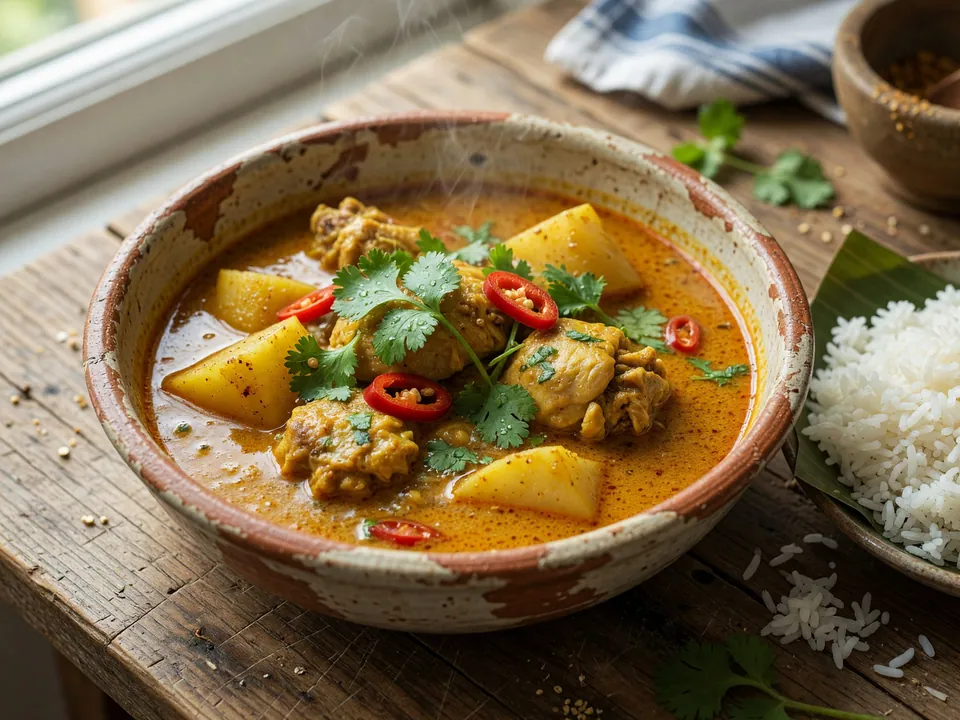
One ingredient, many jobs
Coconut milk is not a garnish in Malaysian cooking. It is structure. It carries spice, softens chilli heat and gives body to curries, soups, rice and sweets. In Malay it is santan. Good santan tastes of fresh coconut, not sugar. It should be creamy but not heavy. It will separate if pushed too hard. That is normal, but the cook can control it.
Malaysian cooks often use two grades. Thick coconut milk, the first press, goes in at the end. Thin coconut milk, the second press, is used earlier for simmering meat or vegetables. Cans are convenient. Shake them well. Full-fat coconut milk gives better body in curries. Light coconut milk is fine for soup but can taste thin. For savoury dishes, a simple can of coconut milk is better than a sweetened coconut cream made for drinks.
How it behaves in the pot
Coconut milk does not like a rolling boil. High heat can make it split into oil and grainy solids. In some dishes that is wanted. In a smooth kari ayam or laksa it is not. Keep the pot at a gentle simmer. Stir from the bottom so the milk does not catch. Add thick coconut milk near the end, after the meat is tender and the spices have cooked. Let it heat through for a few minutes. Do not cover and forget it.
If the sauce looks grainy, pull the pot off the heat and stir. Do not keep boiling it. Return it to low heat only when ready to serve. A wide pan reduces faster than a deep pot, so watch the level. Coconut milk thickens as it sits. If a curry becomes too thick, loosen it with stock or water, not more coconut milk.
Building a curry
Use coconut milk in layers. Start with oil and aromatics: onion, garlic, ginger, lemongrass, curry leaves and a spoon of curry powder or rempah. Fry until the paste smells cooked, not raw. Add thin coconut milk and the meat. Simmer until tender. Then add thick coconut milk, salt and a little palm sugar. Finish with lime or tamarind if the sauce needs lift. The sauce should taste rich but not flat. Malaysian chicken curry is a good template for this method.
The same pattern works with fish and vegetables. Cook the aromatics first. Add thin milk and the firm ingredients. Finish with thick milk. Fish needs less time. Add it after the thin milk has simmered, so it does not break apart. Eggplant and long beans take well to this style. Keep the heat low after the thick milk goes in.
Laksa and noodles
For laksa, coconut milk is the body of the broth. It must go in after the aromatics and stock have simmered, not before. Let the broth taste strong before the coconut goes in. Coconut softens salt and chilli. Stir in thick coconut milk and keep the heat low. Sarawak laksa shows the idea: a fragrant, slightly tart broth with coconut milk rounding the edges. Noodles go in at the end so they do not drink the broth.
Coconut milk also appears in kuih, in rice, and in some snack fillings. Not every Malaysian dish uses it. Curry puffs are a good contrast: crisp pastry and a peppery potato filling, with no coconut milk needed. Knowing when to leave it out is part of using it well.
Rice, snacks and sweets
Nasi lemak rice is cooked with coconut milk, pandan and salt. The rice should smell of coconut, not swim in it. Use thick milk diluted with water. Too much makes the rice greasy. For kuih, coconut milk gives a soft set and a clean finish. Warm the milk gently before mixing it into rice flour or glutinous rice flour. Hot milk can make lumps. Cold milk can make the batter tighten.
For a quick savoury snack, simmer sliced onion, chilli and potato in thin coconut milk until soft. Add thick milk at the end and spoon it over toast or rice. It is not a classic dish, but it uses the same logic: thin milk to cook, thick milk to finish.
Buying and storing
Canned coconut milk is the workhorse. Buy full-fat for curries and laksa. Shake the can hard. If the fat has set on top, warm the can in hot water, then shake. Once opened, transfer the milk to a jar and refrigerate. Use it within a few days. Do not freeze a full jar; leave room for expansion.
Fresh grated coconut can be squeezed with warm water. The first press is thick. The second press is thin. Use the first press for finishing and the second for simmering. Fresh milk is best used the same day. It sours quickly in a warm kitchen.
Taste before serving
Coconut milk mutes salt and acid. Taste at the end. Add salt first, then acid, then a touch of sugar only if needed. A curry that tastes dull often needs lime, tamarind or more salt, not more coconut milk. Serve with rice, roti or noodles. The final bowl should taste of spice, coconut and a clean savoury edge.