Can You Freeze Sarmale? Yes — Here's How
The short answer
Yes, you can freeze sarmale. Both Romanian cabbage rolls and Bulgarian sarmi are cooked in a covered pot until the leaves are soft and the rice is tender, and both recipes include freezing in their make-ahead notes. The key is to freeze the cooked rolls with some of their cooking liquid, then thaw and reheat them gently. Sarmale are soft, sour, savory rolls, not a crisp food, and that texture handles freezing well when packed with liquid.
What the recipes say
The Romanian recipe says to keep sarmale in their cooking liquid in the refrigerator for up to 4 days, or freeze them. It then says to warm them slowly on the stovetop or in a low oven.
The Bulgarian recipe says sarmi can be stored in their cooking liquid in the refrigerator for up to 3 days and reheated over low heat. It also says they can be frozen for up to 3 months.
Freeze them after cooking
Both recipes are long simmers. Romanian sarmale cook for 2½ to 3 hours, either on the stovetop over the lowest heat or in a covered pot in a 350°F (175°C) oven. Bulgarian sarmi simmer for 90 to 120 minutes. By the end, the leaves are completely soft, the rice is cooked, and the pot holds a small amount of thickened liquid.
That cooked stage is the one to freeze. The rolls have already taken on the flavours of pork, onion, rice, bay leaves and, in the Romanian version, smoked bacon or ribs if used. The Bulgarian filling also brings carrot, paprika and chubritsa, with tomato juice folded in before rolling.
Cool, then pack with liquid
Let the pot stand off the heat for 10 to 15 minutes, as both recipes direct, then cool the rolls further before freezing. Packing hot rolls straight into the freezer traps steam and slows freezing.
Pack the rolls snugly, seam side down if possible, and spoon over enough cooking liquid to keep them moist. That liquid is part of the dish. In Romanian sarmale it carries tomato paste if used, plus flavour from the pork and smoked meat. In Bulgarian sarmi it carries tomato juice, paprika and chubritsa. Do not freeze the rolls dry.
Use a container that fits closely, or a freezer bag with the air pressed out. Label it with the contents and freezing date. Bay leaves can be fished out before packing if you prefer.
Thaw and reheat gently
A reliable way to thaw sarmale is in the refrigerator overnight. Put the container on a plate in case of leaks. If reheating from frozen, allow more time and keep the heat low.
For Romanian sarmale, warm them slowly on the stovetop or in a low oven. A covered pot over low heat is ideal. Add a splash of hot water or stock if the liquid has thickened too much. For Bulgarian sarmi, reheat over low heat, as the recipe says, until heated through. A gentle simmer is enough. Hard boiling can tear the leaves and break up the rice.
What to serve with them
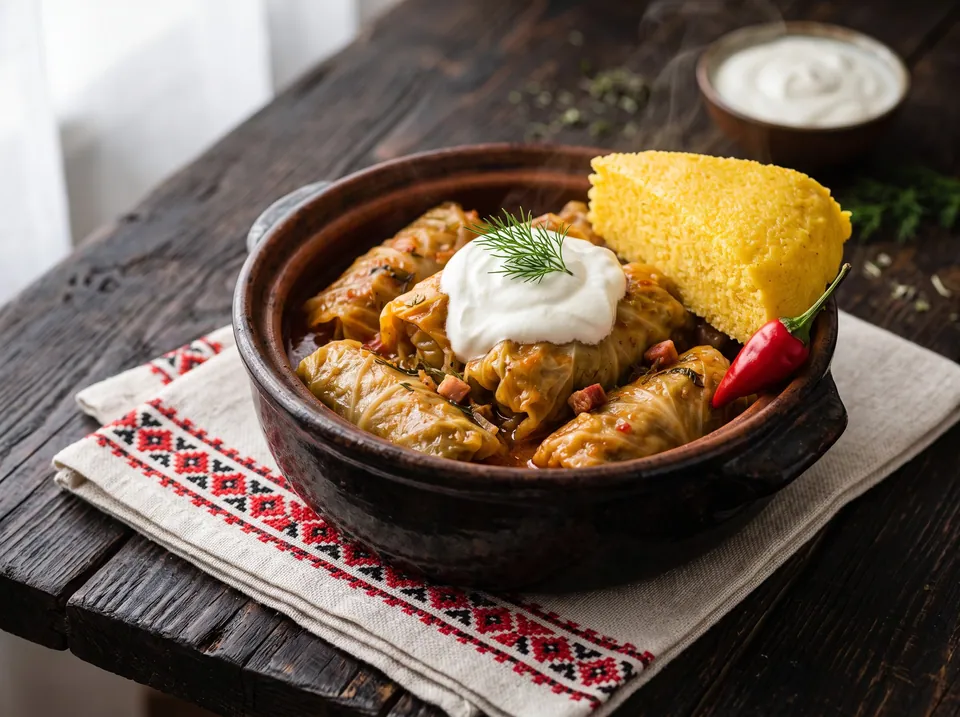
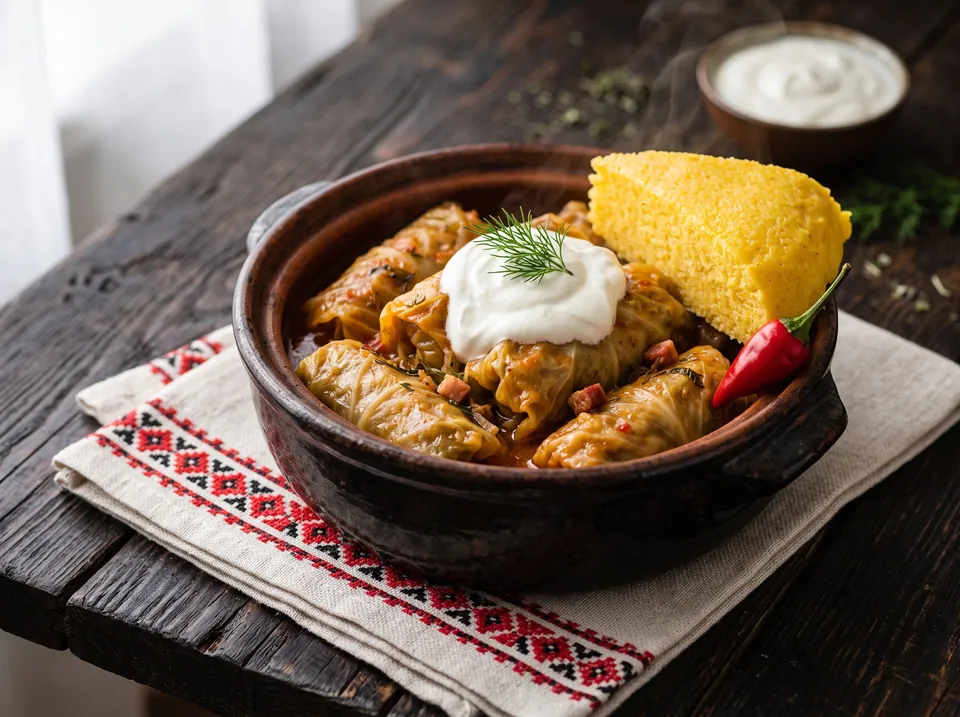
Serve Romanian sarmale with soft polenta, sour cream and hot pickled peppers. The recipe gives about 2 cups (400 g) cooked polenta and 1 cup (240 ml) sour cream for 6 servings. Serve Bulgarian sarmi with plain yogurt and extra parsley, or with a cucumber-yogurt salad and coarse bread. Those fresh, cool sides balance the rich, sour rolls.
Freezer time and quality
The Bulgarian recipe gives a freezer time of up to 3 months. For any sarmale, the sooner you eat them, the better the leaves will taste. Freezing preserves cabbage rolls; it does not improve them.
Mistakes to avoid
Do not freeze the rolls without liquid. Dry leaves turn leathery and the rice hardens. Do not thaw them on the counter for hours; use the refrigerator. Do not reheat at a hard boil. Do not crowd a small pot so tightly that the rolls break as you lift them out. And do not throw away the cooking liquid; it is the sauce.
If you have a pot of sarmale left after a holiday meal, freezing is a sensible way to save it. The same goes for sarmi. Cook them through, cool them, pack them with liquid, and reheat gently. That is the whole method.