Laos: What to Cook First and Why
Start with the sticky rice
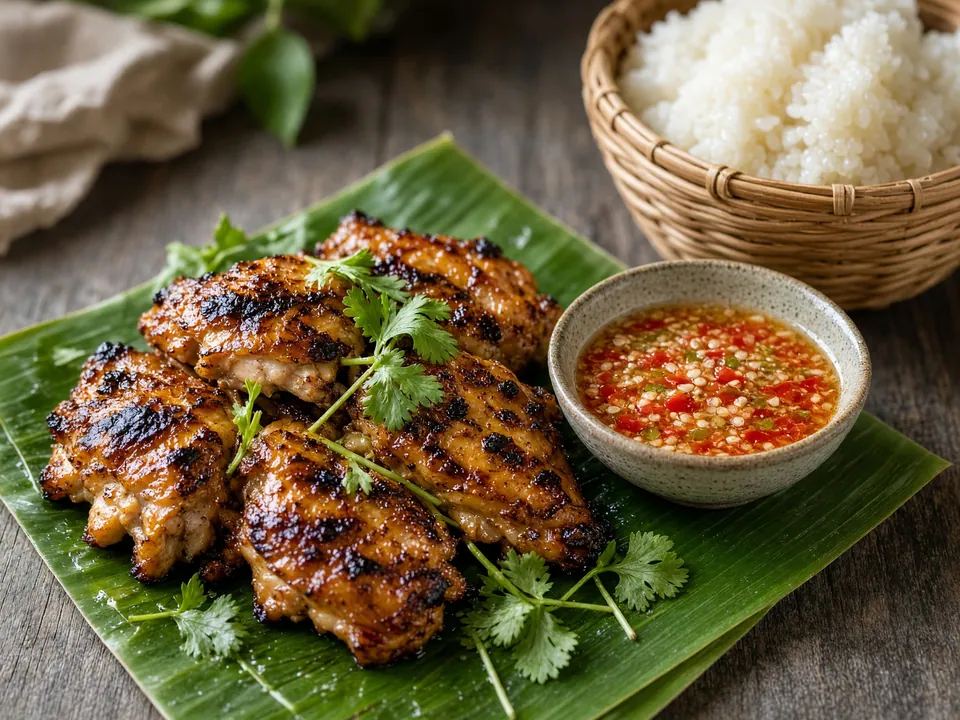
Lao meals are built around khao niaow, glutinous rice. It is soaked, steamed in a conical basket, and served warm in a covered basket. The grains should be tender but separate, not a sticky porridge. At the table, diners pinch off small balls and use them to pick up grilled meat, dips, and salads. This is not a side dish. It is the centre of the meal.
If you cook only one thing, cook sticky rice properly. Rinse the rice until the water is mostly clear. Soak it for several hours or overnight. Drain it, spread it in a bamboo steamer lined with cloth, and steam over boiling water until the grains are translucent and chew tender. Turn the rice once halfway through. Keep it covered after cooking. A woven basket is traditional, but a colander over a pot works.
Why start here? Sticky rice teaches the rhythm of Lao food: rice first, then a small amount of something salty, sour, bitter, or hot. It also shows how Lao meals differ from Thai meals. Jasmine rice may appear, but glutinous rice is the everyday staple.
Grill chicken next
For a first main dish, Lao grilled chicken (ping kai) is a good choice. The marinade relies on ingredients that are easy to find in Asian markets: lemongrass, garlic, shallot, fish sauce, black pepper, and sometimes lime leaves. The chicken is grilled over medium heat so the skin renders and the herbs char without burning. It is often served with sticky rice and a small bowl of dipping sauce.
Why ping kai first? It gives you a hot grill, a pot of rice, and one strong flavour to manage. The work is straightforward, and the result shows the Lao preference for savoury, herby, lightly charred meat rather than sweet glazes. The ping kai recipe is also forgiving: if the fire is too hot, move the chicken to the cooler edge and finish it there. Do not crowd the grill.
Serve the chicken with sticky rice, cucumber, herbs, and a simple dip of lime juice, fish sauce, chili, and a little sugar. That plate is a useful introduction to the balance Lao cooks look for.
Laap: herbs, toasted rice, and lime
Laap is often the next dish to learn. Minced chicken, duck, pork, beef, or fish is cooked quickly with a little fish sauce. Off the heat, it is tossed with lime juice, chili, mint, coriander, scallions, and toasted rice powder. The powder is made by toasting raw sticky rice until deep brown, then grinding it coarse. It thickens the juices and adds a nutty aroma.
Laap should taste bright and savoury, with heat from fresh chilies and a slight bitterness from herbs. It is usually served warm, not cold, with sticky rice and raw vegetables. The dish teaches two important techniques: how to balance lime and fish sauce, and how to use toasted rice powder. Do not skip the powder. Without it, the salad tastes flat.
Tam mak hoong: the mortar salad
Tam mak hoong is green papaya salad, but the Lao version is distinct. It uses shredded unripe papaya, long beans, tomato, garlic, chili, lime, fish sauce, and padaek, the fermented fish sauce that gives many Lao dishes their deep savoury note. Palm sugar rounds the edges. The ingredients are pounded in a clay or wooden mortar, not blended.
The pounding matters. It bruises the papaya and beans so they absorb the dressing. Add padaek a little at a time. It is strong, and a small amount goes a long way. If you are new to it, start with fish sauce and add a spoonful of padaek at the end. Taste as you pound. The salad should be sour, salty, hot, and slightly sweet.
Sausages, soups, and stews
Sai ua is a Lao sausage seasoned with lemongrass, garlic, kaffir lime, chili, and fish sauce. The pork is usually coarsely chopped, not finely ground, so the texture stays meaty. Grill the links slowly and turn them often. They are excellent with sticky rice and a plate of herbs.
For cooler weather, look to noodle soups. Khao piak sen is a rice-noodle soup with a clear pork or chicken broth, thick noodles, and herbs. Luang Prabang-style khao soi is a rice-noodle soup with a pork and tomato broth, often finished with crispy fried noodles. Or lam is a herbal stew with eggplant, mushrooms, beans, and pepperwood. Each dish shows how Lao cooks use herbs and bitter notes alongside sour and salty flavours.
Dips and small plates
Jeow bong is a thick chili paste with garlic, galangal, and fish sauce. Jeow mak len is a roasted tomato dip with chili and herbs. Kaipen is riverweed, dried and brushed with oil, then grilled or fried until crisp. These small plates are not garnishes. They are the salty, spicy contrast that makes plain sticky rice taste complete.
A first Lao meal
A good first menu is grilled ping kai, sticky rice, tam mak hoong, and jeow mak len. Cook the rice first and keep it covered. Grill the chicken over medium heat. Pound the papaya salad last so it stays fresh. Serve everything at room temperature or warm, with extra herbs and lime.
That meal covers the main lessons of Lao cooking: sticky rice as the base, grilled meat with herbs, a pounded salad with acid and fish sauce, and a dip for contrast. Once those are comfortable, add laap, sai ua, and a noodle soup. The order is not a rule. It is simply a practical path from one pot of rice to a full Lao table.