Croatian Baked Noodle Sheets (Zagorski Mlinci)
Zagorski mlinci Say it: ZAH-gor-skee MLEEN-tsee
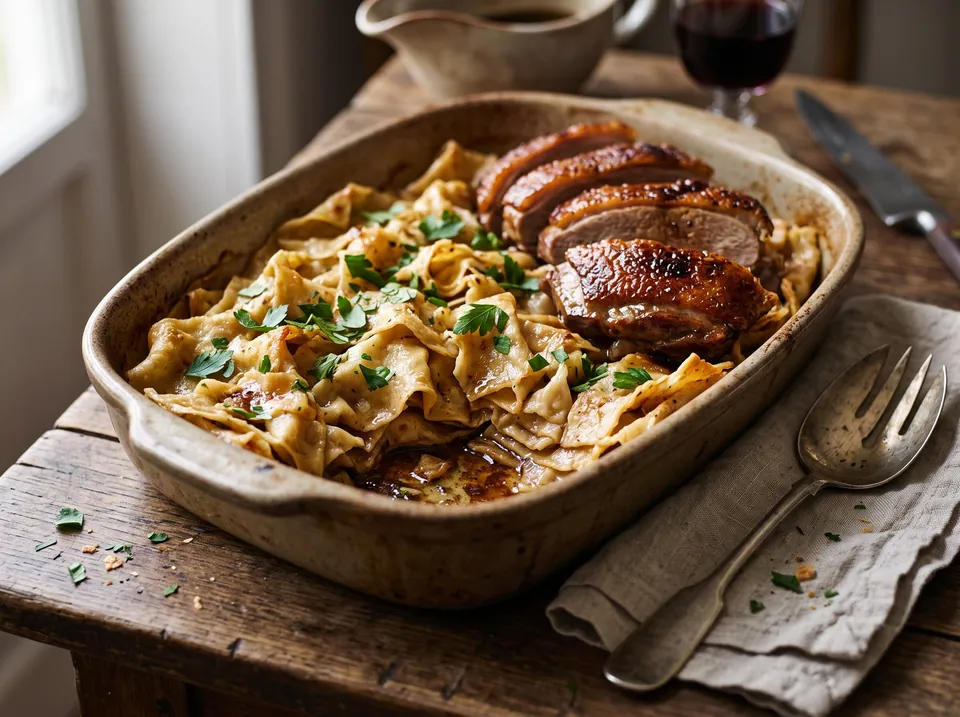
At holiday roasts in Hrvatsko Zagorje, the rural area north of Zagreb, zagorski mlinci are the signature side: paper-thin noodle sheets that are baked dry, broken into shards, briefly simmered, then tossed with lard or poultry fat. They bring a tender chew and blistered crisp edges to the plate, and they are built to catch the juices from roast turkey, duck or goose. The practical appeal is that the dry sheets can be made well ahead and finished in minutes just before the meal.
Croatian Baked Noodle Sheets (Zagorski Mlinci)
Zagorski mlinci
Pronounced ZAH-gor-skee MLEEN-tsee
- Serves
- 6
- Prep
- 45 min
- Cook
- 25 min
- Total
- 1 hr 10 min
- Level
- Medium
Ingredients
Amounts are scaled. Cooking times and pan sizes stay the same.
For the dough
To cook and finish
Method
Combine the flour and salt in a large bowl with a whisk. In a separate jug, beat the eggs into the lukewarm water, then pour this into the flour and stir until a shaggy dough forms.
Turn the dough out onto a floured work surface and knead for 5–8 minutes, until it is smooth and elastic; if it feels dry, add water a few drops at a time. Cover it with a cloth and leave to rest for 30 minutes.
Cut the dough into 4–6 portions. Roll each portion, one at a time, into a rough circle or oval as thin as possible—about 1⁄16 inch (1.5 mm)—using a light dusting of flour to stop sticking.
Set a dry griddle or large skillet over medium-high heat, or heat the oven to 450°F (230°C). Cook each sheet for 1–2 minutes on each side, until dry, blistered and pale golden with only a few light brown spots; avoid taking them to a deep brown.
Let the baked sheets cool a little, then snap them into uneven pieces roughly 2–3 inches (5–7 cm) across. The pieces may be stored at this point.
In a wide pot, bring the meat broth—or water with 1 teaspoon salt—to a boil. Drop in the broken mlinci and cook for 2–3 minutes, until tender but still a little chewy, then drain thoroughly.
Melt the lard or rendered poultry fat in the same pot or a large skillet over medium heat. Put the drained mlinci back in and turn them gently for 1–2 minutes, until every piece is coated and glossy; serve right away.
Regional variant: Mlinci baked in pan drippings (mlinci u tepsiji)
Instead of boiling the broken sheets first, put them in the roasting pan with the meat's pan juices, add about 2 cups (480 ml) hot water or broth, and turn to coat. Bake at 400°F (200°C) for 15–20 minutes, until the liquid has been absorbed and the edges are crisp. This approach is often used when mlinci accompany roast turkey or duck.
Cook's notes
- Thinness is key: pieces rolled too thick turn doughy and heavy once simmered.
- Pull the sheets from the heat while they are blistered and pale golden; deep browning stops them softening properly in the pot.
- Store the baked, uncooked shards in an airtight tin at room temperature for several weeks, then boil them straight from dry.
Serve with
Offer with roast turkey, duck or goose, spooning the pan juices over the top; a sharp cabbage salad or pickled vegetables makes a good contrast to the richness.
Make ahead and storage
Baked but unboiled mlinci stay in an airtight container at room temperature for several weeks; boil them just before serving.