Roast Duck with Cabbage and Dumplings (Pečená kachna)
Pečená kachna se zelím a knedlíkem Say it: PEH-cheh-nah KAHKH-nah seh ZEH-leem ah KNEH-dlee-kem
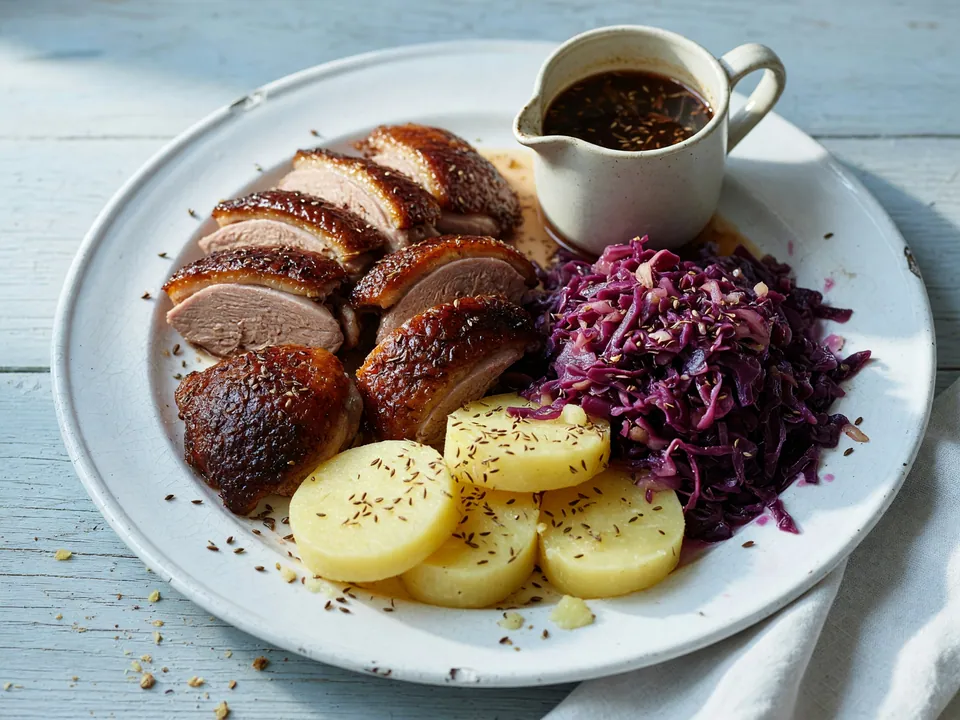
Biting into this Czech favorite reveals incredibly tender duck meat beneath shatteringly crisp skin, balanced by the sweet-tangy chew of slow-braised red cabbage and fluffy potato dumplings that perfectly absorb the savory juices. The straightforward seasoning of salt and caraway allows the rich poultry flavor to shine, while the long low roast followed by a high-heat finish delivers restaurant-quality results at home. This satisfying plate turns any meal into a special occasion and pairs wonderfully with a refreshing beer.
Roast Duck with Cabbage and Dumplings (Pečená kachna)
Pečená kachna se zelím a knedlíkem
Pronounced PEH-cheh-nah KAHKH-nah seh ZEH-leem ah KNEH-dlee-kem
- Serves
- 6
- Prep
- 40 min
- Cook
- 4 hr 30 min
- Total
- 5 hr 10 min
- Level
- Medium
Ingredients
Amounts are scaled. Cooking times and pan sizes stay the same.
For the duck
For the red cabbage
For the potato dumplings
Method
Thoroughly dry the duck using paper towels inside and out. Massage the coarse salt and caraway seeds evenly across the exterior and within the body cavity. Allow the seasoned bird to sit uncovered at room temperature for roughly one hour to promote uniform cooking.
Set the oven temperature to 250°F (120°C). Position the duck with the breast facing upward inside a roasting pan, then add the water to the base. Cook for three and a half to four hours, spooning the accumulated liquids over the duck every forty-five minutes, continuing until the leg joints loosen freely and the skin appears light in color.
Prepare the cabbage during the duck's initial roasting period. Cut the cabbage into fine shreds, slice the halved onion into thin strips, and grate the peeled apple using the coarse side of a box grater. Warm the lard in a spacious pot set over moderate heat, then sauté the onion slices until they soften after about five minutes. Incorporate the shredded cabbage, grated apple, sugar, caraway seeds, measured salt, ground pepper, vinegar, and chosen liquid. Secure the lid and allow the mixture to simmer gently, with occasional stirring, for one and a half to two hours until the cabbage reaches a soft, shiny consistency.
Begin preparing the potato dumplings approximately forty-five minutes prior to completing the slow-roasting stage. Cook the potatoes in boiling salted water until they yield easily when pierced, drain them, and permit them to release steam for several minutes. While still warm, remove the skins and press the potatoes through a ricer or mash them thoroughly; permit brief cooling. Blend in the egg, salt, and flour until a pliable yet somewhat adhesive dough forms, incorporating additional flour sparingly if the mixture seems overly wet.
Form the dough into two or three cylindrical rolls measuring roughly two inches (five centimeters) in diameter. Heat a generous quantity of salted water in a large pot until it reaches a gentle simmer. Carefully submerge the rolls and poach them, flipping midway, for twenty to twenty-five minutes until they rise to the surface and register firm to the touch. Lift them out using a slotted utensil and allow a five-minute resting period prior to cutting into slices with unwaxed dental floss or a keen blade. Gently coat the slices with the melted lard.
Once the duck meat separates readily with a fork, extract the roasting pan from the oven and decant the collected liquids and rendered fat into a suitable vessel. Permit the duck to relax at ambient temperature for thirty to forty-five minutes. Raise the oven temperature to 400°F (200°C), return the duck to the pan, and continue roasting for another twenty to twenty-five minutes to achieve a rich golden hue and maximum crispness on the skin.
As the final crisping occurs, remove the floating fat from the reserved juices and warm them gently in a saucepan, adjusting the seasoning as preferred. Slice or portion the duck and present alongside the glossy cabbage, warm dumpling rounds, and the reheated juices.
Regional variant: Bread dumplings (houskové knedlíky)
Substitute the potato dumplings by creating Czech bread dumplings: immerse 6 cups (about 9 oz / 250 g) of cubed stale white bread in 1 cup (240 ml) warm milk combined with 2 beaten eggs. Incorporate 1/2 tsp salt, 2 tbsp chopped parsley, and 1/2 cup (60 g) flour to form a cohesive dough. Shape into logs and simmer in water for 20-25 minutes before slicing and serving instead of the potato version.
Cook's notes
- Achieve superior skin crispness by ensuring the duck is completely dry and leaving it uncovered on a tray in the refrigerator overnight prior to applying the seasonings.
- Strain the fat that renders from the duck throughout the extended low-temperature roast and store it chilled for later use when preparing roasted potatoes.
- Should the dumpling mixture cling excessively to the hands, coat them lightly with flour rather than incorporating large extra amounts which could lead to dense results.
Serve with
Cold Czech pilsner or light lager; the skimmed duck juices spooned over the dumplings.
Make ahead and storage
The slow-roasted duck can be cooled and refrigerated a day ahead; crisp it in a 400°F (200°C) oven just before serving. Braised cabbage improves overnight; reheat gently. Dumplings are best cooked fresh.