Eight Treasure Rice (Bābǎo Fàn)
八宝饭 Bābǎo FànSay it: bah-bow fahn
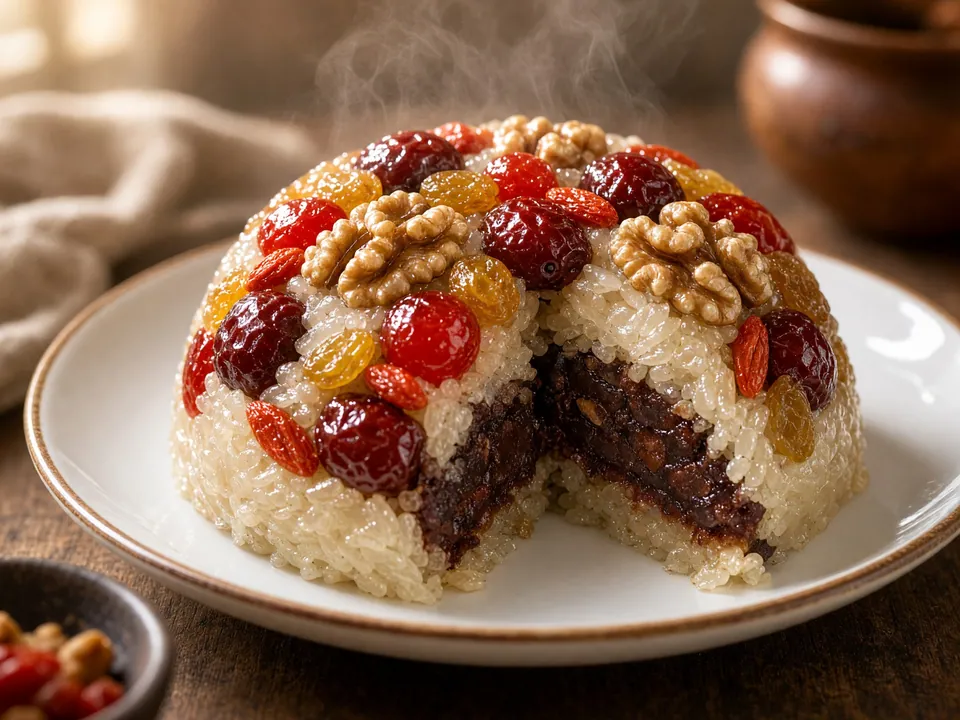
Eight Treasure Rice is a festive Chinese steamed dessert made from sweet glutinous rice layered with red bean paste and crowned with an array of colorful candied fruits, nuts, and dried berries. Popular nationwide but especially associated with Shanghai and southern China, it is traditionally served during Lunar New Year and other celebrations. The dish offers a mildly sweet flavor with a soft, chewy texture from the sticky rice and a pleasant contrast from the fruity and nutty toppings. Its special appeal lies in the jewel-like mosaic of eight auspicious ingredients arranged on top, symbolizing prosperity and good fortune.
Eight Treasure Rice (Bābǎo Fàn)
八宝饭, Bābǎo Fàn
Pronounced bah-bow fahn
- Serves
- 6
- Prep
- 30 min
- Cook
- 1 hr 30 min
- Total
- 2 hr
- Level
- Medium
Also egg-free.
Allergens: contains nuts. Check labels on packaged ingredients.
Ingredients
Amounts are scaled. Cooking times and pan sizes stay the same.
Eight Treasures (choose any 8)
Method
Rinse the glutinous rice in several changes of cold water until the water runs mostly clear. Soak in cold water for at least 4 hours or overnight, then drain thoroughly.
Line a steamer basket with cheesecloth or a damp kitchen towel. Spread the drained rice evenly inside and steam over boiling water for 35-40 minutes until the grains are fully cooked, translucent, and tender.
Transfer the hot steamed rice to a large bowl. Immediately stir in the sugar and 2 tablespoons (30 ml) of the vegetable oil until the sugar fully dissolves and every grain looks glossy and evenly coated.
Generously oil an 8-inch (20 cm) heatproof bowl with the remaining 1 tablespoon (15 ml) of oil. Arrange the eight chosen treasures in an attractive decorative pattern on the bottom of the bowl, starting with larger items like dates, cherries, and walnuts, then filling gaps with smaller fruits and nuts.
Spoon roughly half the sweetened rice into the bowl. Press down firmly and evenly with a spatula or the back of a spoon to create a compact, smooth layer.
Spread the red bean paste evenly over the rice, leaving a ½-inch (1 cm) border around the edge so the top layer of rice can seal it in.
Add the remaining rice on top, pressing down firmly once more to pack the bowl tightly and create a level surface. The bowl should be well filled.
Cover the bowl tightly with foil or an inverted plate. Steam over medium-high heat for 45 minutes.
Carefully remove the bowl from the steamer and let it rest for 5-10 minutes. Run a knife around the edge to loosen, then invert onto a serving plate to reveal the colorful top.
Regional variants
Regional versions may swap red bean paste for lotus seed paste or add a drizzle of osmanthus syrup. Some modern adaptations include extra luxurious toppings such as dried longan, candied pineapple, or even a thin layer of brown sugar syrup.
Cook's notes
- Take time to create a beautiful, symmetrical pattern with the eight treasures; it becomes the presentation side once inverted.
- Glutinous rice must be soaked before steaming or it will cook unevenly; regular long-grain rice is not a suitable substitute.
- If sweetened red bean paste is unavailable, you can substitute lotus seed paste or make a quick version by simmering canned adzuki beans with sugar until thick.
Serve with
Serve warm, often drizzled with light osmanthus syrup or enjoyed plain during Chinese festivals.
Make ahead and storage
Can be made a day ahead and refrigerated. Re-steam for 20 minutes or microwave until heated through before serving.