Milanesa Napolitana: The Cutlet Argentina Made Its Own
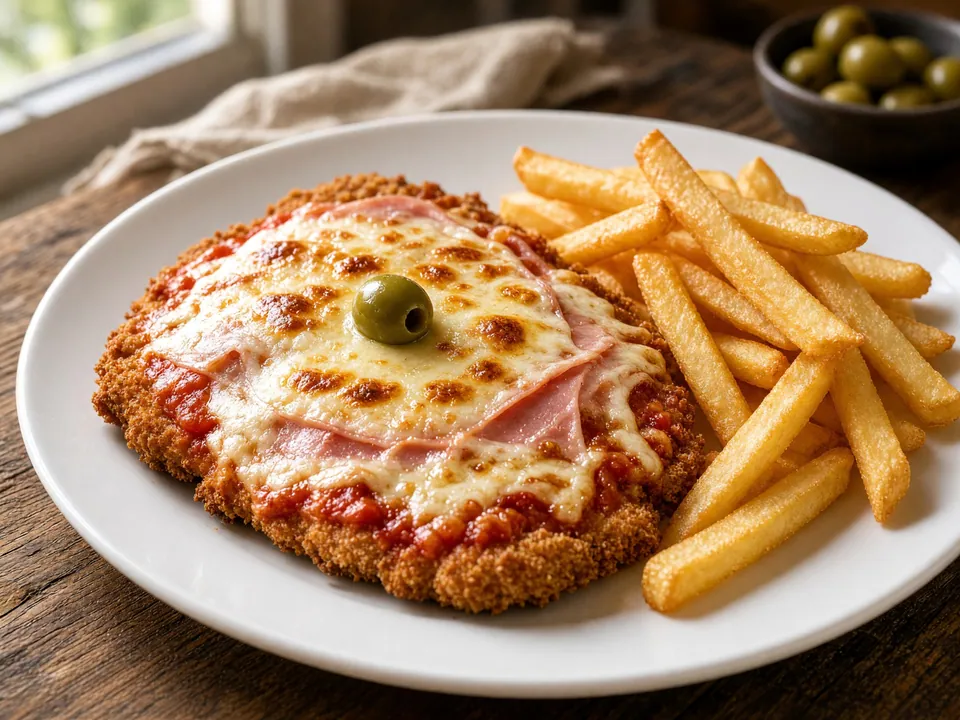
One cutlet, two countries
Milanese cooking gave Argentina the breaded cutlet. Argentina gave it a new name, a bigger plate, and a topping of tomato sauce and melted cheese. Milanesa napolitana is the result: crisp breaded beef under ham, sauce and mozzarella, with fries alongside and a fork already in hand.
It is home food, not restaurant food. Every Argentine cook has opinions about thickness, crumbs and how much sauce is too much. What follows is the technique those arguments are actually about.
The name is not about Naples
"Napolitana" is a Buenos Aires word. The story usually told traces it to a city restaurant that covered a dry milanesa with tomato and cheese to rescue it; the dish took off and kept the name.
Whether or not that is exactly how it happened, the meaning is settled. In Argentina, anything "a la napolitana" arrives with tomato sauce, ham and melted cheese, and pizza napolitana is built the same way. The name is local shorthand for that combination, not a recipe from Naples.
Cut the beef properly
Look for nalga (round), cuadrada or bola de lomo. Ask the butcher for slices about a centimetre thick. Thinner than that and the meat dries out before the crumbs have browned.
Pound each slice between two sheets of plastic to an even 5–7 mm. Evenness matters more than thinness. A cutlet with a thick middle and thin edges cooks unevenly, and the breading slips off the thin parts. Trim hard fat and gristle, then salt the meat lightly before breading.
Set up three plates
Flour is optional; plenty of cooks skip it. Egg first, beaten with crushed garlic, chopped parsley, salt and pepper. Then dried breadcrumbs — the fine kind sold as pan rallado. Panko stays loose and gives a lighter, crunchier shell, which is a different dish; traditional milanesa wants the fine crumb that fries into a thin, tight jacket.
Press the crumbs on firmly with the palm of your hand, turn the cutlet, press again. Shake off only what is loose.
Let the coating rest
Twenty or thirty minutes in the fridge is the quiet step that changes the result. The egg sets, the crumbs hydrate slightly and grip, and the cutlet holds together in the pan instead of shedding its coat. It also means you can bread everything ahead and fry at the last minute.
Fry hot, and shallow
An Argentine kitchen usually shallow-fries: a centimetre of neutral oil in a wide pan, around 175–180°C. Oil that is too cool and the crumb drinks it; too hot and the crust darkens before the beef is cooked. Two to three minutes per side is normal for a pounded cutlet.
Do not crowd the pan. Two at a time keeps the oil temperature steady. Drain on a rack rather than on paper, which traps steam and softens the underside.
Build the topping in order
The sauce is not jarred pizza sauce. Cook chopped onion and garlic in a little oil, add crushed tomatoes, oregano, salt and a pinch of sugar, then reduce until it holds a spoon line. Loose sauce is the main reason a napolitana turns soggy.
Then, on each fried cutlet: a spoonful of warm sauce, a slice of ham, a layer of mozzarella. Low-moisture mozzarella melts without releasing water; fresh mozzarella will flood the plate. Run the tray under a hot grill until the cheese blisters and browns in spots.
Olives go on afterwards. A fried egg on top turns it into milanesa a caballo, and many cooks do both. Build and grill at the last minute so the crumb stays crisp beneath the sauce.
Serve it the way it is eaten
Fries are standard, puré de papas almost as common, and a plain tomato and onion salad cuts through the cheese. Some cooks skip the frying altogether and bake the breaded cutlets on an oiled tray before topping them; the crust is drier, and it works when cooking for a crowd.
Cold leftovers belong in bread. The milanesa sandwich is a genre of its own, especially in Tucumán, and it sits comfortably beside the country's other great sandwiches — see our sándwich de lomo for the steak version.
The full quantities and timings are in our milanesa napolitana recipe.
If you are feeding a table
Milanesa napolitana is the main event of an Argentine spread, not a starter. Open with empanadas tucumanas, keep the salad plain, and finish with something sweet and cold: dulce de leche spooned over ice cream, or a chocotorta made the day before.
The cutlet rewards small things — an even pound, a firm press into the crumbs, a rest in the fridge, a sauce cooked down until thick. Get those right and the topping is simply the last two minutes of work.