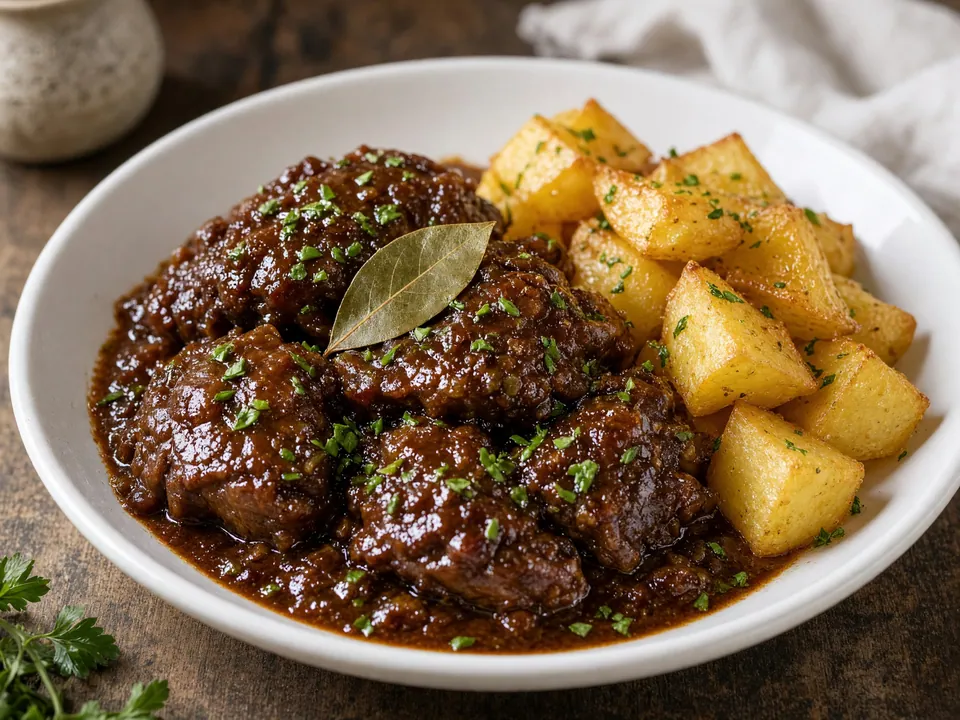
7 Mistakes That Ruin Andalusian Braised Pork Cheeks
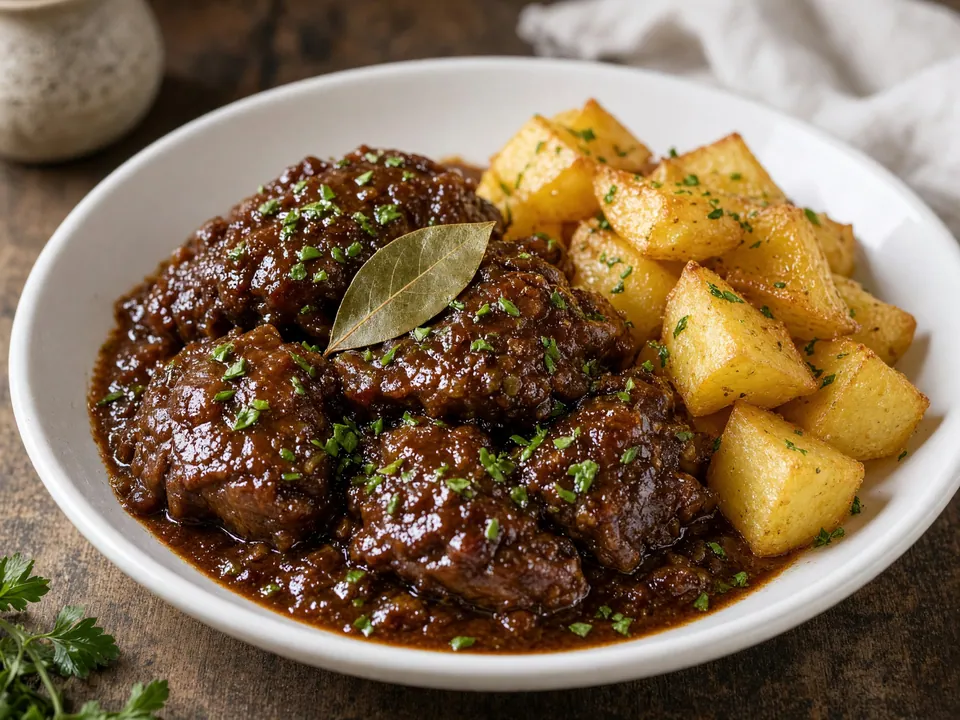
Why Carrillada Deserves Careful Technique
Andalusian braised pork cheeks, or carrillada, turns inexpensive cuts into silky, deeply flavoured meat bathed in thick sauce. The dish relies on slow cooking to break down collagen. Yet many home cooks end up with chewy results or watery gravy.
These seven mistakes appear repeatedly in Spanish kitchens. Avoid them and the recipe linked below will reward you with restaurant-quality carrillada.
Mistake 1: Skipping the Sear
Browning the cheeks creates the foundation of flavour. Without a proper sear the final sauce tastes flat. Heat a heavy pot over medium-high, pat the meat dry, season generously with salt, and cook in batches until deep golden. Do not crowd the pan or the meat steams instead of browning.
Andalusian Braised Pork Cheeks (Carrillada) begins with this step for good reason.
Mistake 2: Choosing the Wrong Cut or Size
True carrillada comes from the pig’s cheek muscle. Supermarket “pork shoulder” or uneven pieces cook at different rates. Ask the butcher for whole cheeks or uniform 50-60 g pieces. Larger chunks require extra time and often finish unevenly.
Mistake 3: Rushing the Braise
The biggest error is impatience. Collagen needs at least 2½ hours at a gentle simmer, often closer to 3. Set the lid slightly ajar so the sauce reduces slowly. Test tenderness with a fork; it should slide in without resistance. A pressure cooker can cut time but changes texture slightly.
Mistake 4: Adding Too Much Liquid
Many cooks drown the meat in stock or wine. The cheeks release plenty of juices. Start with just enough liquid to come halfway up the meat. Keep extra warm broth on hand to add only if the pot dries out. Overly thin sauce never reduces to the glossy consistency that defines the dish.
Mistake 5: Ignoring the Sofrito Base
A classic Spanish sofrito of onion, carrot, garlic and sometimes tomato builds sweetness and depth. Cutting vegetables too large leaves raw chunks; too small and they disappear. Dice evenly and cook on low until caramelised, about 15 minutes. This step cannot be hurried.
For contrast, see how patience with aromatics pays off in Madrid-Style Tripe (Callos a la Madrileña).
Mistake 6: Using the Wrong Wine or Herbs
Dry fino or amontillado sherry is traditional in Andalusia and adds nutty acidity. Generic “cooking wine” or sweet sherry throws the balance off. Bay leaves and a sprig of thyme work; rosemary or excessive paprika masks the pork. Remove herbs before serving so no one bites into a twig.
Mistake 7: Serving Immediately or Over-Reducing
Rest the cheeks in the sauce for 10 minutes after cooking. The meat reabsorbs juices. If the sauce thickens too much during resting, loosen with a splash of warm stock. Some cooks strain and blend the vegetables for a smoother sauce, but many Andalusian grandmothers prefer the rustic texture.
Side Dishes That Complement Carrillada
Serve with crusty bread to mop the sauce or simple boiled potatoes. For a complete Andalusian spread, add Spanish Fried Breadcrumbs with Chorizo (Migas) or Poor Man's Potatoes (Patatas a lo Pobre). A glass of chilled fino sherry echoes the braising wine.
Final Tips for Success
Use a heavy enamelled cast-iron pot that holds heat evenly. Keep the simmer at the gentlest bubble; rapid boiling toughens the meat. Make the dish a day ahead—flavours improve overnight in the fridge. Reheat gently with a little water to prevent drying.
Once these mistakes are avoided, carrillada becomes one of the easiest impressive dishes in Spanish cooking. The linked recipe includes exact timings and quantities that have been tested in home kitchens across southern Spain.
Roast Lamb (Cordero Asado) and Spiced Pork Skewers (Pinchos Morunos) offer other Andalusian pork and lamb ideas when you want variety on the table.
Master these points and your next batch of Andalusian braised pork cheeks will be fork-tender, richly sauced and worthy of any Andalusian tavern.