A Hungarian Holiday Menu: Broth, Goulash and Krémes
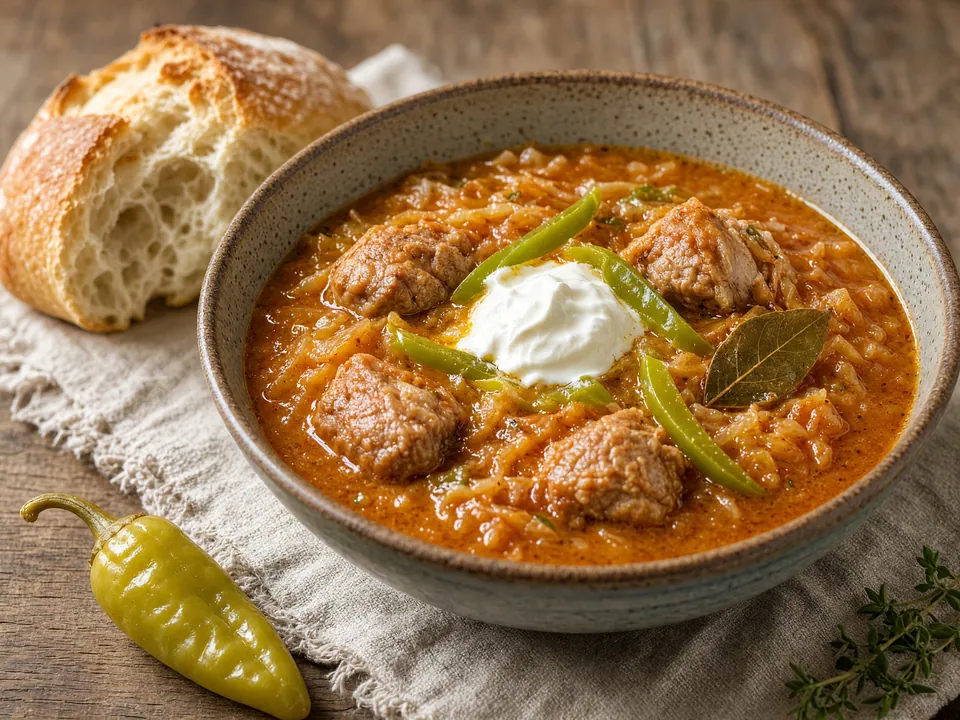
A Hungarian holiday menu has a shape: a clear soup, a paprika-rich main with dumplings, and a creamy sweet. The menu below uses Hungarian recipes from Passport Plate and is built for a cold-weather Sunday, a family celebration, or a holiday lunch. It can be cooked without special equipment, and most of it can be prepared ahead.
Start with a clear chicken broth
Újházi tyúkhúsleves is the quiet first course. It is a clear chicken soup with root vegetables and thin noodles, and it sets the pace for the rest of the meal. Use a whole chicken or a mix of breast, thigh and back for body. Put the chicken in a pot with cold water, bring it slowly to a simmer, and skim the surface. Add onion, carrot, parsnip, celeriac, a few peppercorns and a bay leaf. Keep the heat low; a hard boil clouds the broth. Cook until the meat is tender, then strain and season. Cook the noodles separately and add them to each bowl so they do not swell in the pot. Serve with the chicken and vegetables, or keep the meat for another meal.
Make Székely goulash the centre
Székely goulash is a stew, not a soup. Pork shoulder, onion, garlic, sweet paprika, caraway and sauerkraut do the work, with sour cream at the end. Brown the pork in batches so it colours instead of steaming. Soften the onions, add the garlic, then take the pan off the heat before adding paprika so it does not burn. Return the pork, add sauerkraut and a little stock, and simmer until the meat is tender. The sauerkraut should still have some bite. Stir in sour cream at the end and taste for salt; sauerkraut is already salty.
Cook nokedli close to serving
Nokedli are small egg dumplings and the usual partner for goulash. A simple batter of flour, eggs, water and salt is dropped into boiling salted water. Use a nokedli grater or two teaspoons. They are done when they float, but give them a minute more to cook through. Drain and toss with a little oil or butter. They reheat well in a covered pan with a knob of butter, but they are best cooked close to serving.
Finish with krémes
Krémes is a custard slice made with puff pastry, vanilla custard and whipped cream. Bake the pastry flat between two trays or under a light weight so it stays even. Cool it completely. Make a thick custard with milk, eggs, sugar, flour or cornstarch, and vanilla; cool it with a sheet of film pressed to the surface. Whip cream to soft peaks and fold it into the custard, or layer it separately. Build the slice shortly before serving if you want crisp pastry; it softens as it sits, which many cooks expect. Dust with powdered sugar and cut with a hot knife.
Add fánk for Carnival
Fánk are tied to farsang, the Carnival season before Lent. The dough is enriched with milk, butter, eggs and sugar, so it needs time to rise. Fry in medium-hot oil, turning once; the doughnuts should puff and turn golden. Drain, fill with apricot jam and dust with sugar. They are best the day they are fried, so make them the festive extra rather than the centre of the table.
Use the next morning for bundás kenyér
Bundás kenyér turns slightly stale bread into breakfast. Beat eggs with a pinch of salt, dip the bread, and fry in oil or butter until golden. Serve with jam, honey, or a savoury topping. It is a simple close to a rich menu and uses up bread left from the day before.
A workable order
Two days ahead, make the krémes custard and bake the pastry. One day ahead, cook the goulash; it improves overnight. Make the broth and chill it, then lift off the fat. On the day, reheat the goulash slowly, cook nokedli, and warm the broth. Fry fánk if the menu is for Carnival. Keep the krémes cold until serving. This order keeps the kitchen calm and puts the soup, stew and dumplings on the table together.