Hungarian Plum Dumplings (Szilvás gombóc)
Szilvás gombóc Say it: SEEL-vahsh GOM-bohts
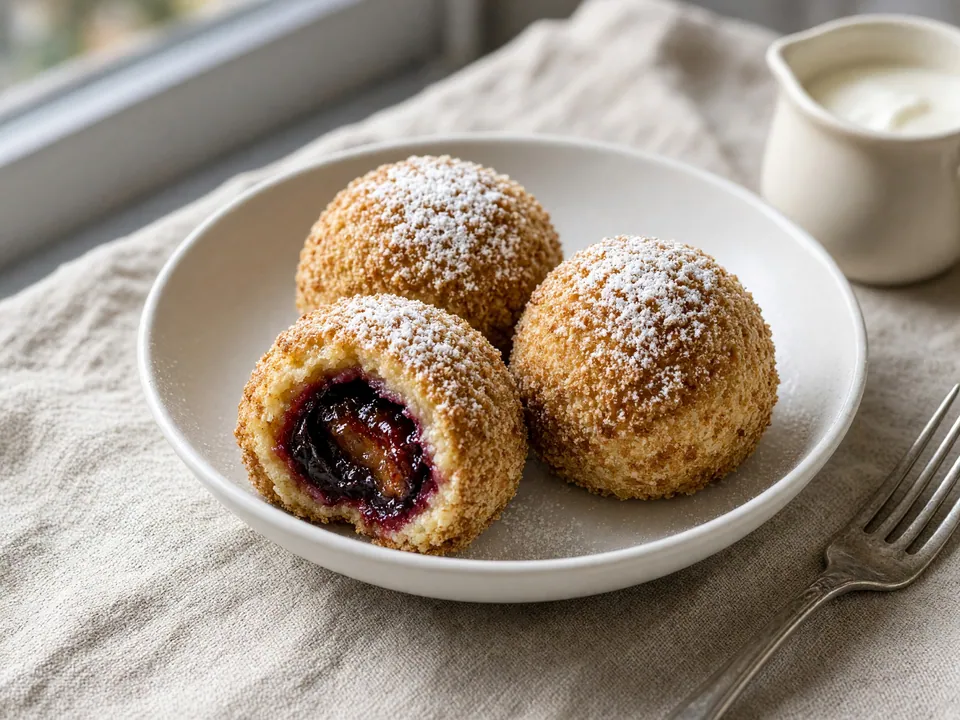
Szilvás gombóc is a Hungarian late-summer dessert of plum dumplings: soft, pillowy potato dough wrapped around a whole plum, boiled until it floats, then rolled in golden toasted breadcrumbs. It is eaten from August to October, when prune plums fill the markets, and often serves as a sweet main course. The contrast is what makes it: a tender, faintly savoury dumpling, a burst of hot juicy plum with cinnamon sugar, and a crisp, buttery crumb coating. Dust with powdered sugar and eat while warm.
Hungarian Plum Dumplings (Szilvás gombóc)
Szilvás gombóc
Pronounced SEEL-vahsh GOM-bohts
- Serves
- 4
- Prep
- 30 min
- Cook
- 40 min
- Total
- 1 hr 10 min
- Level
- Medium
Also nut-free.
Allergens: contains gluten, milk, egg. Check labels on packaged ingredients.
Ingredients
Amounts are scaled. Cooking times and pan sizes stay the same.
For the dough
For the filling
For the coating
Method
Boil the unpeeled potatoes in salted water until a knife slides in with no resistance, 25 to 30 minutes. Drain, let them steam dry for a minute, then peel and mash them while hot. Spread the mash on a plate and leave to cool completely, about 30 minutes.
Put the cold mashed potato in a bowl with the eggs and salt, then sift in the flour. Bring everything together into a soft, slightly tacky dough, kneading just until it holds together and is smooth — stop as soon as it is, or the dumplings turn heavy. Dust lightly with flour, cover and rest for 15 minutes.
Mix the granulated sugar with the ground cinnamon. Cut each plum along its seam, twist out the stone and widen the cavity slightly, keeping the fruit as whole as you can, then pack about a teaspoon of cinnamon sugar into each one.
Divide the dough into 12 equal pieces and flour your hands. Flatten each piece into a disc about 3 inches (8 cm) wide, set a plum in the middle, then draw the dough up around it and pinch the seam firmly closed. Roll gently between your palms into a smooth ball and set on a floured tray.
Bring a large pot of lightly salted water to a bare simmer. Lower in the dumplings a few at a time — they will sink at first. Simmer gently for 8 to 10 minutes, until they rise to the surface, puff up and look dry and matte; give them 2 more minutes once they float, then lift out with a slotted spoon.
While the dumplings cook, melt the butter in a wide skillet over medium heat. Add the breadcrumbs and toast, stirring constantly, for 5 to 6 minutes, until they are an even deep gold and smell nutty. Pull the pan off the heat and stir in the powdered sugar and cinnamon.
Drain each dumpling briefly on a rack or paper towel, then roll it in the warm breadcrumbs until fully coated. Serve at once, dusted with more powdered sugar and a little cinnamon.
Regional variant: Apricot Dumplings (Sárgabarackos gombóc)
Make the same potato dough and use 12 small ripe apricots instead of plums. Halve and pit them, then fill each cavity with a teaspoon of cinnamon sugar and press the fruit closed again, since apricots are smaller and tarter than plums. Wrap, boil and coat them exactly as above; drain the apricots well first, as they release more juice, and seal the dough especially carefully.
Cook's notes
- Use cold, dry, floury potatoes: warm mash makes a sticky dough that needs too much flour and gives a heavy dumpling.
- Pinch every seam completely shut — any gap lets water in and the dumpling splits in the pot.
- Keep the water at a bare simmer and cook in batches; a rolling boil or a crowded pot tears the dough.
Serve with
A dusting of powdered sugar and cinnamon, and a spoonful of sour cream (tejföl) on the side.
Make ahead and storage
Boil and coat the dumplings up to a day ahead, keep them covered in the fridge and reheat in a buttered skillet; they are at their best within a few hours of cooking.