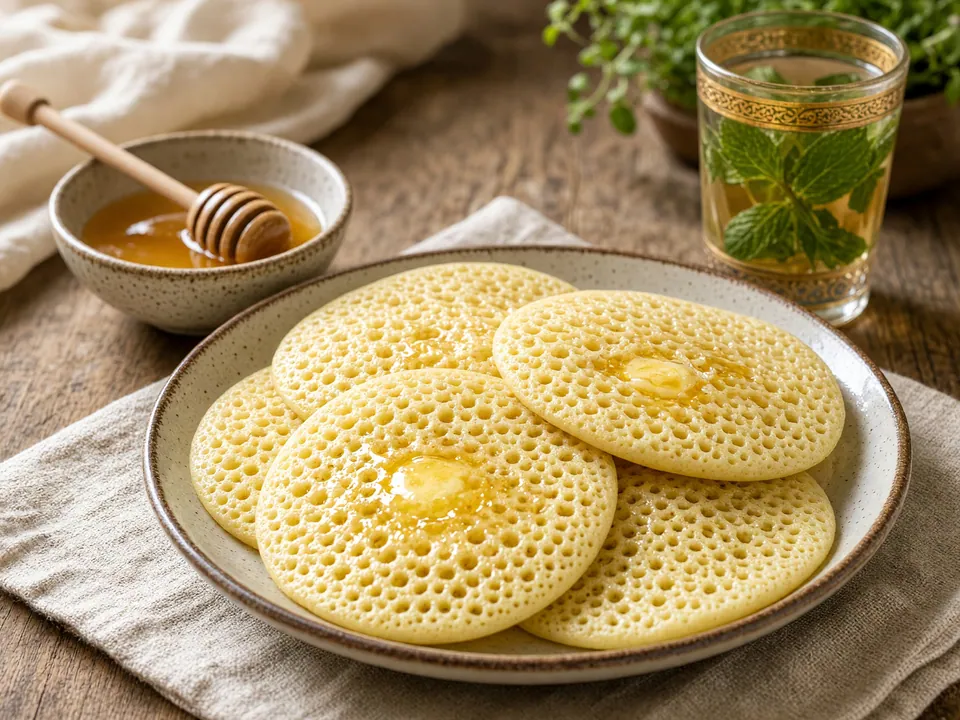
Indonesian Coconut Rice Pancakes (Serabi)
Serabi Say it: seh-RAH-bee
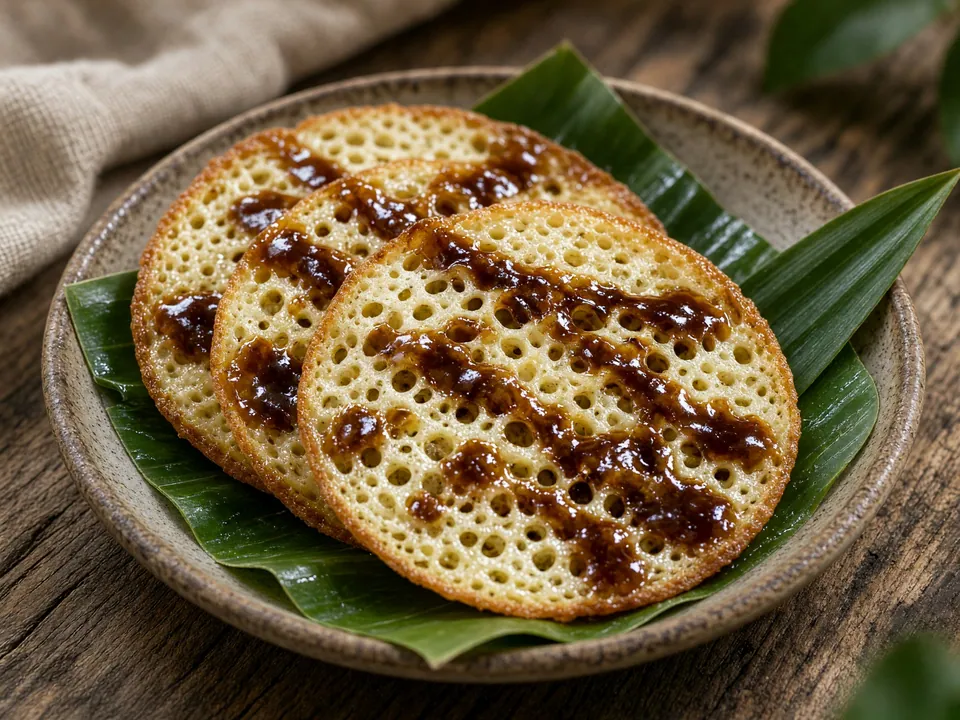
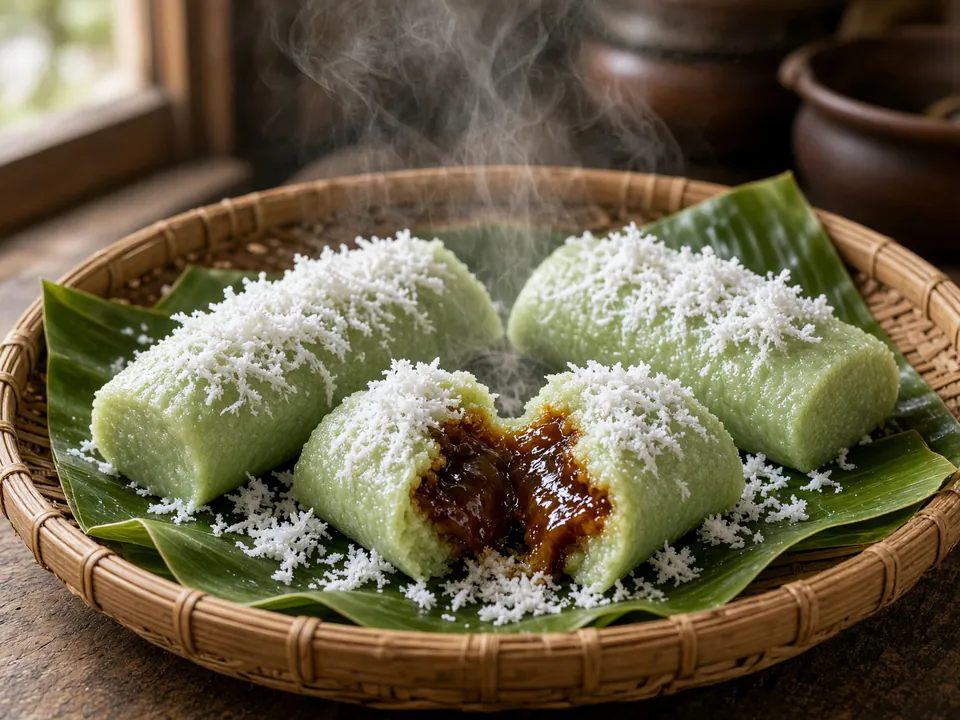
Serabi are small, tender Indonesian rice-flour pancakes cooked in tiny pans until their rims turn lacy and crisp and their pale tops puff into honeycomb holes. Sold from street stalls and eaten for breakfast or as a midday snack across Java, they are gently sweet and rich with coconut milk, often scented with pandan. A warm palm-sugar coconut syrup called kinca is poured over the top, so each bite is soft and faintly chewy in the middle, crackly at the edge, and soaked in caramel.
Indonesian Coconut Rice Pancakes (Serabi)
Serabi
Pronounced seh-RAH-bee
- Serves
- 4
- Prep
- 1 hr 20 min
- Cook
- 30 min
- Total
- 1 hr 50 min
- Level
- Easy
Also nut-free and egg-free.
Allergens: none of the major allergens in the listed ingredients. Check labels on packaged ingredients.
Ingredients
Amounts are scaled. Cooking times and pan sizes stay the same.
Batter
Kinca syrup
Method
Warm the 2 cups (480 ml) coconut milk with the 2 knotted pandan leaves in a small saucepan over low heat until lukewarm, about 110°F (43°C), 2-3 minutes; do not let it boil. Take out the pandan leaves, or stir in the pandan extract if you are using that instead.
Whisk the rice flour, granulated sugar, instant yeast and fine salt in a large bowl. Pour in the warm coconut milk a little at a time, whisking to a smooth, thick batter with no lumps. Cover with a cloth and leave in a warm spot for 60-75 minutes, until the surface is bubbly and the batter has visibly puffed.
Meanwhile make the kinca. put the 1 cup (240 ml) coconut milk, palm sugar, 1 knotted pandan leaf and pinch of salt in a small saucepan. Simmer over low heat for 8-10 minutes, stirring until the sugar melts and the syrup lightly coats a spoon; remove the pandan and keep warm.
Heat a serabi pan or a small nonstick skillet about 4-5 inches (10-12 cm) across over medium-low heat and brush it lightly with oil. Stir the rested batter gently just to deflate it slightly.
Pour in about 1/4 cup (60 ml) batter and cook 3-4 minutes, until the edges are set, golden and crisp and the top is covered in many small holes. If the middle still looks wet, cover the pan for 1 minute; never flip the pancake.
Slide the serabi onto a plate and cook the rest the same way, brushing the pan with a little oil between batches and keeping the finished pancakes warm.
Serve the serabi warm, with the kinca spooned generously over the top so it pools in the little holes.
Regional variant: Bandung Savory Serabi (Surabi Oncom)
For the savory Bandung version, leave out the kinca and make an oncom topping instead: sauté 2 sliced shallots, 2 minced garlic cloves and 2 sliced red chilies until fragrant, add 7 oz (200 g) crumbled oncom (or tempeh), 1/2 cup (120 ml) coconut milk and salt, then simmer until thick. Spoon it over the hot serabi and eat immediately. Sweet Bandung versions skip the topping and finish the pancakes with grated cheese, chocolate or sliced jackfruit.
Cook's notes
- Use a small 4-5 inch (10-12 cm) pan so the batter stays shallow and the rim can crisp before the center dries out.
- Wait for a visibly bubbly, puffed batter before cooking; that is what creates the honeycomb surface.
- Keep the heat at medium-low: too hot burns the base before the center sets, too low leaves them pale and tough.
Serve with
Serve warm with kinca, strong sweet tea or black coffee.
Make ahead and storage
The kinca keeps up to 3 days chilled; reheat gently with a splash of water. Cooked serabi are best eaten at once, but they can be rewrapped and warmed in a low oven for a few minutes.