Croatian Grilled Fish (Riba na gradele)
Riba na gradele Say it: REE-bah nah GRAH-deh-leh
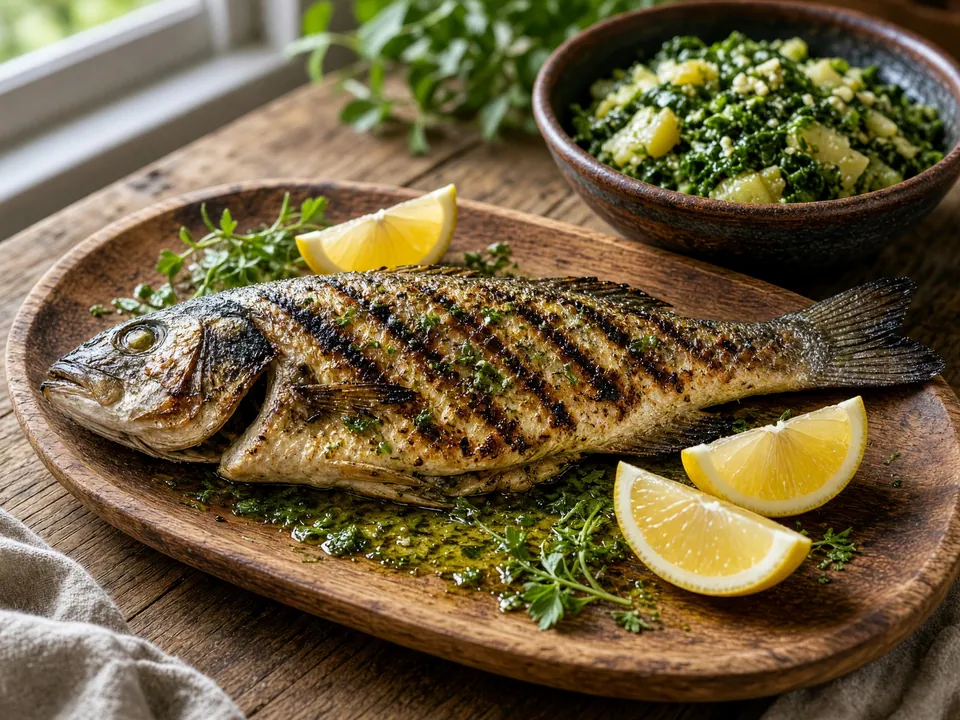
Riba na gradele is a cornerstone of Dalmatian cuisine along Croatia’s Adriatic coast. Fresh whole fish—typically sea bass, bream, or mackerel—is simply seasoned with salt, olive oil, and lemon, then grilled over fragrant wood embers until the skin is crisp and the flesh flakes perfectly. It is traditionally served with blitva, a garlicky Swiss chard and potato mash, capturing the pure flavors of the sea and the simplicity of coastal home cooking. This dish shines at summer gatherings and family meals where the quality of the fish takes center stage.
Croatian Grilled Fish (Riba na gradele)
Riba na gradele
Pronounced REE-bah nah GRAH-deh-leh
- Serves
- 4
- Prep
- 20 min
- Cook
- 25 min
- Total
- 45 min
- Level
- Medium
Also nut-free and egg-free.
Allergens: contains fish. Check labels on packaged ingredients.
Ingredients
Amounts are scaled. Cooking times and pan sizes stay the same.
For the blitva (Swiss chard and potatoes)
Method
Prepare a wood-fire or charcoal grill for medium-high heat; the embers should be glowing but not flaming. If using a gas grill, preheat to 400°F (200°C).
Rinse the fish inside and out under cold water and pat very dry with paper towels. Make 3–4 diagonal slashes on each side of the fish, cutting almost to the bone.
Rub the fish inside and out with 3 tbsp (45 ml) olive oil, then season generously with 2 tsp (12 g) coarse sea salt, sliced garlic, and black pepper. Stuff a few lemon slices into the cavity of each fish.
Place the fish on a clean grill grate directly over the embers. Grill for 10–12 minutes per side, turning once, until the skin is golden and crisp and the flesh is opaque and flakes easily when tested near the bone.
While the fish grills, bring a large pot of salted water to a boil. Add the potato chunks and cook for 8 minutes.
Wash the Swiss chard, remove thick stems, and tear leaves into large pieces. Add the chard to the boiling potatoes and cook another 5–6 minutes until both are tender.
Drain the vegetables well, return to the pot, and mash lightly with a potato masher, leaving some texture. Stir in 4 tbsp (60 ml) olive oil, minced garlic, 1 tsp (6 g) salt, and ½ tsp (1 g) black pepper. Taste and adjust seasoning.
Transfer the grilled fish to a large platter, squeeze the grilled lemon halves over the top, and drizzle with additional olive oil. Serve immediately with the warm blitva and lemon wedges on the side.
Regional variants
Some cooks add a splash of white wine or a few sprigs of fresh rosemary or thyme inside the fish cavity. In Istria, a similar dish may be finished with a sprinkle of local truffle shavings or served alongside a simple green salad instead of blitva.
Cook's notes
- The freshest possible fish is essential—look for bright eyes, red gills, and a clean ocean smell. Ask your fishmonger to scale and gut them for you.
- If wood or charcoal is unavailable, a hot gas grill or even a stovetop grill pan works, though the characteristic smoky aroma will be milder.
- Blitva can be made up to an hour ahead and gently reheated; a splash of the fish’s cooking juices or extra olive oil revives it beautifully.
Serve with
Blitva (Swiss chard and potato mash), extra olive oil, lemon wedges, and a chilled bottle of Croatian white wine such as Pošip or Malvazija.
Make ahead and storage
The blitva can be prepared up to 2 hours ahead and reheated gently. The fish is best grilled just before serving.