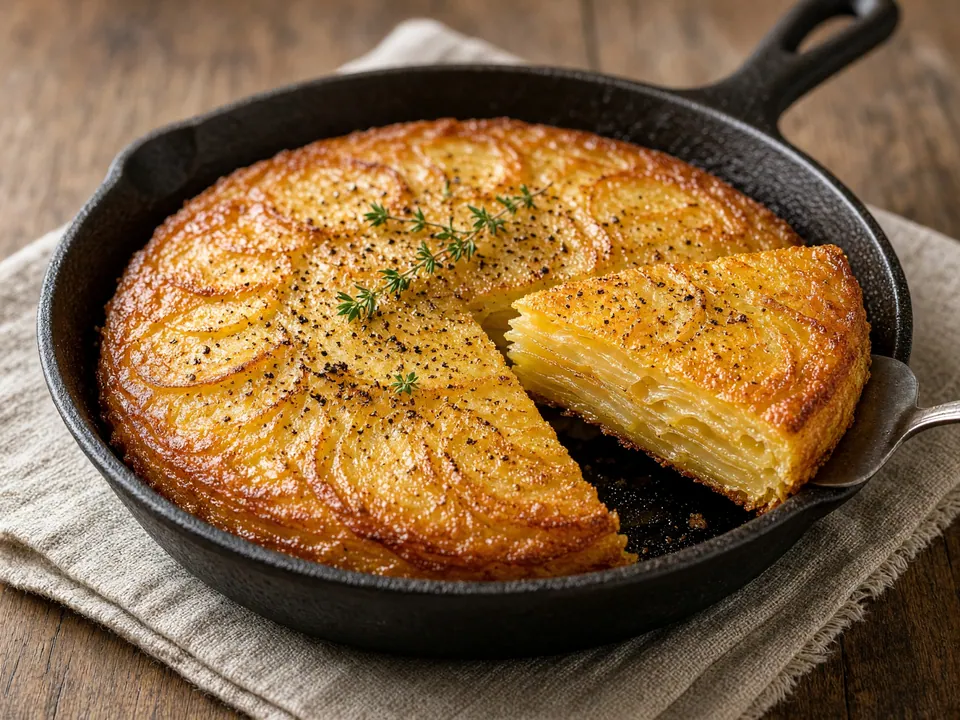
Armenian Rice Pilaf with Dried Fruit (Plav Chrerov)
Փլավ չրերով plav chrerovSay it: plahv chreh-ROV
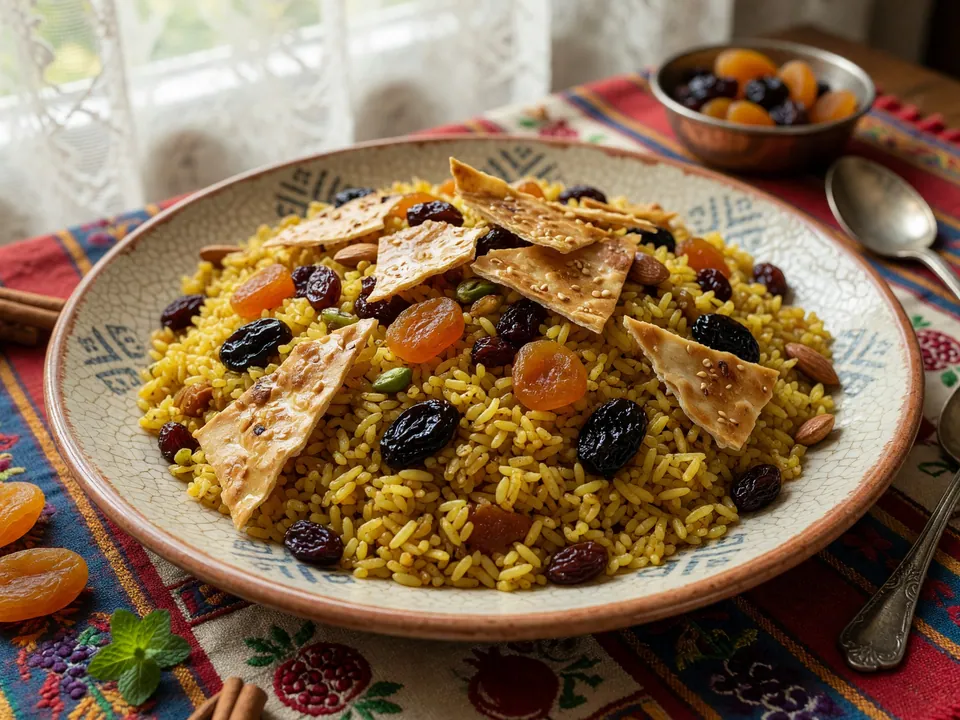
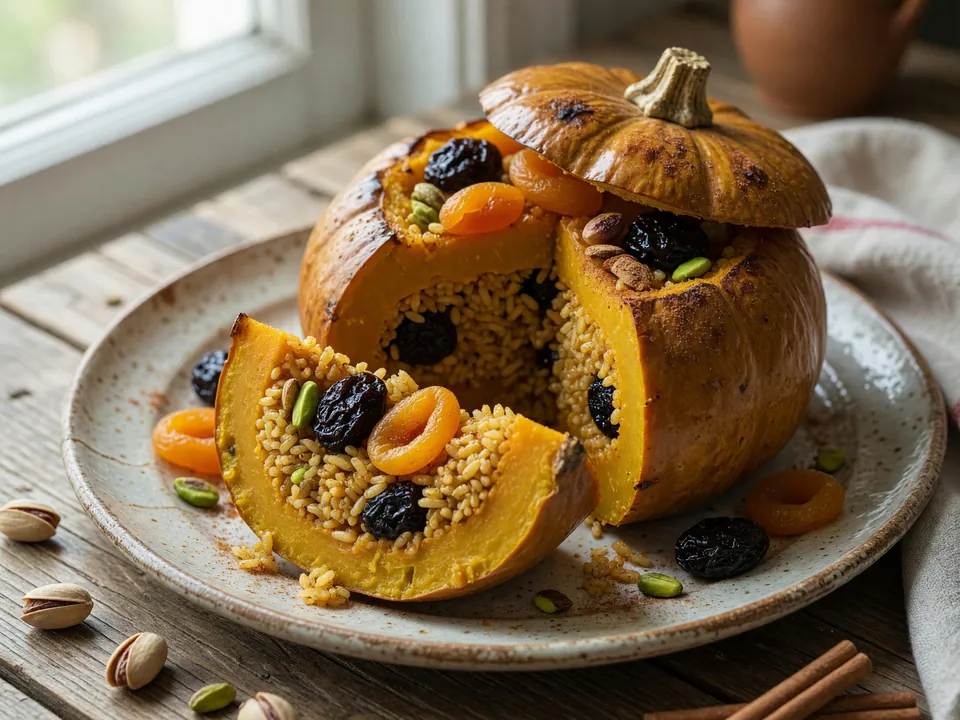
At Armenian Christmas on January 6, plav chrerov usually appears with boiled fish, sautéed greens, and red wine. Each spoonful mixes distinct grains of rice with raisins, apricots, and prunes that have softened in butter until glossy. Torn lavash goes over the top, holding in steam and emerging crisp and golden in patches. The method is simple: start the rice soaking, give the fruit a short warm bath, and let the final stage steam slowly and quietly.
Armenian Rice Pilaf with Dried Fruit (Plav Chrerov)
Փլավ չրերով, plav chrerov
Pronounced plahv chreh-ROV
- Serves
- 6
- Prep
- 20 min
- Cook
- 40 min
- Total
- 1 hr
- Level
- Medium
Also nut-free and egg-free.
Allergens: contains gluten, milk. Check labels on packaged ingredients.
Ingredients
Amounts are scaled. Cooking times and pan sizes stay the same.
Method
Wash the rice under cold water, changing the water several times, until it is only faintly cloudy. Cover it with salted water by 2 inches and leave it to soak for 1 to 2 hours; drain thoroughly.
While the rice soaks, drop the raisins, apricots, and prunes into warm water for 5 minutes. Drain them and dry them gently with a cloth or paper towel.
Warm 2 tablespoons of butter in a wide skillet over medium-low heat. Stir in the raisins and dried fruit and cook, turning them frequently, for 3 to 4 minutes, until they look plump and glossy and smell sweet. Take the skillet off the heat and set it aside.
In a large pot, bring the 4 cups (960 ml) water to a vigorous boil. Stir in 1 teaspoon salt and the drained rice, then cook without a lid for 7 to 9 minutes, until the grains are tender but still offer a little resistance. Pour the rice into a colander and drain well.
Melt the remaining 2 tablespoons butter in a heavy-bottomed pot or Dutch oven set over low heat. Cover the base with one-third of the rice, add half the fruit, then repeat with another third of rice, the rest of the fruit, and the last third of rice. Pour over any butter remaining in the skillet.
Cover the rice completely with the torn lavash, pressing the pieces down gently. Put on a tight lid and steam over the lowest heat for 20 to 25 minutes; a heat diffuser helps if available. The pilaf is done when the rice is light and fluffy, the fruit is very soft, and the lavash has crisp, golden patches.
Take the pot off the heat and leave it covered for 5 minutes. Remove the lid, lift off the crisp lavash pieces, and use a fork to loosen the rice and spread the fruit through it. Mound the pilaf on a warmed platter, scatter over a few extra raisins, tuck in the lavash shards, and serve while hot.
Regional variant: Fasting rice pilaf with dried fruit (pasuts plav)
For a Lenten or fasting version, use 4 tablespoons neutral vegetable oil instead of butter. Cook the fruit in half the oil, then use the remainder to coat the rice and the pot. Leave out the lavash, or brush it lightly with oil before covering; steam the pilaf uncovered or with a plain lid until the rice is tender and the base is lightly golden.
Cook's notes
- The soak is worth planning for: it gives the rice a more even cook and helps the grains stay distinct.
- For a more traditional taste, combine butter with a small amount of neutral oil, and steam over the gentlest heat so the bottom does not catch.
- Thin lavash may need two or three layers to make a reliable seal over the rice.
Serve with
At Armenian Christmas it is traditionally paired with boiled or fried fish, sautéed greens, and red wine; it also works as a festive side for roasted lamb or chicken.
Make ahead and storage
This can be prepared up to 4 hours in advance. Reheat it gently in a covered pot with a splash of water over low heat, and add the crisp lavash pieces only at serving time.