Romanian Easter Cheese Bread (Pască)
Pască Say it: PAS-kuh
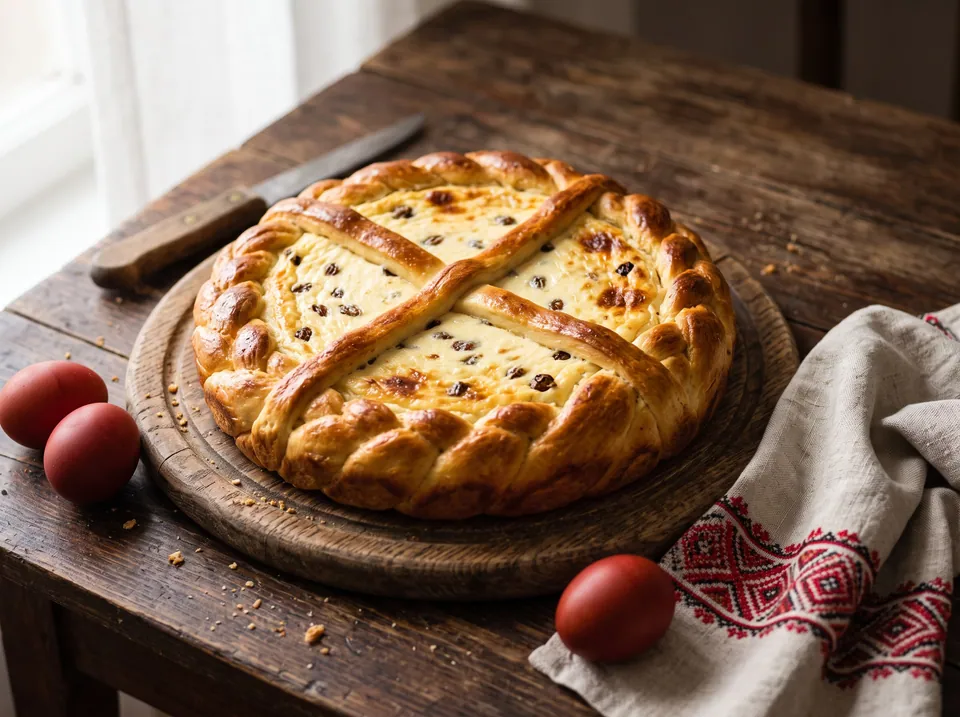
Pască is served on Romanian Easter tables, typically after the church service, next to red-painted eggs and cozonac. A ring of soft, lightly sweet yeast dough holds a creamy filling made from fresh cow's cheese, eggs, sour cream, lemon zest, and optional rum-soaked raisins. The baked bread has a shiny braided border, a tender crumb, and a dairy-rich center; because it rises twice, it is best planned as a calm weekend project.
Romanian Easter Cheese Bread (Pască)
Pască
Pronounced PAS-kuh
- Serves
- 8
- Prep
- 40 min
- Cook
- 50 min
- Total
- 1 hr 30 min
- Level
- Medium
Also nut-free.
Allergens: contains gluten, milk, egg. Check labels on packaged ingredients.
Ingredients
Amounts are scaled. Cooking times and pan sizes stay the same.
For the dough
For the filling
For brushing
Method
Activate the yeast. mash the fresh yeast with 1 teaspoon of the sugar in a small bowl until it turns liquid, or stir dry yeast into the lukewarm milk with a pinch of sugar; leave it 5–10 minutes until foamy. In a large bowl, beat the egg yolks with the rest of the sugar and the salt until lighter in color, then whisk in the lukewarm milk, vanilla, lemon zest, and the yeast mixture.
Sift the flour into a wide bowl or pile it on a work surface. Form a well, add the egg mixture, and bring everything together into a soft dough. Work in the melted butter and knead 8–10 minutes, until the dough is smooth and elastic; if it feels very sticky, dust in only 1–2 extra tablespoons of flour. Roll into a ball, set in an oiled bowl, cover, and leave in a warm spot until it has doubled, 1–1½ hours.
While the dough rises, prepare the filling. If you are using raisins, steep them in the rum or liqueur in a small bowl. Push the cheese through a sieve into a mixing bowl (drain ricotta thoroughly first). Add the sugar, eggs, sour cream, vanilla, lemon zest, and the raisins with any liquid that clings to them; beat until thick, smooth, and spreadable. Chill until the dough is ready.
Cover a baking sheet with parchment. Deflate the risen dough. Reserve two portions roughly the size of tennis balls, one for the base and one for the cross. Roll the rest into 3–5 ropes, each about 28 inches (70 cm) long, braid them, and join the ends into a wreath. Press one reserved ball into a 9-inch (23 cm) round on the parchment. Set the braid around its rim and pinch gently so it holds. Drape a clean towel over the base and let it rise 30 minutes.
Heat the oven to 350°F (180°C). With the second reserved ball, roll two ropes and shape a cross that will fit over the filling area. Keep it lightly covered while the base finishes its second rise.
Once the base has risen, spoon the cheese mixture into the center, smoothing it evenly and leaving the braided rim clear. Whisk the egg yolk with the cold water and brush the braid with this wash.
Bake 20–25 minutes, until the filling is barely set at the edges. Set the dough cross on the filling, brush it with the remaining egg wash, and bake another 25 minutes, until the crust is deep golden and the center is set but still trembles slightly. If the braid darkens too fast, tent it loosely with foil.
Cool on the baking sheet for 20 minutes, then move the pască to a wire rack and let it cool completely. Cut into slices and serve at room temperature.
Regional variant: Maramureș-style plain pască (pască înstruțată)
In Maramureș and nearby northern districts, pască is often made without a cheese filling. The same sweet cozonac dough is formed into a tall round loaf or a ring, then finished with small braids, twisted ropes, dough flowers, and a cross on top. Coat it well with egg wash and bake at 350°F (180°C) until the crust is deeply golden and the loaf sounds hollow when tapped, 45–55 minutes.
Cook's notes
- Use cheese that has been drained thoroughly; pressing it through a sieve removes lumps. Any extra whey can make the filling runny and the dough damp.
- Aim for a dough that is soft and a little tacky, not gluey. During kneading, add extra flour a single tablespoon at a time.
- For a glossier, darker braid, give it a second coat of egg wash right before the cross goes on.
Serve with
Offer pască at room temperature with red-dyed Easter eggs, a slice of cozonac, or a glass of sweet Romanian dessert wine.
Make ahead and storage
A baked pască can be kept in the refrigerator for up to 4 days; let it come to room temperature before serving. The dough may also be prepared the day before and given a slow overnight rise in the refrigerator.