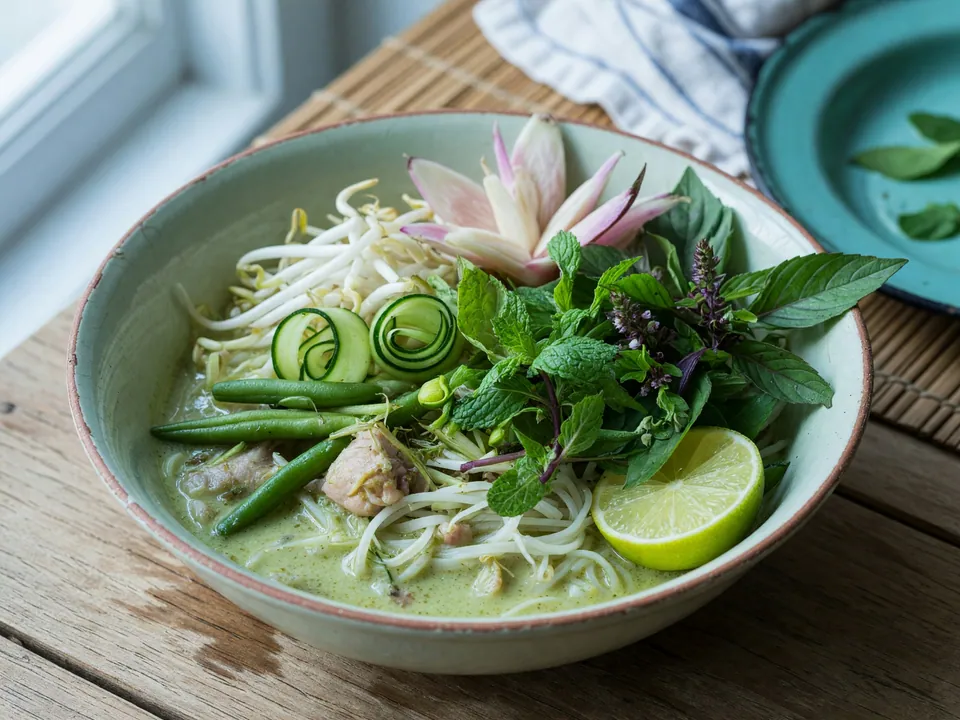
Cambodian Phnom Penh Noodle Soup (Kuy Teav)
គុយទាវ kuy teavSay it: koo-yee tee-uhv
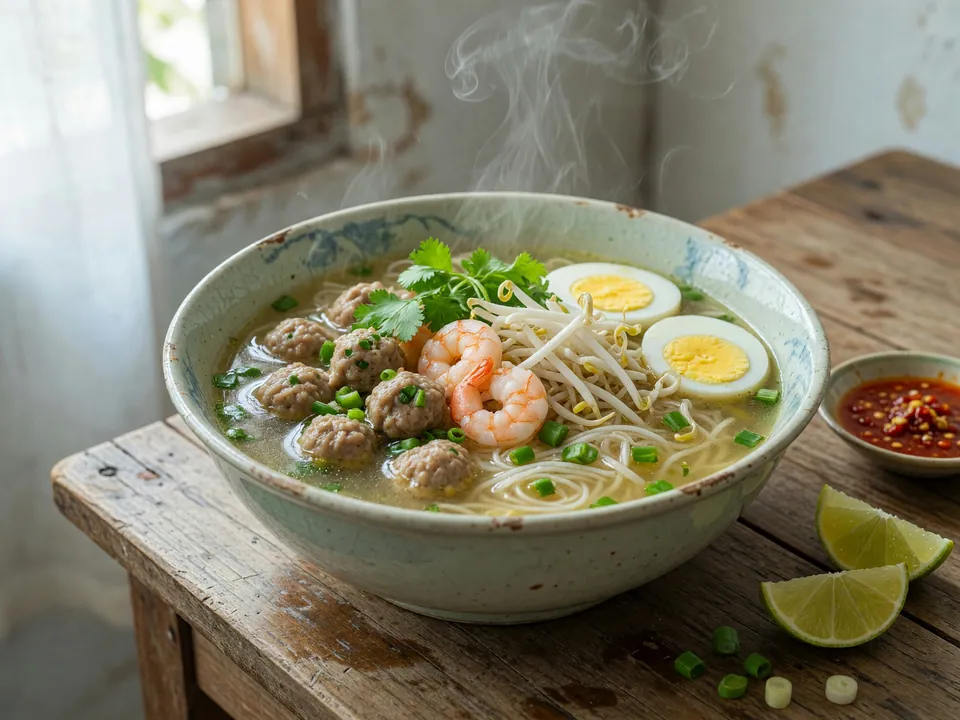
When you dig into this fragrant Cambodian noodle soup the clean pork broth delivers a gentle savory warmth while the springy rice noodles, tender meatballs, sweet shrimp and bright herbs create a comforting harmony that wakes up the senses. It offers a practical morning meal that comes together after a long simmer yet rewards every slurp with customizable heat and acidity from the table condiments.
Cambodian Phnom Penh Noodle Soup (Kuy Teav)
គុយទាវ, kuy teav
Pronounced koo-yee tee-uhv
- Serves
- 6
- Prep
- 45 min
- Cook
- 3 hr
- Total
- 3 hr 45 min
- Level
- Medium
Also nut-free.
Allergens: contains gluten, soy, fish, shellfish, egg, sesame. Check labels on packaged ingredients.
Ingredients
Amounts are scaled. Cooking times and pan sizes stay the same.
For the broth
For the pork balls
To finish
Method
Place the pork neck bones into a large pot and add cold water until the bones are covered by 2 inches. Bring the water to a rolling boil and let it continue for 5 minutes, then pour everything into a colander, rinse the bones thoroughly under running water, and wash the pot clean. Blanching this way prevents cloudiness in the finished soup.
Return the rinsed bones to the clean pot along with the 3 quarts of water, halved onion, carrot pieces, smashed garlic cloves, and dried shrimp. Raise the heat until the liquid boils, lower it to a gentle simmer, leave the pot uncovered, and cook for 3 hours while occasionally lifting away any foam that rises. Add more hot water during the process if the liquid falls below the level of the bones. The meat should become very soft and the liquid should stay clear and aromatic.
Lift out the bones and any large vegetable pieces using a slotted spoon, then pass the liquid through a fine-mesh strainer into another clean pot. Allow the bones to cool just enough to handle, pull off all the meat, and shred it finely while discarding the bones and spent aromatics. Stir the fish sauce, salt, and white pepper into the broth, taste carefully, and adjust the seasoning. Maintain the broth at a low heat so it stays piping hot.
Stir together the ground pork, soy sauce, rice wine, honey, sesame oil, and white pepper in a mixing bowl until evenly combined. With damp hands roll the mixture into meatballs roughly 1 inch across or simply spoon small portions straight into the simmering broth. Bring the broth back to a light boil, drop in the meatballs, and let them cook for 5 minutes. Add the peeled shrimp and continue cooking for another 2–3 minutes until the meatballs are fully cooked and the shrimp turn pink and firm.
If the eggs require cooking, put them in a small saucepan, cover with water, bring to a boil, and simmer for 8 minutes. Transfer to cold water, peel, and cut each into four wedges. Prepare the rice noodles following the instructions on their package—dried ones generally need 3–5 minutes in boiling water until just soft, while fresh ones require only 30 seconds of blanching—then drain and give them a quick rinse.
Divide the cooked noodles evenly among six deep serving bowls. Arrange several meatballs, a few shrimp, some shredded pork, and egg wedges over each portion. Pour the hot seasoned broth generously over the toppings, then scatter bean sprouts, chopped cilantro, and sliced scallions on top. Bring the bowls to the table right away and pass lime wedges and Sriracha or chili sauce separately so everyone can season their own serving.
Regional variant: Chicken noodle soup (kuy teav sach moan)
Substitute a whole chicken or chicken carcass for the pork neck bones and reduce the simmering time to about 1.5 hours instead of 3. Leave out the pork balls and shrimp entirely. Flavor the broth using only fish sauce and a modest amount of salt, then garnish the noodles with slices of the poached chicken plus scallions, cilantro, and crispy fried garlic. Lime wedges and chili remain on the side for diners to add as desired.
Cook's notes
- Achieve maximum clarity in the broth by rinsing the blanched bones well and removing surface foam frequently without allowing a vigorous boil.
- Should dried shrimp be unavailable, a little extra fish sauce can stand in, although the dried shrimp contribute a unique umami layer that is difficult to duplicate.
- When fresh rice noodles can be found they give excellent texture; a brief 30-second blanch keeps them pleasantly chewy rather than mushy.
Serve with
Traditionally served with lime wedges, Sriracha or fresh chili, and sometimes deep-fried breadsticks (chakvay).
Make ahead and storage
The broth and pork balls can be made a day ahead and refrigerated separately. Reheat the broth before cooking the noodles and assembling the bowls.