Cantonese Sweet and Sour Pork (Gū Lū Ròu)
咕噜肉 gūlū ròuSay it: goo-loo roh
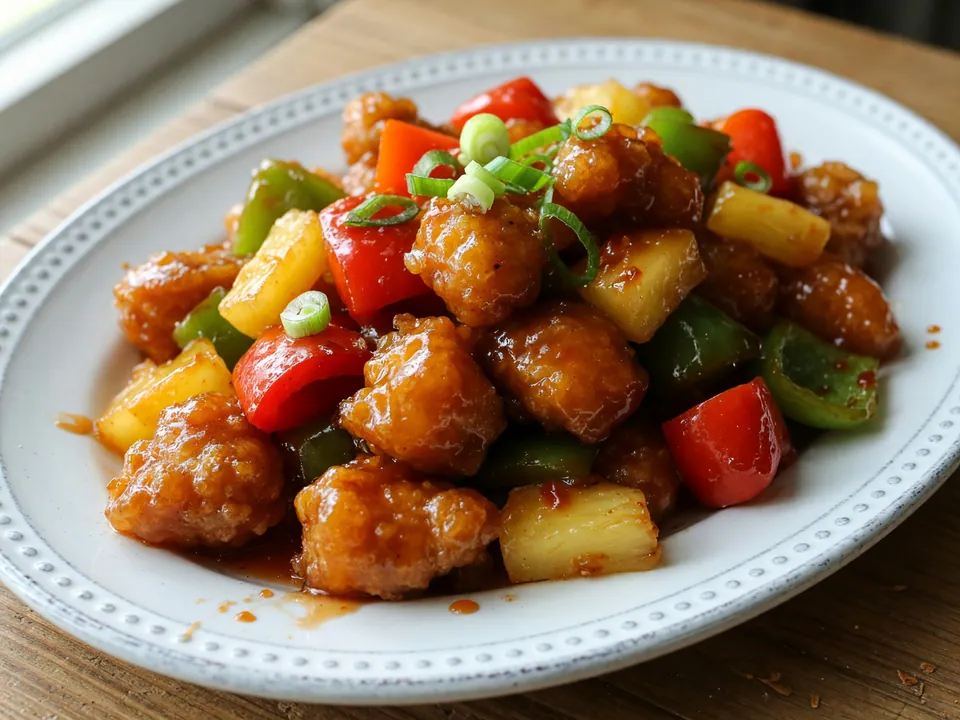
Bite into these golden, shatteringly crisp pieces of pork and experience the classic Cantonese harmony of bright tang from vinegar, mellow sweetness from sugar and pineapple, and savory depth that lingers on the palate. This dish delivers irresistible contrast between a crunchy shell and tender, juicy meat inside, making it a go-to favorite for both festive spreads and everyday dinners across Guangdong and Hong Kong.
Cantonese Sweet and Sour Pork (Gū Lū Ròu)
咕噜肉, gūlū ròu
Pronounced goo-loo roh
- Serves
- 4
- Prep
- 25 min
- Cook
- 45 min
- Total
- 1 hr 10 min
- Level
- Medium
Also nut-free.
Allergens: contains gluten, egg, soy, sesame. Check labels on packaged ingredients.
Ingredients
Amounts are scaled. Cooking times and pan sizes stay the same.
For the pork and marinade
For the sauce
For the coating
For frying and stir-frying
Method
Combine the pork cubes with water, garlic powder, onion powder, sesame oil, and soy sauce in a mixing bowl. Stir thoroughly until the liquid is fully absorbed. Allow the mixture to sit at room temperature for 30 minutes, or refrigerate covered for as long as 2 hours.
Begin preparing the sauce by warming 1 teaspoon of neutral oil in a small saucepan over medium heat. Toss in the smashed ginger slices along with the star anise and cook until the ginger edges turn golden, roughly 1 minute. Mix in the ketchup and continue stirring for about 2 minutes until it darkens and develops a toasted aroma.
Pour in the white vinegar, granulated sugar, and reserved pineapple juice from the can. Stir over heat until the sugar fully dissolves, then lower the temperature and let the mixture simmer gently without a lid for 25–30 minutes until it thinly coats the back of a spoon. Take the pan off the heat, remove and discard the ginger and star anise. The sauce may be prepared in advance and rewarmed later.
Whisk the all-purpose flour, cornstarch, salt, and ground white pepper together in a shallow container. Pour the beaten egg into a separate shallow container. Roll each piece of marinated pork first in the dry mixture, then through the egg, and finally back into the dry mixture while pressing gently to ensure an even layer.
Warm the deep-frying oil in a sturdy pot or wok until it reaches 350°F (175°C). Fry the coated pork pieces in several batches for 2–3 minutes each until they turn pale golden and are just cooked inside. Lift them out using a slotted spoon and let excess oil drain on a wire rack or paper towels, avoiding overcrowding the pot.
Right before assembling the dish, raise the oil temperature to 375°F (190°C). Return the pork to the hot oil in batches and fry an additional 30–60 seconds so the exterior becomes deep golden and extremely crunchy. Drain once more on a wire rack for a short time.
Heat 1 tablespoon of neutral oil in a clean wok or wide skillet over high heat. Add the green and red bell pepper squares along with the onion pieces and stir-fry them for 30–45 seconds so they soften slightly while retaining a firm bite. Stir in the pineapple chunks and the prepared sauce, then bring everything to a simmer.
Give the cornstarch and water mixture a quick stir before adding about half of it to the wok. Cook and stir for 15 seconds; incorporate a bit more slurry if the sauce needs extra thickness to cling properly. Sample the flavor and dilute with a small amount of water if it tastes too strong, or tweak with extra sugar or vinegar as needed for balance.
Toss the twice-fried pork cubes into the simmering sauce and stir rapidly for 20–30 seconds to coat each piece evenly. Move the finished dish to a serving platter without delay and present it while piping hot.
Regional variant: Northern-style sweet and sour pork (táng cù lǐ jī, 糖醋里脊)
Omit the pineapple and bell peppers entirely. Slice pork tenderloin into 2-inch (5 cm) strips instead of cubes and marinate using white pepper, salt, Shaoxing wine, plus a touch of sugar. Coat with a thin batter created from equal amounts of flour and cornstarch blended with water. Double-fry the strips, then combine with a sauce containing ketchup, sugar, rice vinegar, and scallion-ginger water that has been thickened using cornstarch. The result is paler in hue with a thinner shell and a more pronounced sweet-and-sour profile.
Cook's notes
- Performing two separate frying stages is key: the initial lower-temperature fry cooks the meat fully while the hotter second fry expels moisture from the coating so it remains crisp even when sauced.
- Without a thermometer on hand, check oil readiness by adding a tiny bit of leftover coating; it should bubble vigorously and float right away without darkening too fast.
- Prepare the sauce several days in advance and store it refrigerated; its taste actually improves after resting.
Serve with
Steamed jasmine rice and a simple stir-fried green vegetable; pair with jasmine tea or a cold lager.
Make ahead and storage
The sauce can be made up to 3 days ahead and reheated. Fried pork is best eaten immediately, but leftover pork can be reheated in a 375°F (190°C) oven or air fryer until crisp again, then quickly tossed in warm sauce.